
Street Sentinel Triple-Contact Stun Gun - Black
6 sold in last 24 hours
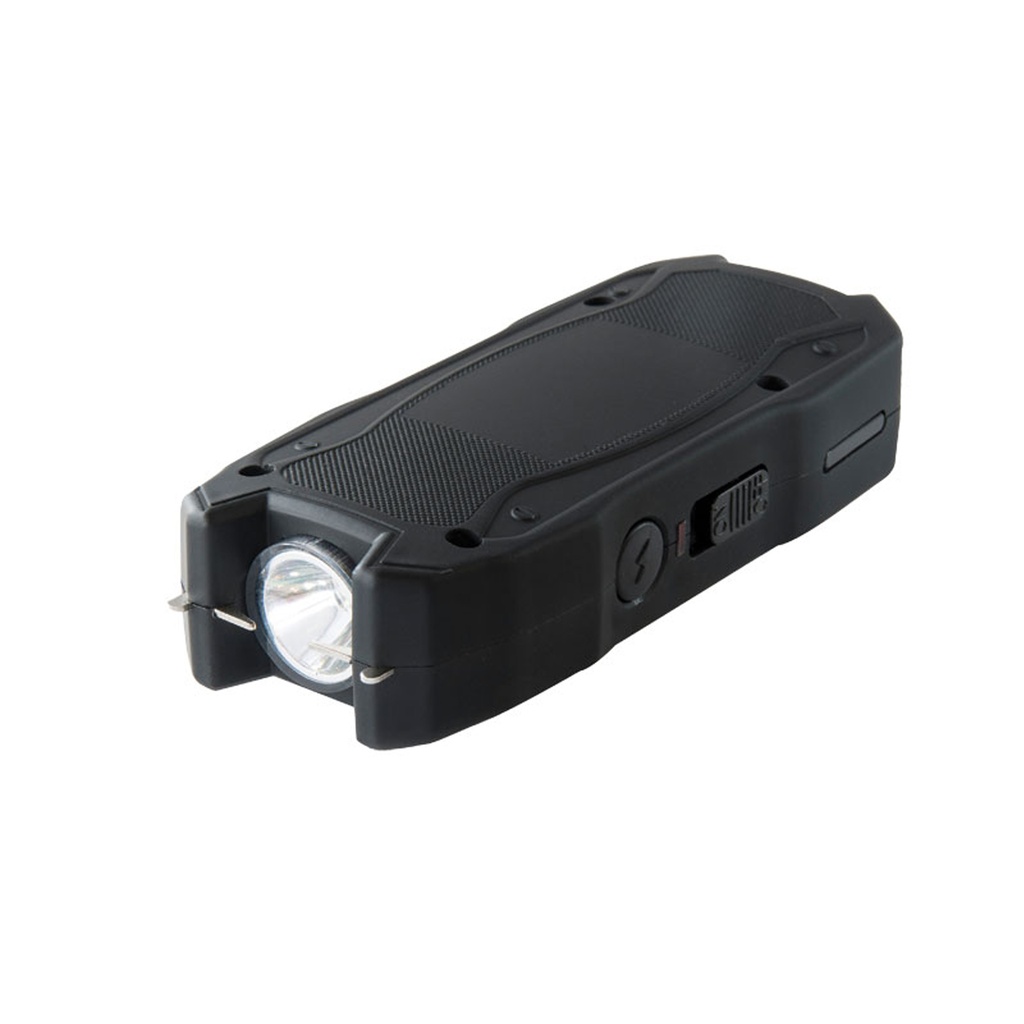
The Street Sentinel Triple-Contact Stun Gun - Black is a compact self-defense tool built for real-world carry, not the junk drawer. Its rubberized, anti-slip body and side safety slider give you secure control, while triple stun contacts focus power where it counts. A built-in LED flashlight and battery level indicator keep you ready in low light and let you know when it’s time to recharge. Small enough for a keychain, serious enough to end a threat fast.
Automatic Knives for Sale & Why Serious Buyers Also Carry a Stun Gun
If you’re the kind of buyer who actually cares about lock geometry, detent tuning, and the difference between a coil spring auto and a dual-action OTF, you already know this: real self-defense is layered. You might have an automatic knife for sale bookmarked right now, but there are places you can’t legally deploy a blade, or situations where closing distance is a bad idea. That’s where a compact stun gun like the Street Sentinel Triple-Contact Stun Gun - Black earns a spot beside your favorite auto.
Why a Knife Enthusiast Takes This Stun Gun Seriously
Most stun guns are the equivalent of gas-station “tactical” folders—loud, cheap, and not something you’d trust under pressure. This one is different. The matte black polymer housing is screwed together like a real piece of gear, not clipped plastic. The anti-slip rubberized grip panel gives you purchase even if your hands are sweaty, the same way good texturing on a G10 handle means you don’t have to baby it.
Up front you’ve got a clear LED lens flanked by triple stun contacts. Think of it as three indexed contact points: more surface engagement, more reliable connection on impact clothing, and more visual intimidation when it arcs. You’re not fumbling for an exact jab point—the contact zone is broad and focused where your thumb naturally drives the front of the tool.
Action, Safety, and Control: The Deployment Story Matters
Knife people obsess over deployment, and with good reason. With this stun gun, the deployment story is about control hierarchy—safety first, action second. The side slider safety switch locks the unit out when you don’t want any surprises in a pocket or bag. Once armed, the separate activation button does the work. Two-stage control beats a single exposed trigger any day, the same way a well-designed safety on an automatic knife keeps the spring from firing in your pocket.
Triple Stun Technology: Why Three Contacts Matter
Those three metal contacts aren’t cosmetics. They spread energy and increase the chance that, under stress, you’re actually delivering current where it needs to go. On heavy clothing or a moving target, one tiny contact can slip or partially connect. Three contacts create a more forgiving strike window—less precision required, more reliable disruption of the attacker’s nervous system. It’s the same logic as preferring a secure lock interface over a flimsy liner: margin for error under real use.
Rechargeable & Indicator-Driven: Always Ready Beats “I Hope It Works”
A stun gun that lives in a drawer with half-dead alkaline batteries is theater, not protection. This unit runs a rechargeable battery with a clear battery level indicator. That means you know, at a glance, whether it’s ready or due for a charge—no guessing, no discovering a dead unit when you actually need it. The integrated LED flashlight also pulls double duty: target identification in low light and a way to visually orient the front of the device instantly.
Carry Reality: How This Stun Gun Fits Beside Your EDC Auto
If you’re already shopping automatic knives for sale for your daily carry, this stun gun slots into the same mindset: compact, accessible, and purpose-built. The keychain-ready size means it can ride on keys, drop into a pocket, or disappear in a small bag. The included nylon holster gives you one more carry option if you prefer dedicated belt access.
It’s roughly the footprint of a compact EDC flashlight, so it doesn’t advertise itself as a weapon. That discreteness matters in public spaces, rideshares, parking garages, or campus walkways where drawing an obvious weapon escalates the situation before you’re sure what you’re looking at.
What Buyers Ask Before Purchasing an Automatic Knife (And Why This Matters)
Whether you’re here to buy an automatic knife or rounding out your self-defense kit with a stun gun, the questions are always the same: legality, mechanism, and whether the tool actually delivers when it counts.
Are automatic knives legal?
In the United States, automatic knives sit under a mix of federal and state law. Federally, the Switchblade Knife Act restricts interstate commerce and mailing of switchblades (including many automatic knives and OTF designs), with specific exemptions for military, law enforcement, and certain one-armed users. That’s why you’ll often see rules about where a dealer can ship an auto.
State laws are the real maze. Some states allow automatic knives and OTFs with few restrictions, others limit blade length, carry method (open vs concealed), or restrict them entirely. Before you buy an automatic knife or carry one, you need to check your current state and local laws—the difference between an EDC you enjoy and a legal problem can be a couple of zip codes.
Stun guns, including compact units like this one, are regulated separately. Many states and cities allow them, some require permits, and a few localities ban or tightly control them. You’re responsible for confirming that owning and carrying a stun gun is legal where you live and where you travel.
What’s the difference between an automatic knife, OTF, and a switchblade?
Collectors like precision, so let’s be precise:
- Automatic knife: A folding knife that opens via an internal spring when you hit a button, lever, or switch. The blade is stored in the handle and pivots out—side-opening autos are the most common.
- OTF (out-the-front) knife: A specific subtype of automatic where the blade travels linearly out the front of the handle instead of pivoting from the side. Many OTFs are double-action—the same control both deploys and retracts the blade against spring tension.
- Switchblade: Legally, this is often the umbrella term used in statutes for spring-activated knives (including many automatics and OTFs). In enthusiast language, people sometimes use “switchblade” casually, but serious buyers distinguish between side-opening autos and OTFs for mechanism and feel.
This stun gun isn’t an automatic knife or a switchblade—it’s a separate layer in your defensive system that pairs well with a legal-to-carry auto where allowed.
What makes this stun gun worth buying?
Three things separate this unit from the landfill-tier stun gadgets:
- Triple stun contacts: A wider, more forgiving strike zone that delivers a decisive shock with less perfect aim.
- Real-world ergonomics: Rubberized, anti-slip grip and a side safety slider that behaves like a proper control, not a toy switch.
- Always-ready power management: A rechargeable battery plus clear battery level indicator and integrated LED flashlight. You know when it’s charged, and you know what you’re pointing at.
If you already choose your automatic knives by action quality and build, this stun gun meets that same standard: functionality over flash, control over gimmicks.
Choosing Gear Like a Collector, Carrying It Like a Professional
The best automatic knife for EDC is the one that fires clean, locks solid, and disappears in your pocket until you need it. The best stun gun for real-world carry follows the same logic: compact, controllable, and actually ready to work. The Street Sentinel Triple-Contact Stun Gun - Black earns its space next to your auto as a non-lethal, fast-access option when a blade isn’t the right answer—or isn’t legally an answer at all.
Build your kit like you’d build a collection: with respect for the mechanism, awareness of the law, and zero tolerance for cheap compromises.