Trail Heirloom Field-Ready Hunting Knife - Polished Bone
5 sold in last 24 hours
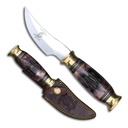
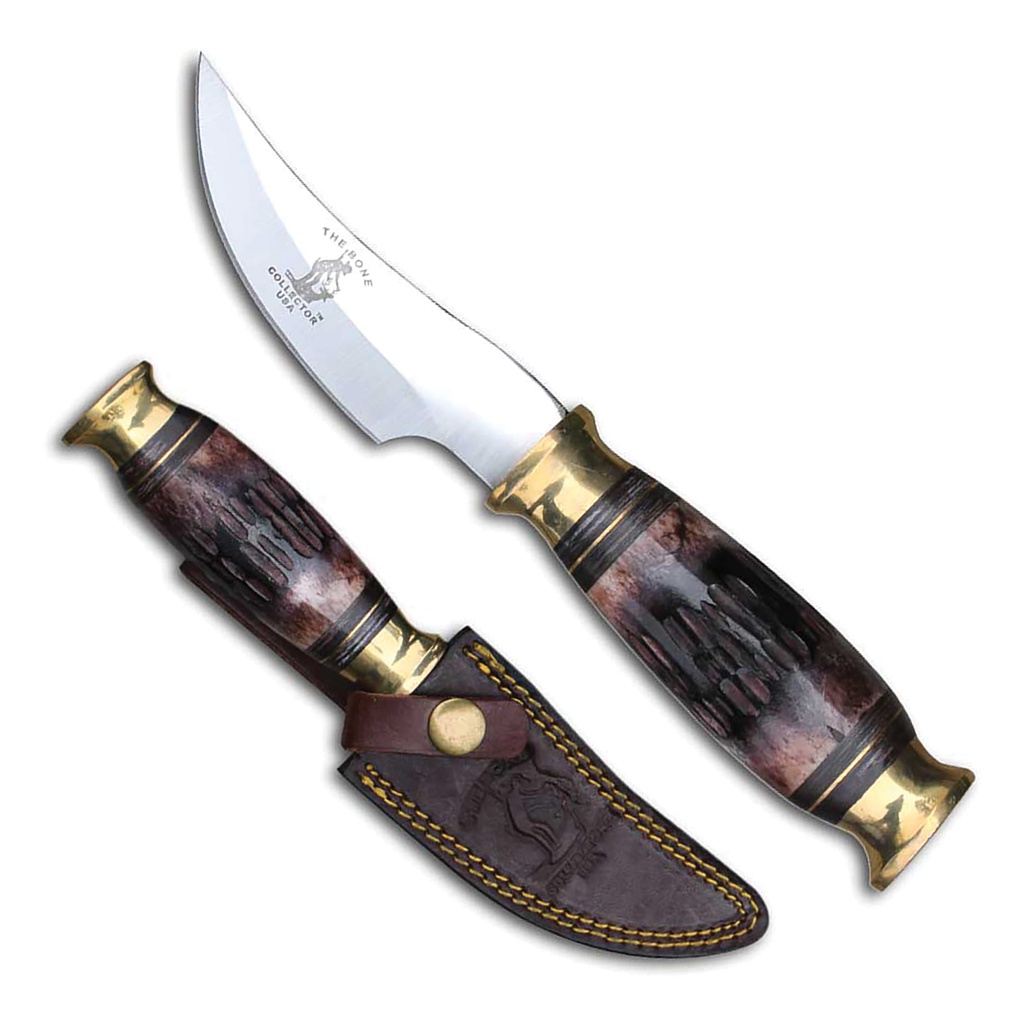
This is a fixed blade hunting knife built like the ones that actually got used, not just collected. A 3.5" polished clip-point rides on a true full tang for real field control, anchored by a jigged polished bone handle and brass guard that lock into the hand. The leather belt sheath carries clean and quiet. It’s the kind of knife that looks like it’s been on the belt for years by the end of the first season.
Heritage Bone Field-Ready Fixed Blade Hunting Knife - Polished Bone
This isn’t a fantasy piece or a catalog prop. It’s a fixed blade hunting knife built in the same language as the knives that actually saw work in camp, in the truck, and on the skinning pole. Full tang, clip point, polished bone, brass, and leather — the classic recipe, scaled into a compact 8-inch package that still feels substantial in the hand.
Why This Fixed Blade Hunting Knife Belongs on a Real Belt
The proportions on this knife are where the story starts. A 3.5-inch clip-point blade puts you in the sweet spot for whitetail, small game, and camp utility without feeling clumsy or overbuilt. At 4.5 inches, the handle gives a full four-finger grip, with that brass guard and flared pommel locking your hand in when things get slick.
Unlike a folder or any automatic knife you might carry in town, a fixed blade hunting knife like this is about zero hesitation. No deployment, no springs, no buttons — just draw from the leather sheath and you’re cutting. Hunters who already run an automatic knife for EDC often reserve a compact fixed blade like this for field dressing and camp work, because the full tang gives more confidence when you’re twisting, pushing, and bearing down.
Blade, Grind, and Control: How This Knife Actually Cuts
The clip-point profile is deliberate. You get a fine tip for detail work — opening up a body cavity cleanly, tracing around joints, or cutting notches in camp — but there’s enough belly in the edge to make long skinning passes possible without constantly adjusting your grip. The polished finish sheds tissue and moisture more easily than a coarse stonewash, which matters when you’re cleaning up at the tailgate with limited water.
Full-tang construction runs steel straight through the handle, from guard to pommel. That matters more than marketing copy ever will. When you’re working around bone or levering a bit harder than you should, a true full tang spreads the stress through the entire knife instead of concentrating it at a pivot or a narrow rat-tail. You feel that solidity the first time you put the spine into a thumb-supported cut.
Handle Geometry and Field Feel
The polished bone scales have a jigged texture that breaks up the surface without turning the handle into a cheese grater. In the field, that means you still get traction with wet or bloody hands, but you can carve, whittle, or choke up for fine work without hot spots. The brass guard gives a positive front stop; the flared brass pommel creates a natural backstop for pulling cuts and hammer-grip work.
Leather Sheath That Actually Carries
The belt sheath is traditional on purpose: brown leather, contrast stitching, and a snap-retention strap that keeps the knife put when you’re climbing into a stand or dropping into a ravine. It rides at a sensible height — not a low-dangle gimmick, not a high-ride wrestling match. This is the kind of sheath that disappears on the belt until you need the knife.
A Traditional Fixed Blade for Buyers Who Already Own Automatics
If you’re the kind of buyer who reads steel charts and cares about spring tension in an automatic knife, you already know why a compact fixed blade still has a place. This knife doesn’t compete with your automatic — it complements it. Where your automatic knife handles quick cuts, daily carry, and town-legal situations, this fixed blade hunting knife takes over when gloves are on, hands are cold, and you don’t want to think about mechanisms.
Collectors who line their safe with automatic knives and OTFs often keep a row of classic bone-and-brass fixed blades for the same reason they keep a vintage revolver: some tools are timeless because they solved the problem correctly the first time. This knife plays directly into that tradition.
Steel, Maintenance, and Real-World Use
The polished blade steel is tuned for honest field work: easy to touch up on a stone or pocket sharpener, tough enough to handle light prying and joint work without being so hard it chips out the first time it meets bone. In real hunting use, that trade-off beats spec-sheet bragging every time. You want a knife that you can bring back to sharp in camp lighting, not one that demands a full bench setup to be useful.
The smooth surfaces — both blade and bone — clean up quickly. A quick rinse, a wipe-down, and a bit of oil on the blade and brass bring it right back. Over time, the bone handle will pick up character from use, darkening at the high spots and polishing at the low. That’s the point. This is a knife that’s supposed to look better after a few seasons, not worse.
What Buyers Ask Before Purchasing an Automatic Knife
Even when you’re shopping a traditional fixed blade like this, the same questions that come up in the automatic knife world are in the back of your mind: legality, mechanism distinctions, and what makes one piece more worth owning than another. Let’s address those directly.
Are automatic knives legal?
Under U.S. federal law, automatic knives (often called switchblades) are regulated mainly in terms of interstate commerce and shipping, not simple ownership. The Federal Switchblade Act restricts manufacture and shipment across state lines, with some exceptions for military, law enforcement, and one-armed individuals. Day-to-day legality, however, is dictated by state and sometimes local law. Some states allow automatic knives and OTFs for general carry, some limit them by blade length, and others prohibit carry or possession entirely.
This particular knife is a fixed blade hunting knife, not an automatic knife or switchblade, so it falls into a different legal category in most jurisdictions. That said, many states have separate rules about fixed blades, concealed carry, and blade length. Before you buy or carry any knife — automatic, OTF, switchblade, or fixed blade — check your current state and local laws, because they change and enforcement attitudes vary.
What’s the difference between an automatic knife, OTF, and a switchblade?
Mechanically, the definitions matter:
- Automatic knife: A folding knife that opens by pressing a button, lever, or similar control. A spring or stored energy deploys the blade from the closed position.
- OTF (out-the-front) knife: A subtype of automatic knife where the blade travels linearly out the front of the handle instead of pivoting from the side. Many are double-action (blade extends and retracts via the same control) or single-action (spring-driven out, manually retracted).
- Switchblade: In U.S. legal language, “switchblade” is usually the term used in statutes for automatic knives in general — side-opening automatics and OTFs alike — triggered by a button or similar device.
This Heritage Bone knife is none of those. It’s a traditional fixed blade: no moving parts, no button, no spring. You draw it from the sheath and it’s already in the working position. Enthusiasts who collect automatic knives and OTFs often keep fixed blades like this for tasks where simplicity, strength, and easy cleaning beat mechanical fascination.
What makes this hunting knife worth buying?
For a collector or serious user, it comes down to three things: proportions, construction, and materials. The 3.5-inch clip-point on an 8-inch overall platform hits the usability sweet spot; full-tang construction with brass guard and pommel means the knife feels like a single solid piece in hand. Polished bone scales and a real leather sheath aren’t shortcuts — they’re the classic field materials that age with you instead of falling apart.
If your drawer is already full of flippers, assisted openers, automatic knives, and OTFs, this fixed blade adds a different kind of satisfaction: a simple, honest hunting knife that looks like it came from a previous generation but works exactly how you need it to right now.
For Collectors and Hunters Who Care About the Right Tool
Whether you’re the buyer who studies spring tension on every automatic knife for sale or the hunter who wants one dependable belt knife for the season, this Heritage Bone fixed blade speaks the same language: good geometry, honest materials, and no-nonsense construction. It’s the knife that lives on the belt while the rest of the collection lives in the safe — and it earns that spot the hard way, cut by cut.
| Overall Length (inches) | 8 |
| Blade Color | Silver |
| Blade Finish | Polished |
| Blade Style | Clip Point |
| Blade Edge | Plain |
| Blade Material | Steel |
| Handle Finish | Polished |
| Handle Material | Bone |
| Theme | None |
| Tang Type | Full Tang |
| Pommel/Butt Cap | Brass |
| Carry Method | Belt |
| Sheath/Holster | Leather |