Trail Heirloom Lockback Pocket Knife - Rosewood
13 sold in last 24 hours
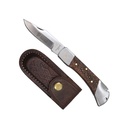
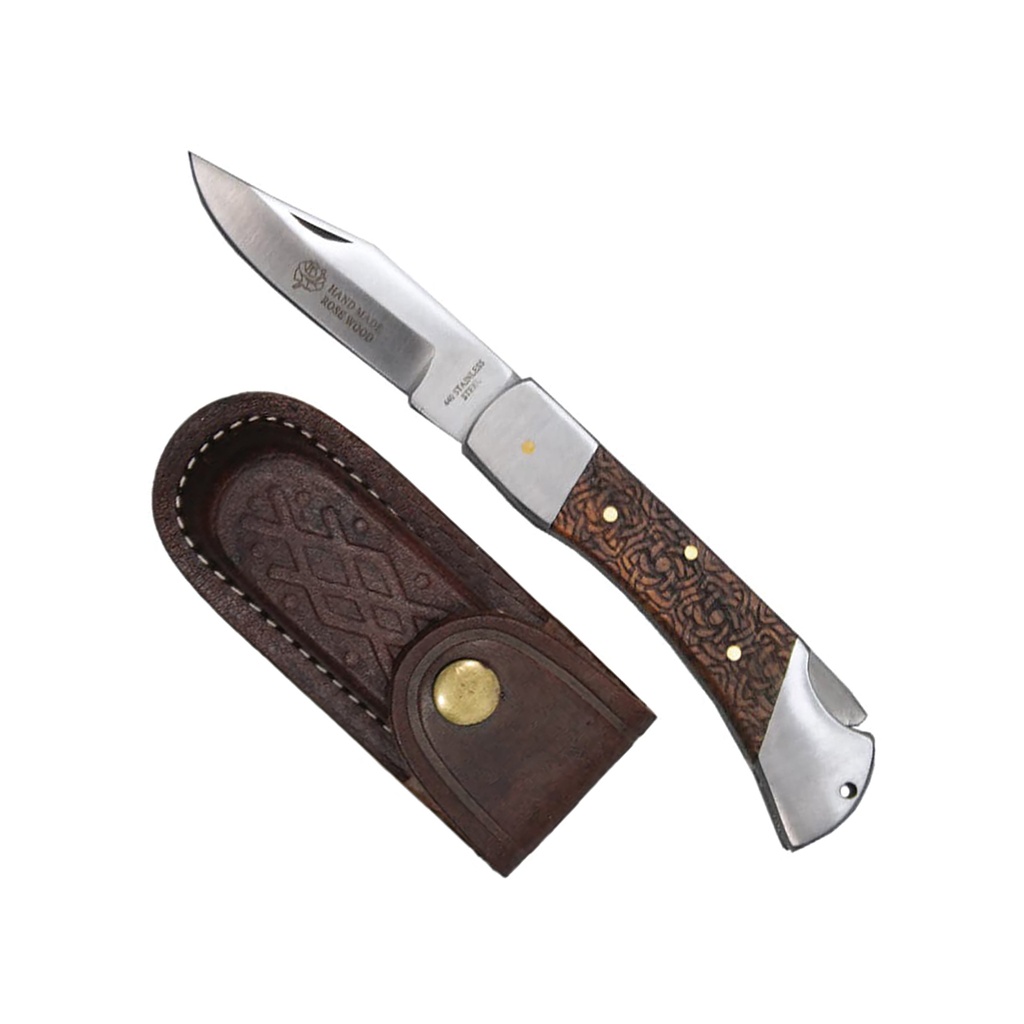
This heritage lockback folding knife feels like it’s been in the family for years. A 3-inch stainless clip point rides on a smooth backspring, opened the right way with a nail nick and locked solid with a classic back lock. Carved rosewood scales and polished bolsters bring real pocket-knife character, while the leather belt sheath keeps it ready when pockets are full. A traditional EDC for people who still appreciate wood, steel, and a lock that clicks home with certainty.
Heritage Lockback Folding Knife for Sale – Built Like the Ones That Actually Got Used
This isn’t a tactical conversation piece. It’s a heritage-style lockback folding knife built in the old pattern: 3-inch stainless clip point, carved rosewood scales, polished bolsters, and a leather belt sheath that actually sees dirt. If you’re looking for an automatic knife for sale, this is its quieter cousin – the one you reach for when you want control, tradition, and a lock that earns its keep without any drama.
Why This Lockback Belongs Next to Your Automatic Knife Collection
Serious knife people don’t just buy one mechanism and call it done. You might buy automatic knives for the speed, OTF blades for the novelty and precision, and the occasional switchblade for the classic outlaw charm. But a good lockback folding knife like this rosewood piece fills a different slot: the honest, belt-carried EDC that doesn’t need explaining.
Here you get a 7-inch overall profile open, with a 3-inch plain-edge clip point in stainless steel. It opens on a nail nick – deliberate, positive, no springs, no assist, no surprises – then settles into a back lock that clicks in with the familiar, reassuring note anyone who’s carried a lockback will recognize.
Back Lock Mechanics: Why This Action Still Matters
The back lock (or lockback) is simple on paper and brilliant in practice. A spring bar runs along the spine of the handle, engaging a notch in the blade tang when opened. Depress the exposed lock bar at the rear and the tang clears, letting the blade fold. What matters here is execution: the fit between tang and lock face, the tension of the spring, and the absence of play when locked.
On this knife, that interface is tuned for real use. You don’t get the lazy, squishy lockup you see on bargain folders. You get a clear, tactile lock engagement and minimal vertical play – exactly what you want in a traditional EDC that might be asked to cut cord, break down a box, or clean up a camp meal.
Clip Point Steel and Edge Geometry That Still Earn Their Keep
Stainless steel here isn’t about spec-sheet bragging rights; it’s about predictable behavior. For an everyday folding knife, the formula is straightforward: a corrosion-resistant stainless that sharpens easily and doesn’t demand babying. Paired with a 3-inch clip point and a plain edge, this is tuned for slicing and controlled tip work, not prying contests or social media abuse.
The satin finish on the blade reduces drag through material and makes it easier to see what you’re doing at the edge. The clip point profile gives you a fine, manageable tip without going needle-thin, so you can open mail, trim cord, or do small camp tasks without feeling like you’re risking a break on every cut.
Handle Ergonomics: Carved Rosewood That Actually Works in Hand
Plenty of knives dress up in wood; fewer get the ergonomics right. The carved rosewood scales on this lockback do more than look good. The contouring and texture give you real purchase when you bear down on a cut, and the three brass pins per side keep that wood securely anchored to the full-length frame.
Polished stainless bolsters front and back help the knife slide cleanly into and out of the sheath, while also reinforcing the ends where knives most often get banged up. In hand, the overall shape lands squarely in the “classic pocket knife” zone: no aggressive finger grooves, no gimmicks, just a neutral, usable profile.
EDC Reality: When You Don’t Want to Carry an Automatic Knife
There are days when an automatic knife or OTF just isn’t the right social signal. Offices, family events, some travel situations – you know the drill. That’s where a traditional lockback like this rosewood folder earns its place. It looks like what it is: a straightforward cutting tool with heritage lines and no tactical cosplay.
At 7 inches overall open and compact closed, it carries easily in the included leather belt sheath. That sheath isn’t an afterthought: dark brown leather, embossed pattern, brass snap, and contrast stitching make it look like it came out of a real leather shop, not a blister pack. Belt carry keeps the knife off your pocket edge and out of the lint trap, while still giving you fast access when you need it.
Belt Sheath vs. Pocket Carry
Plenty of modern folders live on a pocket clip. This one is built for belt carry. If you’re climbing in and out of trucks, working around machinery, or spending your weekends outdoors, a vertical belt sheath means the knife stays put, stays accessible, and doesn’t chew up your pocket seam.
Snap the flap shut and you’ve got solid retention. Pop it open, and the polished bolsters and leather interface let you draw the knife cleanly without fighting the sheath – the way it should be.
What Buyers Ask Before Purchasing an Automatic Knife
Are automatic knives legal?
In the U.S., automatic knife legality is a two-layer issue: federal and state. Federally, the Switchblade Knife Act restricts interstate commerce and mailing of automatic knives (what most people casually call switchblades) but doesn’t outright ban ownership. The real decisions live at the state and local level. Some states allow automatic knives and OTF knives for general carry, some restrict blade length or carry type, and others limit them to military, law enforcement, or at-home ownership only.
This particular lockback folding knife is not an automatic knife or switchblade – it’s a manual folder opened with a nail nick and secured by a back lock. That makes it legal in more jurisdictions than a true automatic knife, but you should still check your state and city laws, especially if they define length limits or lock types for everyday carry.
What’s the difference between an automatic knife, OTF, and a switchblade?
Mechanically, here’s the clean breakdown:
- Automatic knife: A folding knife where the blade opens under spring tension when you press a button, lever, or similar control. Side-openers swing the blade out from the side like a traditional folder.
- OTF (out-the-front) knife: A specific type of automatic where the blade travels in line with the handle, out the front. Most enthusiast-grade OTFs are double-action: press the switch forward to deploy, pull it back to retract.
- Switchblade: In common U.S. usage, this is essentially another name for an automatic knife, especially under the federal Switchblade Knife Act. Legally, it usually refers to any knife that opens automatically via a button, spring, or other mechanical device in the handle.
The knife on this page is neither automatic nor OTF. It’s a manual lockback folding knife with a nail nick – you supply the opening force; the lock simply secures the blade open.
What makes this lockback knife worth buying?
Collectors and serious users tend to avoid disposable-feeling gear. This rosewood lockback earns its space by combining proven mechanics with honest materials: a stainless clip point blade you can sharpen without drama, a back lock that actually locks, carved rosewood scales that feel like a real pocket knife, and a leather sheath you’ll still be using years from now.
It’s not trying to replace your best automatic knife; it’s there to complement it. On the days when a fast-deploy side-opener or double action OTF stays in the drawer, this is the knife you can carry without second-guessing – and without apologizing to anyone who actually knows knives.
For the Enthusiast Who Owns Automatics but Still Respects a Good Lockback
If you’re here hunting for an automatic knife for sale, you already care about mechanics. Add this lockback to your rotation for the same reason: reliable action, clean lockup, and materials that don’t pretend to be something they’re not. Whether it rides your belt next to a high-end OTF or lives as your dedicated camp folder, it contributes to the same story – a drawer full of blades chosen for how they work, not how loudly they advertise it.