Upland Ridge Classic Hunting Knife - Yellow Bone
5 sold in last 24 hours
A fixed blade hunting knife that feels like home the moment it hits your palm. The polished 4-inch stainless drop point pairs with a sun-warm yellow bovine bone handle and a leather sheath that rides easy on belt or pack. Field-balanced, compact, and confident, it cleans, trims, and preps without fuss. Designed in the USA, handcrafted with care, it’s the dependable partner that keeps you efficient—and proud to carry.
Upland Ridge Classic Fixed Blade Hunting Knife - Yellow Bone
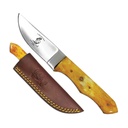
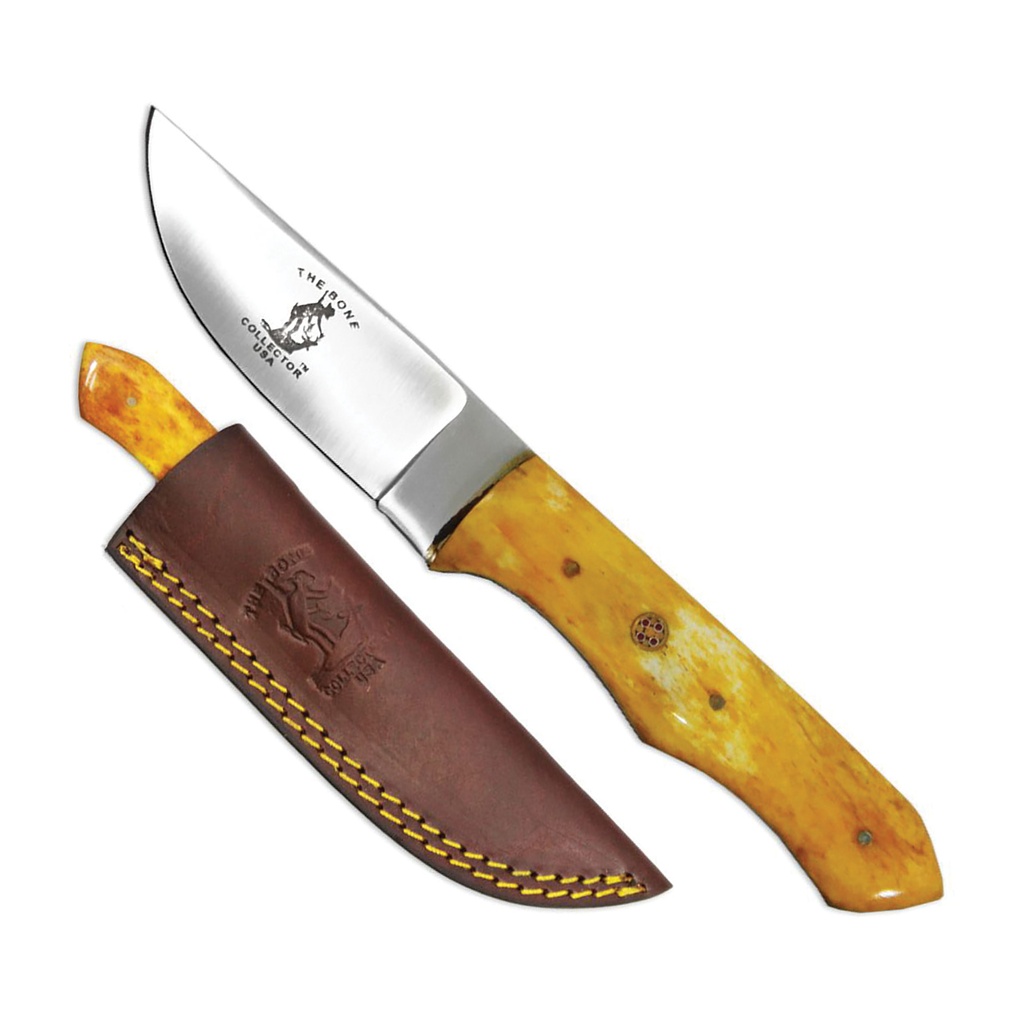
This isn’t a wall-hanger and it’s not some oversized fantasy blade. The Upland Ridge Classic Fixed Blade Hunting Knife - Yellow Bone is exactly what it looks like: a compact, full-tang field knife built for real hunting work. At 8 inches overall with a 4-inch polished stainless drop point and warm yellow bovine bone handle, it’s sized for control, not ego.
Everything about this design says traditional North American hunting knife: bone scales pinned to a full tang, stitched leather belt sheath, and a blade geometry that’s tuned for cleaning game, light camp chores, and the hundred small cuts you make around a fire or tailgate. It’s the knife you reach for because it simply does the job without drama.
Why This Fixed Blade Hunting Knife Just Works in the Field
The drop point here is classic for a reason. The spine carries good thickness into the tip, so you’ve got enough strength for joint work and controlled prying, while the belly gives you a generous slicing arc for skinning and general cutting. No serrations, no gimmicks — just a clean, plain edge that sharpens easily and glides through tissue and rope alike.
At 4 inches, the blade hits the sweet spot: long enough to break down game and handle camp prep, short enough to choke up on the handle and run the edge with precision. The finger groove and slight palm swell in the yellow bone handle give secure indexing, even when your hands are cold, wet, or gloved. That’s the difference between a knife that just looks good and a knife that keeps working after three hours on a buck in November.
Steel, Grind, and Real-World Cutting Performance
The Upland Ridge runs a polished stainless steel blade. That matters in the real world for one reason: maintenance. In a hunting knife that may ride on a belt, in a truck, or in a pack for months at a time, stain resistance isn’t a luxury. Stainless steel gives you a blade that shrugs off blood, moisture, and the occasional neglect, and still comes back with a few passes on a stone or field sharpener.
Polished Edge and Field Sharpening
The polished finish is more than cosmetic. A smooth, refined surface resists corrosion better than an aggressive stonewash and makes cleanup faster when you’re working on game. The plain edge is straightforward to maintain — no specialty rods or systems required. If you’re the type who keeps a pocket stone in the pack, this knife will reward you with a clean, biting edge in a few strokes.
Full-Tang Confidence and Handle Geometry
Full-tang construction means the steel runs the length of the knife, visible around the bone scales. That’s structural insurance. If you’re torquing the blade out of a joint or bearing down on a stubborn cut, you’re not trusting some hidden rat-tail tang — you’re holding solid steel from tip to pommel. The handle’s finger groove and light palm swell lock the knife into the hand, while the exposed bone butt gives you a natural rest point for pinky or lanyard use.
Carry, Sheath, and How It Rides All Season
A hunting knife is only as useful as it is accessible. The brown leather belt sheath on this fixed blade is built for real carry. It rides close without flopping, with yellow contrast stitching that ties visually back to the bone handle. You can wear it on the hip while driving a truck, climbing into a stand, or packing into camp without constantly catching it on gear.
The compact 8-inch overall length means it doesn’t dominate your belt line. It’s there when you need to process a bird, trim cord, or cut kindling tinder — and out of the way when you’re climbing, kneeling, or shouldering a rifle. This is the quiet advantage of a well-sized fixed blade over a bigger camp knife: you actually carry it, so you actually use it.
Collector Appeal: Bone, Mosaic Pin, and Traditional Lines
For collectors, the Upland Ridge Classic checks the right boxes without pretending to be a safe-queen. The yellow bovine bone scales have natural mottling that will age with use, picking up small polish marks and darkening at the edges the way real working knives do. Brass or bronze pins secure the handle, and the mosaic pin detail gives a subtle nod to custom shop aesthetics.
The stamped logo on the blade and embossed logo on the sheath are restrained — present, but not screaming for attention. It’s a knife that will look as at home in a display of traditional fixed blade hunting knives as it will on a belt during bird season. For many enthusiasts, that balance between functional tool and heritage styling is exactly the point.
What Buyers Ask Before Purchasing an Automatic Knife
Even though the Upland Ridge is a fixed blade hunting knife, serious buyers in this category often cross-shop automatic knife for sale listings, OTF models, and traditional fixed blades. The same questions about legality, mechanism, and real-world value come up over and over. Let’s answer them directly.
Are automatic knives legal?
Under U.S. federal law, automatic knives (often called switchblades) are regulated primarily for interstate commerce — the Federal Switchblade Act restricts how they can be imported and sold across state lines, especially to non-military and non-law-enforcement buyers. Actual carry and ownership rules, however, are driven by state and local law. Some states now allow automatic knives and OTF designs for everyday carry with few restrictions, others limit blade length or concealment, and a handful still prohibit them outright.
This Upland Ridge model is a non-folding fixed blade hunting knife, not an automatic knife, OTF, or switchblade, so it falls under a different set of rules. Many jurisdictions treat fixed blade hunting knives more favorably, especially when carried openly or while actively hunting, camping, or fishing. That said, knife laws change, and enforcement can vary. Always check your current state and local laws — and any hunting regulations — before assuming what’s legal to carry.
What’s the difference between an automatic knife, OTF, and a switchblade?
The terminology gets abused, so let’s be precise:
- Automatic knife: A folding knife where the blade opens by pressing a button, switch, or lever in the handle, using an internal spring to drive deployment. Side-opening autos flip out from the side like a conventional folder.
- OTF (Out-The-Front) knife: A specific type of automatic where the blade travels linearly out the front of the handle. Many OTF knives are double-action — the same control both deploys and retracts the blade under spring tension.
- Switchblade: In U.S. legal language, this is essentially an automatic knife: a blade that opens automatically by a push-button, inertia device, or similar mechanism. In enthusiast use, “switchblade” is often just a casual term for autos.
The Upland Ridge is none of those. It’s a full-tang fixed blade hunting knife with no spring, no button, and no folding joint — the blade is always out, ready to work. Buyers who browse automatic knives for sale often keep a fixed blade like this in their lineup for the tasks where simplicity and strength beat any mechanism.
What makes this hunting knife worth buying?
Value on a knife like this isn’t about hype; it’s about whether the fundamentals are right. This fixed blade brings:
- A 4-inch drop point profile that’s actually tuned for hunting and field chores.
- Stainless steel that prioritizes corrosion resistance and easy maintenance in bloody, wet, or dirty conditions.
- Full-tang construction for predictable strength when you’re bearing down or twisting the blade.
- Yellow bone scales and a mosaic pin that give you traditional aesthetics with real hand-feel, not plastic.
- A leather belt sheath that makes daily or seasonal carry realistic, not wishful thinking.
If you already own a drawer full of folders, autos, and OTFs, this is the quiet fixed blade that earns its place by simply doing the job, year after year, without demanding attention.
Who This Knife Belongs To
The Upland Ridge Classic Fixed Blade Hunting Knife - Yellow Bone belongs on the belt of the hunter who dresses their own game, the camper who prefers bone and leather to synthetics, and the collector who appreciates traditional field knives that see real use. You don’t buy this to impress a forum. You buy it because you know exactly what a compact, honest fixed blade should feel like — and this one delivers it.
For the enthusiast who might be scrolling through automatic knives for sale one minute and studying classic hunting knives the next, the Upland Ridge is the bridge: modern practicality wrapped in traditional materials, ready to work the moment it leaves the sheath.
| Blade Length (inches) | 4 |
| Overall Length (inches) | 8 |
| Blade Color | Silver |
| Blade Finish | Polished |
| Blade Style | Drop Point |
| Blade Edge | Plain |
| Blade Material | Stainless Steel |
| Handle Finish | Polished |
| Handle Material | Bovine Bone |
| Theme | None |
| Handle Length (inches) | 4 |
| Tang Type | Full Tang |
| Pommel/Butt Cap | Exposed bone |
| Carry Method | Belt Carry |
| Sheath/Holster | Leather Sheath |