
Urban Refuge Heat-Shield Emergency Blanket - Silver Mylar
5 sold in last 24 hours
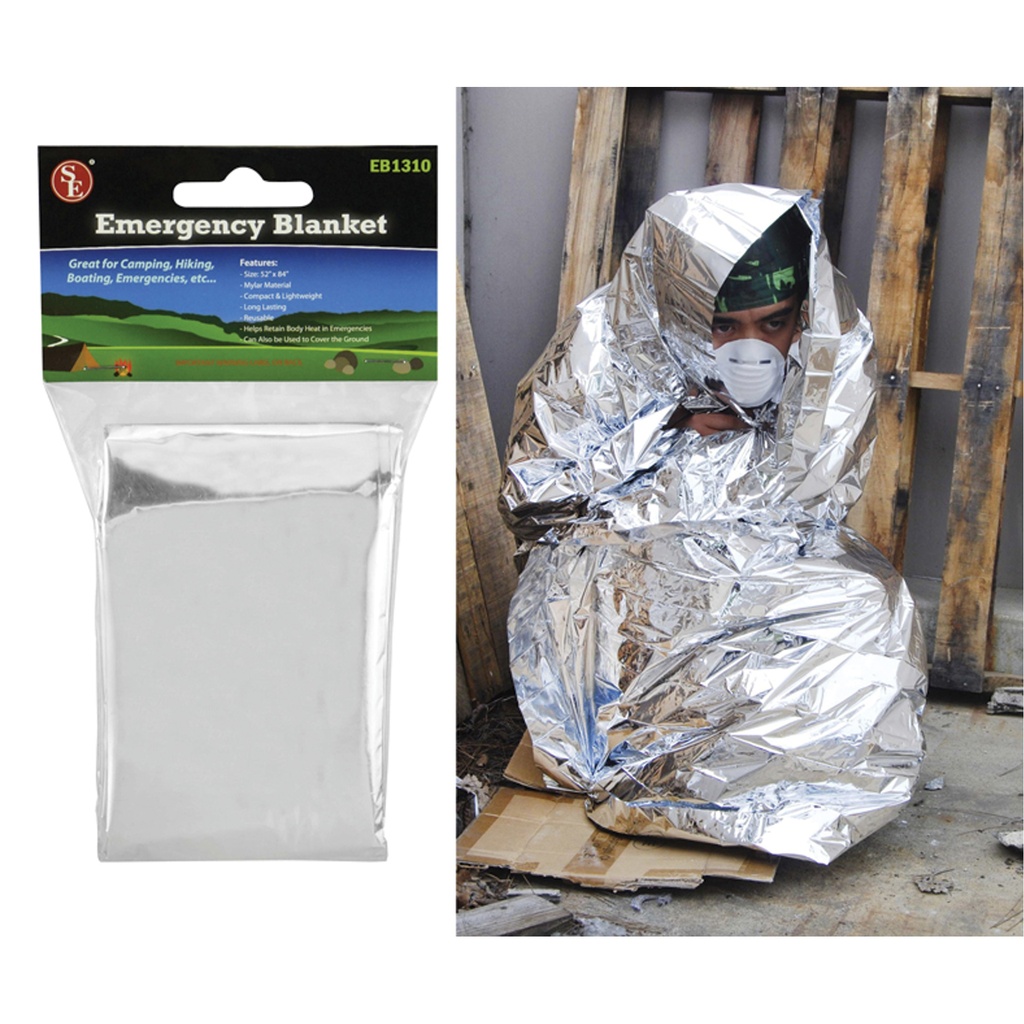
Not every emergency is a mountain rescue. Sometimes it’s cold pavement, wet cardboard, and a long wait. This heat-reflective emergency blanket earns its slot in every kit by doing one job exceptionally well: trapping body heat and blocking wind with ultra-thin silver Mylar. It folds down to pocket size, then opens to 52 x 82 inches of full-body coverage. Lightweight, reusable, and packed in a clean poly bag with header card, it’s built for go-bags, glove boxes, first-aid kits, and bulk emergency staging.
Why This Emergency Blanket Deserves a Permanent Spot in Your Kit
Some gear is optional. A heat-reflective emergency blanket isn’t. When you’re sitting on cold ground, wind cutting through your clothes and your core temperature dropping, this is the piece that actually changes the outcome. The Urban Refuge Heat-Shield Emergency Blanket - Silver Mylar is built around a simple, ruthless standard: maximum thermal retention in the smallest, lightest package you’ll actually carry.
Emergency Blanket Engineering: How a Thin Mylar Sheet Holds Real Heat
Forget the gimmicks. This isn’t about fluff or filling; it’s about physics. The silver Mylar in this emergency blanket is engineered to reflect your radiant body heat back toward you instead of letting it bleed into the air. That reflective surface is doing the heavy lifting, turning your own heat output into a thermal barrier. At 52 x 82 inches, it covers an adult from shoulders to boots, wrapping around shoulders or over a sleeping bag or victim on the ground. The crinkled Mylar texture isn’t a flaw; it’s what lets the blanket fold to pocket size while still creating micro air gaps that slow convective heat loss.
Heat Reflection and Wind Blocking in Real Conditions
In the field, warmth is about more than just reflection — it’s about stopping wind from stripping heat off you. This emergency blanket lays down an instant wind block. That shiny Mylar surface acts like a barrier against moving air, whether you’re sitting in an exposed parking lot after an accident or hunkered down on a ridge waiting out bad weather. Wrap it tight and you cut convective loss. Drape it over a victim and you add critical minutes of preserved warmth while you sort out the next step.
From Pocket Size to Full-Body Coverage
Packed, this blanket disappears into a glove box, go-bag, or first-aid kit. Unfolded, it’s big enough to create a real thermal envelope around a person. That compact-to-coverage ratio is the whole point: gear you leave at home doesn’t help you. A sub-one-ounce Mylar sheet that lives in your kit 24/7, ready to deploy, is worth more than a bulky fleece you only pack for planned trips.
Built for Go-Bags, Glove Boxes, and Wholesale Deployment
This isn’t a boutique camping novelty; it’s practical emergency equipment. Each blanket is individually packaged in a clear poly bag with a header card, ready for retail pegs, bulk bins, or organized kit building. The packaging shows exactly what the blanket does: full-body coverage, reflective heat retention, and urban survival realism — wooden pallets, rough ground, and all. Preppers, outdoor instructors, fleet managers, and relief planners can drop these into go-bags, vehicle kits, corporate safety programs, and community response caches without repacking or relabeling.
Reusable, Not One-and-Done
Many space blankets are treated like single-use consumables. This one is built to do more than survive a single panic unwrap. Used with a bit of respect — unfolded instead of ripped open, folded rather than wadded — the Mylar can be reused for training, drills, planned cold-weather outings, and staged emergency caches. It’s thin and light, but not throwaway by design.
Emergency Use Cases: Where This Heat-Reflective Blanket Earns Its Keep
If you build kits seriously, you know every cubic inch has to justify itself. This heat-reflective emergency blanket earns its space in a lot of scenarios:
- Vehicle emergencies: Stranded in winter, waiting on a tow, or stuck in traffic after a pileup.
- Urban incidents: Falls, exposure, or medical events on cold pavement or damp ground.
- Outdoor trips: Backup thermal insurance on hikes, camping, hunting, or boating.
- Mass care: Disaster shelters, evacuation centers, and relief operations.
- First responder kits: Immediate warmth and wind block for shock and trauma.
In every case, the job is the same: slow heat loss, block wind, and buy time.
Practical Specs That Matter When It’s Cold
There’s no marketing fluff here — just useful details:
- Material: Silver Mylar (metalized polyester) for high radiant heat reflection
- Dimensions: 52 x 82 inches full open for full-body coverage
- Portability: Folds down to true pocket size, rides in any kit
- Performance: Heat-reflective, wind-blocking, and water-resistant surface
- Use Profile: Lightweight, reusable with careful handling, zero-maintenance storage
The result is an emergency blanket that works in both wilderness and concrete environments, from campsites to alleyways, with the same core function: keep the human inside warmer and drier than the environment outside.
What Buyers Ask Before Purchasing an Automatic Knife
On this product page, you’re looking at an emergency blanket, not an automatic knife for sale — but serious buyers in either category care about the same thing: does the gear perform when it matters? Below are the questions knife buyers usually ask us, included here to keep our site structure consistent for enthusiasts browsing between blades and survival gear.
Are automatic knives legal?
Under U.S. federal law, automatic knives — often called switchblades — are regulated primarily by the Federal Switchblade Act. It restricts interstate commerce in automatic knives but does not outright ban ownership at the federal level. The real controlling rules are state and sometimes local laws. Some states allow automatic knives with few limits, others restrict blade length, opening mechanism, or carry type (open vs. concealed), and a few still prohibit possession entirely. Before you buy an automatic knife, you must check the current laws in your state and municipality; they change over time, and "legal to own" does not always mean "legal to carry." This emergency blanket has no such restrictions — it’s legal to carry and store anywhere.
What’s the difference between an automatic knife, OTF, and a switchblade?
An automatic knife is any knife that opens its blade using a spring or stored energy when you press a button, lever, or switch in the handle — you don’t have to manually rotate the blade open. A switchblade is the traditional legal and colloquial term used in U.S. law for many automatic knives, especially side-opening designs where the blade pivots out from the handle like a standard folder, just powered by a spring. An OTF (out-the-front) knife is a specific type of automatic where the blade travels linearly out the front of the handle instead of pivoting from the side. OTF knives can be single-action (spring deploy, manual retract) or double-action (spring assist in both directions). All OTFs that deploy by a mechanism are automatic knives, but not all automatic knives are OTFs. None of this applies to this emergency blanket — but if you’re the kind of person who dials in their tools, the distinction matters.
What makes this automatic knife worth buying?
Applied to the blanket in front of you, the same logic holds: what justifies adding it to your kit? This heat-reflective emergency blanket is worth buying because it hits the crucial balance of size, function, and reliability. It folds down small enough that you’ll actually carry it, opens large enough to fully wrap a person, uses proven Mylar technology to reflect body heat, and adds a legitimate wind and moisture barrier in seconds. It’s packaged for real-world deployment — from glove boxes and go-bags to wholesale disaster relief — and it does the one job that matters in cold exposure: giving your body a fighting chance to stay warm until the situation changes.
Kit Builder’s Closing Note: Gear You Carry, Not Just Gear You Admire
Collectors obsess over the details on an automatic knife for sale — lockup geometry, spring tension, grind symmetry — because they know gear is judged when it’s used, not when it’s unboxed. Apply that same standard to your emergency kit. This heat-reflective Mylar emergency blanket isn’t glamorous, but it’s the kind of quiet, effective piece that has a real say in how a bad night ends. If you build kits like a serious enthusiast, you don’t leave this out.