

Whitetail Ridge Field Skinner Knife - Stag Damascus
15 sold in last 24 hours
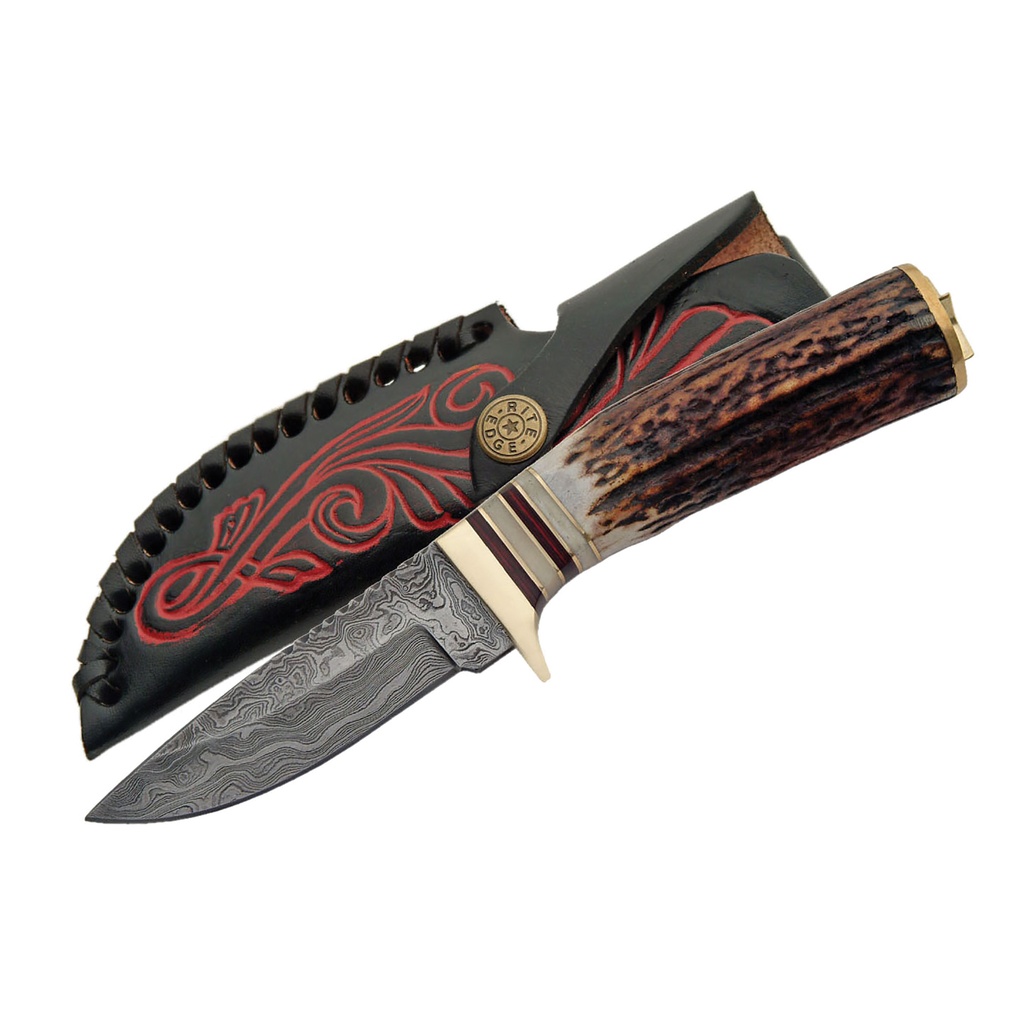
This fixed whitetail skinner is built for real field work, not the display case. An 8" full-tang design with a 3.5" Damascus drop-point blade gives you control where it matters—tight around joints and along the hide. The natural stag handle, brass guard, and leather belt sheath keep it in the classic hunting lane, with enough grip and balance to actually finish a deer, not just pose next to it.
Whitetail Ridge Field Skinner Knife - Stag Damascus
The Whitetail Ridge Field Skinner Knife is exactly what it looks like: a traditional hunting knife built to break down real animals, not cardboard. Full-tang, 8 inches overall, 3.5-inch Damascus drop point, stag handle, brass guard, leather belt sheath. No gimmicks, no fantasy angles—just a classic skinner that actually makes sense in a deer camp.
Fixed Blade Hunting Knife Built for Real Field Work
This isn’t an automatic knife, an OTF, or a switchblade—it’s a compact fixed blade hunting knife with the right geometry for skinning whitetail and similar game. The full-tang construction runs the steel through the entire length of the handle, which means predictable balance, no flex, and none of the mechanical failure points you get with folders or autos in heavy, messy work.
The 3.5-inch drop point is short enough to choke up on for fine control, but long enough to open up a deer cleanly. The blade length and belly profile matter here: too long and you’re fighting the tip around the rib cage; too short and you’re sawing instead of slicing. This lands in that proven sweet spot.
Damascus Blade Details: Why the Steel Matters
The Damascus blade isn’t just for looks. Layered steel gives you that distinctive patterned finish, but more importantly, it allows the maker to balance toughness and edge performance. While exact alloys vary by maker, typical hunting-grade Damascus in this style is heat-treated to hold an edge through a full field dressing without constant touch-ups.
Blade Geometry That Works on Whitetail
The drop-point profile with a plain edge is the right call for skinning. The spine carries enough thickness for strength, but the grind tapers cleanly to a working edge that slices hide rather than tearing it. The belly arc gives you a wide working section for long skinning passes, while the tip drops just enough to stay controllable around joints and under the hide.
Full Tang and Brass Guard: Control Under Pressure
Full-tang construction paired with a brass guard isn’t nostalgia—it’s functional. The guard stops your hand from sliding forward when things get slick, and the tang gives you a rigid platform you can trust when you’re twisting the blade through pelvis or joint work. Brass also adds a bit of front weight, which helps the knife settle into a stable, edge-down cutting position.
Stag Handle and Leather Sheath: Traditional, but For a Reason
The natural stag handle is more than just a pretty field photo. Stag gives you a textured, irregular surface that locks into your grip, even when your hands are cold or bloody. Unlike dead-smooth synthetics, that natural texture and contouring give you reference points—your hand knows where it is on the handle without looking.
The brass pommel cap closes the handle cleanly and protects the end of the stag, while decorative spacer work at the guard adds a custom-knife feel without turning it into a safe queen. The leather sheath is belt-carry, with tooling and laced edges that echo Western hunting traditions, but the important part is this: it keeps the knife oriented, secure, and accessible from a standing position at camp or in the field.
Field Use and Carry: Why This Size Works
At 8 inches overall with a 4.5-inch handle, this knife sits right in that practical hunting zone: enough handle for a full, gloved grip, enough blade to do every part of a deer, but not so large that it feels clumsy around tight anatomy. Belt carry means it rides where it should—on your hip, not buried in a pack when you actually need it.
Balance is slightly blade-forward, which is what you want on a skinner. It encourages slicing strokes and helps the edge stay engaged without constant hand pressure. It’s the difference between gliding along the hide and fighting your way through every cut.
What Buyers Ask Before Purchasing an Automatic Knife
This Whitetail Ridge Field Skinner is a fixed blade hunting knife, not an automatic knife, OTF, or switchblade—but the same buyers who hunt for an automatic knife for sale usually care about legality, mechanisms, and use cases. Let’s address those directly.
Are automatic knives legal?
Under U.S. federal law, automatic knives (often called autos or switchblades) are regulated mainly in terms of interstate commerce and shipping, not simple ownership. Federal rules restrict mailing and transport of switchblades across state lines in certain contexts, but they do not automatically ban individual ownership nationwide.
Legality is decided at the state and sometimes local level. Some states allow automatic knives and OTF knives for everyday carry with few limitations. Others restrict blade length, opening mechanism, or carry type (open vs. concealed). A few still heavily limit or ban autos and traditional switchblades outright.
This particular knife is a fixed blade hunting knife, which typically falls under a different legal category than an automatic knife. Still, before you buy an automatic knife or any fixed blade for carry, check your state and local laws—length limits, hunting regulations, and concealed carry rules can all apply.
What’s the difference between an automatic knife, OTF, and a switchblade?
An automatic knife uses an internal spring or stored energy to open the blade with the push of a button, lever, or similar control. Once you actuate it, the blade deploys under spring power—no wrist flick required.
OTF (out-the-front) knives are a subset of automatics where the blade slides straight out of the front of the handle. Many OTF knives are double-action: the same control both deploys and retracts the blade under spring tension. Side-opening automatics, by contrast, swing open like a traditional folding knife.
“Switchblade” is the older term that law and pop culture often use for automatic knives in general, especially side-openers. In modern enthusiast circles, we tend to use “automatic knife” as the technical umbrella, with OTF, side-opening, single-action, and double-action as more precise subtypes.
The Whitetail Ridge Field Skinner is none of these—it’s a full-tang fixed blade. No deployment mechanism, no spring, nothing to fail in the middle of a messy field dressing job. You draw it, you cut. That’s the entire mechanism story.
What makes this knife worth buying?
For a hunter or traditional knife collector, value comes from honest design: a Damascus drop point tuned for game processing, full-tang strength, a stag handle that actually improves grip in real conditions, and a leather sheath you won’t be embarrassed to wear at deer camp.
It bridges the gap between working tool and collectible—Damascus patterning, brass hardware, and leather tooling give it that custom feel, but the size, geometry, and construction are pure, functional hunting logic. You can hang it on the wall if you want, but it’s at its best elbow-deep in a whitetail.
For Hunters and Collectors Who Actually Use Their Knives
If you’re the kind of buyer who can talk steels and actions all day, but still believes a proper hunting knife should earn its keep in the field, this Whitetail Ridge Field Skinner Knife - Stag Damascus fits. Whether you’re here to buy an automatic knife for EDC or fill out your hunting kit with a traditional fixed blade, this is the piece that reminds you why simple, purpose-built knives never go out of style.
| Blade Length (inches) | 3.5 |
| Overall Length (inches) | 8 |
| Blade Color | Grey |
| Blade Finish | Patterned |
| Blade Style | Drop Point |
| Blade Edge | Plain |
| Blade Material | Damascus |
| Handle Finish | Natural |
| Handle Material | Stag |
| Theme | Damascus |
| Handle Length (inches) | 4.5 |
| Tang Type | Full tang |
| Pommel/Butt Cap | Brass cap |
| Carry Method | Belt carry |
| Sheath/Holster | Leather sheath |