
Backcountry Precision Twin-Active Water Treatment Kit - Blue Label
10 sold in last 24 hours
Think of this Twin-Active kit as the automatic knife of water treatment—compact, purpose-built, and deadly serious about performance. Two 1 oz bottles (Part A chlorine dioxide and Part B activator) work together to treat up to 30 gallons, whether your source is clear alpine flow or muddy stock tank. Dropper caps give you exact dosing, blue labels keep the steps idiot-proof under stress. It disappears in your pack until you need it, then quietly turns questionable water into something you can actually trust.
Backcountry Precision in a Bottle: Twin-Active Water Treatment Kit
Automatic knife people understand this instinctively: the right tool is the one that works every single time, in the real world, not just on paper. This Twin-Active chlorine dioxide water treatment kit plays the same role in your pack that a dialed-in automatic knife plays in your pocket—compact, mechanically simple, and brutally reliable when everything else starts to look sketchy.
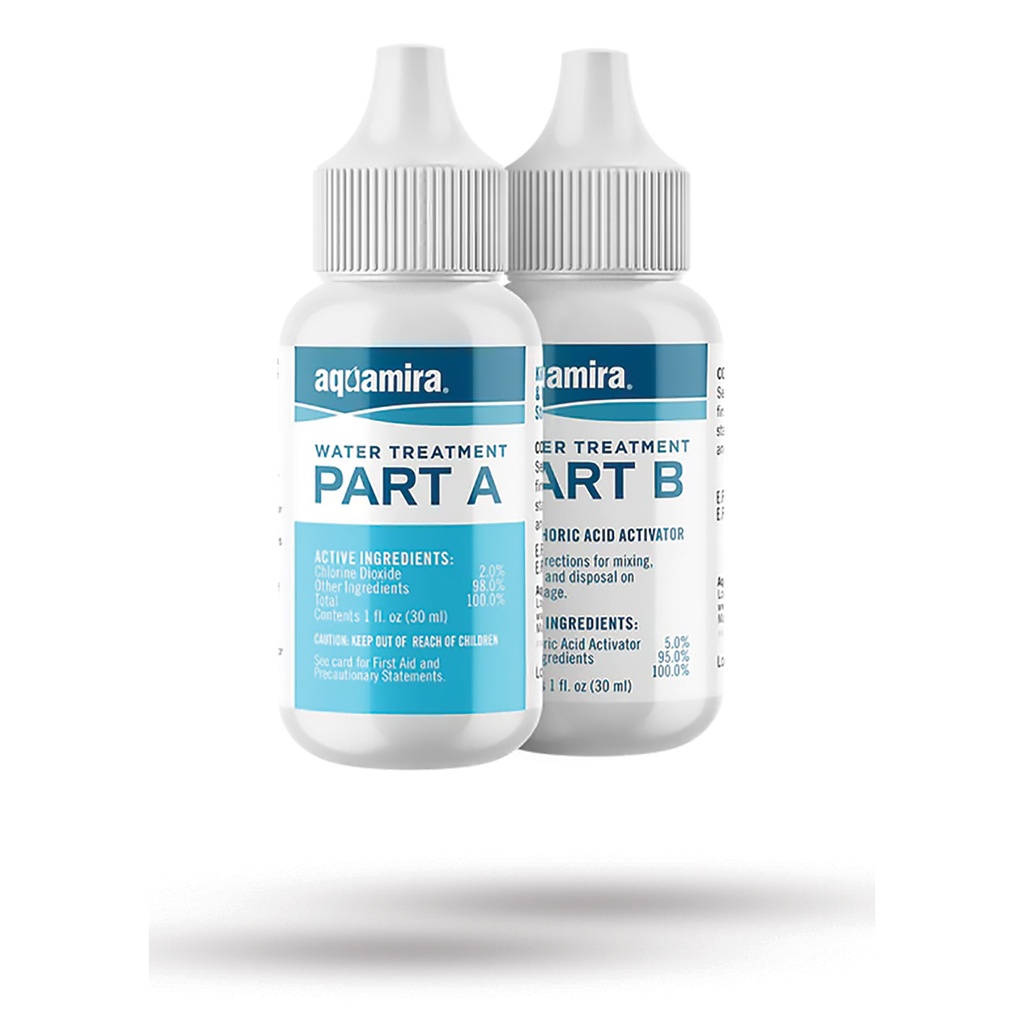
You’re looking at two 1 oz dropper bottles—Part A (chlorine dioxide) and Part B (phosphoric acid activator)—designed to treat up to 30 gallons of water. Clear stream, tannin-stained creek, or muddy stock pond, warm day or freezing morning: activate, wait, dose, and you’ve moved your water from ‘maybe’ to ‘drink it without second-guessing.’
Designed Like a Serious Tool, Not a Camping Toy
The blue-and-white clinical labels aren’t an accident. This is built more like a lab reagent than a novelty outdoors product. Part A is 2.0% chlorine dioxide in solution; Part B is a 5.0% phosphoric acid activator. You mix them first, let the reaction kick off, and then add the active mixture to your raw water. It’s the chemical equivalent of a tuned double-action mechanism—two parts working together to deliver force exactly where it matters.
Each bottle is compact, pocketable, and shaped for control. Fine-ribbed dropper caps give you grip with cold, wet fingers. The droppers mean measured, repeatable dosing instead of “splash and pray.” And the large PART A / PART B markings with blue banding are readable at a glance, even when your headlamp is on its last legs.
Why This Twin-Active Kit Belongs in the Same Bag as Your Best Automatic Knife
If you’re the type of buyer who actually knows the difference between an automatic, an OTF, and a classic side-opening switchblade, you also know there’s a big difference between ‘water purification’ marketing copy and chemistry that performs in the field. Chlorine dioxide is the workhorse here—it’s widely used in municipal and industrial treatment because it handles bacteria, viruses, and many protozoa better than old-school chlorine tabs, and it doesn’t leave your water tasting like you’re drinking a swimming pool.
Thirty gallons per kit means this isn’t a single-weekend gimmick. It’s realistic capacity for a backcountry season, a bug-out bag, or an RV tank backup. Unlike filters, there’s no moving part to clog, snap, or freeze solid. If the bottles are sealed and in date, the chemistry does its job, quietly.
Controlled Dosing, Repeatable Results
Automatic knife enthusiasts appreciate repeatability—you want the same crisp action on deployment number 500 that you felt on deployment number 5. This kit takes the same philosophy to water treatment. Dropper caps give you exact control over how much A and B you activate, and how much finished solution you add to your water volume. Whether you’re treating a single Nalgene or a multi-gallon camp container, you’re not guessing; you’re dosing.
Built for Real Backcountry, Not Just Catalog Photography
The visual story is simple: clinical blue labels, bold PART A / PART B text, minimal fluff. That’s what you want when you’re tired, cold, and trying not to screw up your only safe water source. The small twin-bottle form factor disappears in a cook kit, med pouch, or admin pocket alongside your favorite automatic knife. This is a piece of kit you forget about until conditions go sideways—and that’s exactly how it should be.
Mechanics of the Chemistry: How the Twin-Active System Works
Think of Part A and Part B as a double-action system: neither does what you need alone, but together they deliver the full stroke. Part A carries chlorine dioxide precursors in solution. Part B is a phosphoric acid activator. When you combine a measured number of drops from each, you trigger an acid-driven reaction that frees active chlorine dioxide gas into solution. After a short activation period, the mix is ready to be added to your raw water, where that active species starts oxidizing pathogens.
This approach has two advantages. First, shelf life: the components stay more stable when stored separately. Second, performance: you’re generating active treatment on the spot instead of trusting a pre-mixed solution that’s been losing strength on a warehouse shelf.
Clear, Muddy, Warm, or Cold—Why That Matters
The label calls out that this Twin-Active treatment works in clear or muddy, warm or cold sources. That isn’t marketing noise. Turbid water and low temperatures both make life harder for most treatment methods. Filters clog, UV gets blocked by silt, and cold slows chemical reactions. Chlorine dioxide remains effective across a broader range than classic chlorine, as long as you respect contact time. If you’re pulling from a silty source or near-freezing water, you give it more time to work, just as you’d cycle an automatic knife a few extra times when you’ve just torn it down and re-lubed it.
Practical Carry: Where This Kit Fits in Your System
For the same reason you don’t rely on one blade to do everything, you shouldn’t rely on one style of water treatment if you’re serious about preparedness. This Twin-Active set lives well alongside filters and UV pens as your chemical backbone. It’s ideal for:
- Backcountry kits: Light enough for multi-day trips, with capacity for long hauls.
- Emergency storage: Stash in home, vehicle, and go-bags as no-maintenance insurance.
- RV tanks and camp systems: Treat stored water or questionable campground hookups.
Because each component is sealed and compact, you can split the kit—one bottle in your daypack, one in your larger camp kit—without adding real bulk. It’s the water equivalent of tucking a backup automatic knife into a med pouch: small penalty, huge upside.
What Buyers Ask Before Purchasing an Automatic Knife
Different product category, same mindset: serious buyers want legal clarity, mechanical distinctions, and a clear reason to trust the tool. If you approach your water treatment like you approach choosing an automatic knife for sale, you’re asking the right questions.
Are automatic knives legal?
Under U.S. federal law, automatic knives (often called switchblades in legal language) are regulated primarily by the Federal Switchblade Act. That act restricts interstate commerce and mailing of automatic knives under certain conditions but does not create a blanket nationwide ban on ownership. The real complexity comes at the state and local level: some states allow automatic knives for general carry, some limit them to certain blade lengths, some restrict concealed carry, and a few still heavily regulate or prohibit them outright.
The takeaway is the same rule that applies to water treatment in the backcountry: know your environment. Before you buy automatic knife models for everyday carry, check your specific state and municipal laws, look for current guidance from reputable knife rights organizations, and assume that what’s legal in one jurisdiction may not be in the next county over.
What’s the difference between an automatic knife, OTF, and a switchblade?
Mechanically speaking, an automatic knife is any knife that opens its blade fully with a spring or stored energy when you actuate a button, lever, or similar control. Within that family, a switchblade is the term most laws use for side-opening automatics and, in many statutes, OTF designs as well. Enthusiasts usually use “switchblade” as the broad, legal-sounding term, and “automatic” as the mechanical category.
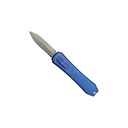
An OTF (out-the-front) automatic knife is a subtype where the blade deploys along the axis of the handle, exiting through a slot at the front. Many OTFs are double-action, meaning the same control both deploys and retracts the blade using spring power, while single-action OTFs fire automatically but must be manually reset. A classic side-opening automatic carries the blade folded in the handle and swings it out on a pivot when you hit the button or scale release. All of them rely on tuned springs, precise lockup, and clean geometry—the same kind of mechanical discipline that makes this Twin-Active water kit reliable in its own world.
What makes this automatic knife worth buying?
Translate that question to this product: What makes this Twin-Active water treatment kit worth packing? The answer is the same set of criteria you’d use on a serious automatic knife for sale:
- Mechanism: Two-part activation chemistry that generates fresh chlorine dioxide on demand, instead of hoping old tablets still work.
- Control: Dropper caps and clear labeling turn dosing into a repeatable process, not a guess.
- Capacity: Up to 30 gallons per kit means real-world utility, not a one-and-done gimmick.
- Form factor: Twin 1 oz bottles that ride unnoticed until the day you absolutely need them.
- Versatility: Effective across clear or muddy, warm or cold water sources with appropriate contact time.
In other words: you’re not buying flavored marketing. You’re buying chemistry that’s been doing heavy lifting in serious water treatment applications for years, packaged in a way that respects how gear actually gets used in the field.
For the Buyer Who Carries the Right Blade and the Right Backup
If you care enough to choose the right automatic knife for EDC—something with a tuned action, real steel, and honest lockup—you’re the exact buyer this Twin-Active kit was built for. It’s not flashy. It’s not trying to be. It’s a compact, clinically clean water treatment system that does its job with the same quiet competence you expect from your best gear.
Treat this the way you treat your favorite automatic knife: understand the mechanism, respect its limits, and give it a permanent slot in your loadout. When your water source looks questionable and your day is already going sideways, you’ll be glad you made that call.