Blackout Low-Ride Duty Handcuff Case - Nylon Black
3 sold in last 24 hours
This isn’t a fashion accessory, it’s quiet duty gear that works. The Blackout Low-Ride Duty Handcuff Case rides low on the belt, keeping your cuffs secure, protected, and out of the spotlight until you need them. Textured black nylon, reinforced binding, and a positive snap closure give you predictable, repeatable access on every grab. For patrol, security, or off-duty work, it’s built to match the pace of real shifts, not catalog photos.
Blackout Low-Ride Duty Handcuff Case – Built for Real Shifts
Some gear is for looking tactical in a catalog. This isn’t that. The Blackout Low-Ride Duty Handcuff Case is the kind of quiet equipment professionals actually depend on: low profile, secure snap, and durable nylon that doesn’t complain when the shift goes long. It’s meant to disappear on your belt until the second you reach for your cuffs.
Why This Duty Handcuff Case Earns Its Place on a Working Belt
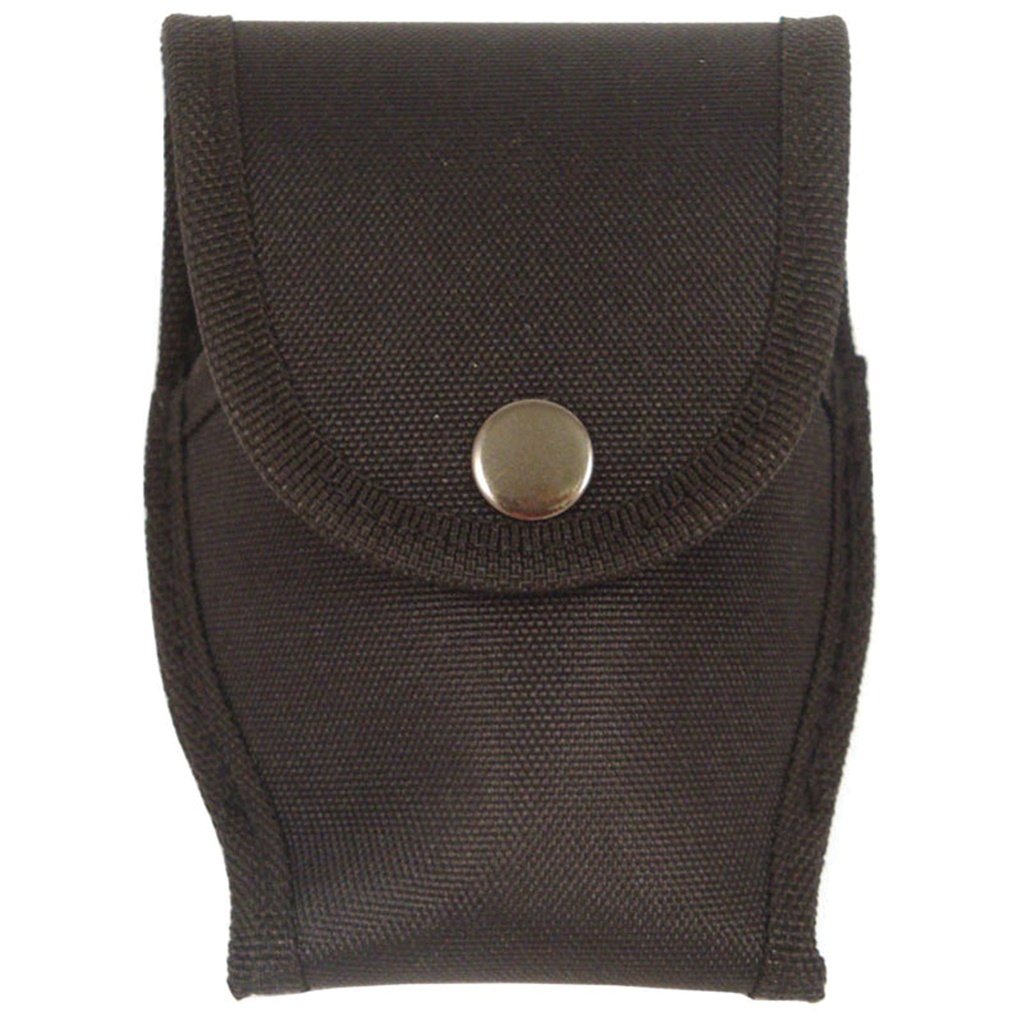
Look closely and the priorities are obvious. The case is compact and rides low, following the vertical line of a standard duty belt so it doesn’t snag on door frames, seatbelts, or gear in the next keeper slot. The curved flap gives you a clean purchase as you come in with the thumb, even under stress, sweat, or gloves.
The single front snap is deliberate: one motion, one point of failure removed from the equation. No Velcro to telegraph your movement, no extra straps to fumble with. Just a firm, centered snap you can open and close by feel. When you’re working a crowded scene, that difference matters.
Snap Closure and Access: The Mechanics of a Clean Draw
With restraint gear, access speed is as much about consistency as it is about raw speed. This handcuff case uses a classic snap closure tuned for predictable resistance. You get a quiet but definite break when you pop the flap, so you know it’s open without needing to look down.
Low-Ride Belt Mounting for Realistic Movement
The low-ride mount is there for a reason: it drops the case just enough below the beltline to clear body armor, outer carriers, and bulkier jackets, without dangling into awkward territory. That means you can get your hand around the case, index the flap, and clear the cuffs in one fluid motion whether you’re standing, seated in the unit, or moving through a hallway.
Quiet Snap, Minimal Signature
The snap closure also keeps your profile quiet. Unlike hook-and-loop closures, you don’t announce every adjustment or every readiness check. For security, loss prevention, and plainclothes roles, that low acoustic signature is more than a comfort feature—it’s part of staying professional and controlled.
Duty-Grade Nylon Construction That Handles Daily Abuse
This case is built from textured black nylon with reinforced edge binding. That texture isn’t cosmetic; it gives the pouch enough structure to keep its shape under pressure while resisting fraying and fuzzing that softer fabrics develop after real-world use.
The stitched seams and bound edges do two jobs: hold the pouch’s geometry so it continues to accept standard handcuffs cleanly, and protect against the belt rubbing and seatbelt abrasion that slowly kill cheaper cases. Over time, that means less collapsing, less sag, and fewer missed re-holsters when you’re trying to re-secure cuffs one-handed.
Professional Presentation Without Flash
There’s no logo screaming for attention on the front, no contrasting thread, and no gimmick panels. Just solid black, a single satin-finish snap, and a shape that reads as professional from five feet away. On a duty belt, this blends into the rest of your loadout and lets your uniform, not your gear, do the talking.
For law enforcement, security, and corrections work, that understated approach matters. Your equipment should look like it belongs there, not like it’s trying to be the main character.
Carry Reality: How This Handcuff Case Works on Shift
On the belt, the low-profile design keeps the case close to your body. That means fewer hang-ups when getting in and out of vehicles and less bulk catching on seatbelts, door jambs, or railings. The structured body helps you reinsert cuffs without wrestling soft fabric out of the way.
Whether you’re setting up your belt for dominant-side draws or running this as a support-side backup for a second pair of cuffs, the consistent shape and central snap help you build usable muscle memory quickly. The case protects your cuffs from grit and pocket debris while leaving them exactly where you expect them to be.
What Buyers Ask Before Purchasing an Automatic Knife
Are automatic knives legal?
Under U.S. federal law, automatic knives are regulated but not outright banned. Federal restrictions mainly address interstate commerce and shipping, particularly through the U.S. Postal Service. The real deciding factor is state and local law: some states allow automatic knives to be owned and carried with few restrictions, others limit blade length, opening mechanism, or who may carry them (for example, only law enforcement or military), and a few are still highly restrictive. Before you buy or carry any automatic knife, you need to check the current statutes where you live and where you’ll be carrying—state law, city ordinances, and even county rules can all apply. When in doubt, consult official legal sources or an attorney rather than relying on hearsay.
What’s the difference between an automatic knife, OTF, and a switchblade?
Mechanically, an automatic knife is any knife that opens its blade using an internal spring when you press a button, switch, or lever in the handle. Most side-opening autos pivot the blade out from the side, like a standard folder that finishes its arc under spring power.
An OTF (out-the-front) automatic knife is a subset of automatics where the blade travels linearly out of the front of the handle instead of pivoting from the side. Many OTFs are double-action: the same slide or switch both deploys and retracts the blade using internal springs and track systems.
“Switchblade” is largely a legal and cultural term that usually refers to automatic knives in general, especially side-opening autos, in statutes and older literature. Enthusiasts tend to use “automatic” for the mechanism category, “OTF” for that specific front-deploying design, and reserve “switchblade” when they’re quoting law or talking historical patterns.
What makes this automatic knife worth buying?
When you evaluate an automatic knife, the same criteria that matter to serious users apply: a reliable, repeatable deployment; a lockup that doesn’t chatter or flex under pressure; steel that balances hardness with toughness and real-world edge retention; and construction that stays tight after hundreds of cycles. A well-built automatic knife will deploy with authority but without grinding or bounce, show minimal blade play, and use hardware and handle materials that handle the extra stress an auto mechanism generates. Those are the pieces that separate a serious automatic from a novelty button-opener.
Why This Handcuff Case Belongs in a Serious Kit
If you’re the kind of buyer who obsesses over the mechanics of an automatic knife’s action, you already understand why small details in carry gear matter. The Blackout Low-Ride Duty Handcuff Case takes that same seriousness and applies it to restraint carry: a predictable snap instead of noisy Velcro, a low-ride profile instead of boxy bulk, and duty-grade nylon instead of soft, collapsing fabric.
It’s a quiet piece of kit that supports the rest of your loadout—automatic knife, flashlight, sidearm, and cuffs—by doing its job without drama. For professionals and prepared civilians alike, this is the kind of understated, purpose-built gear that keeps your system clean, efficient, and ready when it counts.