
Command Grip Double-Lock Handcuffs - Black Carbon Steel
8 sold in last 24 hours
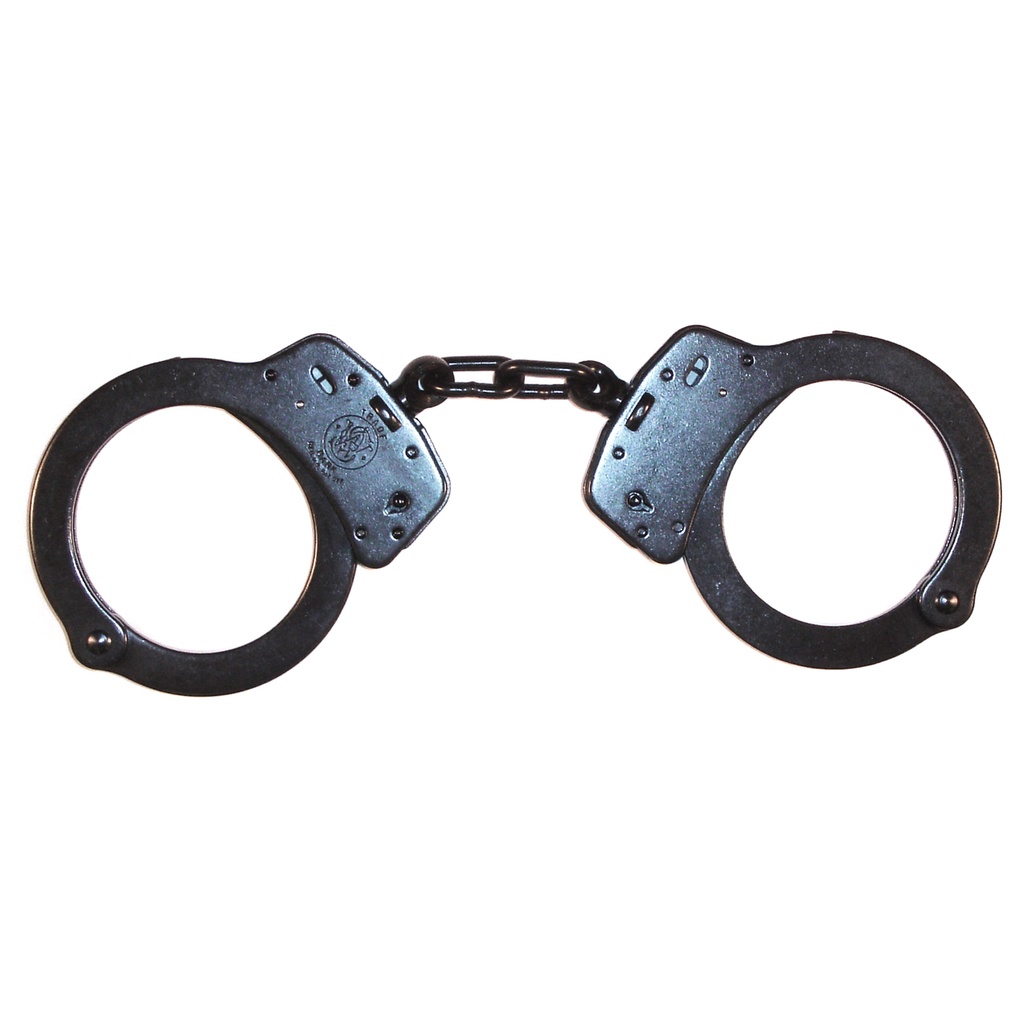
These Smith & Wesson Command Grip Double-Lock Handcuffs in black carbon steel are built for professionals who can’t afford failure. The swing-through design snaps cleanly, while the positive double-lock prevents over-tightening once the subject is secured. Heat-treated carbon steel and a matte black finish keep the cuffs rigid, discreet, and reliable under real load—not just in a display case. For law enforcement, security, or serious training use, this is a restraint built like actual duty gear, not costume hardware.
Command Grip Double-Lock Handcuffs - Built for Real Control
When you pick up a pair of serious restraints, you shouldn’t be wondering if they’re going to flex, bind, or pop open at the worst possible moment. These Smith & Wesson Command Grip Double-Lock Handcuffs in black carbon steel are purpose-built for professional restraint—law enforcement, security, or anyone running realistic training where equipment has to behave like duty gear.
This isn’t a toy, and it’s not novelty hardware. It’s a classic chain-link handcuff layout, executed in heat-treated carbon steel with a positive double-lock that gives you predictable control over fit and compression on the wrist.
Mechanics That Matter: Double-Locking, Swing-Through Control
In the restraint world, mechanism matters every bit as much as it does on a precision automatic knife. These handcuffs use a standard swing-through arm design: the bow swings cleanly through the ratchet, bites, and locks on the wrist with audible, tactile clicks. That feedback is your first layer of control—you know exactly how many notches you’ve taken, even under stress, low light, or gloves.
Why Double-Lock Is Non-Negotiable
The double-lock mechanism is the second, and arguably most important, layer. Once the cuffs are applied and properly sized, you engage the double-lock using the key. That does two crucial things:
- Prevents further tightening on the wrist, reducing the risk of nerve compression and injury during movement or transport.
- Locks out casual tampering with the ratchet, making it significantly harder for a restrained subject to work the bow tighter or looser against the pawl.
In other words, single-lock cuffs just hold; double-lock cuffs stabilize. That’s the difference between basic hardware and professional restraint equipment.
Heat-Treated Carbon Steel: Why the Steel Choice Matters
Smith & Wesson builds these with heat-treated carbon steel, and that’s not marketing fluff. Heat treatment on carbon steel here is about three things:
- Rigidity under torque: When a subject twists, pulls, or tries to lever against the chain, you need the bows and lock housings to resist flex. Heat-treated carbon steel keeps its shape instead of warping.
- Wear resistance on the ratchet teeth: Every click you hear is steel on steel. Softer metals round off over time; hardened carbon steel teeth keep their bite and their precision fit with the pawl.
- Structural integrity at the pivots: The riveted joints at the bow and chain need to survive repeated cycles, drops, and impact without loosening. Proper heat treatment keeps those pivot points tight and reliable.
This is the same mindset knife people bring to blade steel and heat treat—you’re not just buying material, you’re buying how it’s been hardened and tuned for the job.
Professional Chain-Link Design with Matte Black Discretion
The chain-link style is a deliberate choice. Versus rigid or hinged variants, a three-link chain:
- Gives more flexibility in positioning behind the back, on the side, or during transport.
- Absorbs sudden movement a bit more gracefully, instead of transferring every jolt directly into the wrist.
- Plays better with a variety of body types and cuffing positions in the real world.
Rounded inner edges on the bows help reduce hot spots and cutting pressure when sized correctly, while still maintaining a secure, unforgiving hold. The matte black finish keeps reflections down—useful in tactical or low-profile environments—and visually separates these from the chrome novelty cuffs you see in cheap costume kits.
Collector and Trainer Value: Why These Cuffs Belong in a Serious Kit
For collectors and trainers who already appreciate precision mechanisms—people who own quality automatic knives, real-duty holsters, and proper lights—these handcuffs fit right into that ecosystem. They carry the Smith & Wesson crest, which in the restraint space signals duty-grade intent, not boutique cosplay.
They’re ideal for:
- LE and security professionals who want a spare or dedicated training set that behaves like their primary duty cuffs.
- Instructors who need consistent, repeatable mechanical behavior across drills and scenarios.
- Collectors who build out complete duty rigs and want the restraint component to match the seriousness of their sidearm and blade choices.
Legal and Use Context: What You Need to Know
Handcuffs don’t ride the same legal line as an automatic knife or switchblade, but that doesn’t mean there are no rules. In most of the United States, owning and possessing handcuffs is legal for civilians. However, context and intent matter.
- Impersonation laws: Many states have strict penalties for impersonating law enforcement. Running a full-duty belt with cuffs, badges, and other LE identifiers in public, especially while acting as if you have authority, can get you charged.
- Unlawful restraint: Using handcuffs on another person without legal justification or clear consent can move you into criminal territory very quickly. These are real restraints, not stage props.
- Professional policies: If you’re LE or security, your agency or employer may restrict what brands or models you’re allowed to carry on duty. These are serious-duty cuffs, but you should still confirm policy before deploying them on the job.
If you’re used to parsing knife laws—automatic knife legal to carry here, banned there—the same discipline applies: know your local statutes and use these cuffs responsibly.
What Buyers Ask Before Purchasing an Automatic Knife
Are automatic knives legal?
Under U.S. federal law, automatic knives (often called switchblades in the legal code) are regulated primarily in terms of interstate commerce and shipping, especially to certain restricted jurisdictions and federal properties. Recent changes under the Federal Switchblade Act have opened the door for more lawful commerce, but the real complexity is at the state and local level. Some states allow automatic knives for EDC with few limits, some restrict blade length, opening mechanism, or carry type, and others still prohibit possession outright. Before you buy or carry an automatic knife, check your current state and city statutes—not last year’s forum thread. Treat it like any serious piece of kit: verified information first, then purchase and carry.
What’s the difference between an automatic knife, OTF, and a switchblade?
Mechanically, an automatic knife is any folding knife where the blade is deployed by a spring or stored energy, triggered by a button, lever, or similar actuator in the handle. A classic side-opening automatic looks like a conventional folder that snaps open under spring power once you trip the mechanism.
An OTF knife (out-the-front) is a specific subclass of automatic where the blade travels linearly out of the front of the handle instead of pivoting from the side. Many OTF knives are double action, meaning the same slider both deploys and retracts the blade under spring tension.
Switchblade is largely a legal and cultural term—U.S. statutes often use it to describe what enthusiasts call automatic knives. In enthusiast language, “automatic” is the mechanical category, “OTF” is a subtype, and “switchblade” is the catch-all word that shows up in law books and old headlines.
What makes this automatic knife worth buying?
When you evaluate an automatic knife, you look for clean, decisive deployment, lockup with minimal play, a reliable button or slider interface, and blade steel that justifies the mechanism wrapped around it. The best automatic knife for EDC doesn’t just fire hard—it returns to battery the same way, every time, with a spring and pivot system that shrugs off daily use. You’re paying for tuned action, proper heat treat on the blade steel, and a handle design that actually controls the recoil of deployment. The knives that earn long-term pocket time are the ones that feel engineered, not just spring-loaded.
Why These Cuffs Belong Next to Your Best Gear
If you already care enough to seek out a proper automatic knife for sale, you understand the difference between gear that just looks the part and gear that’s mechanically honest. These Smith & Wesson Command Grip Double-Lock Handcuffs in black carbon steel sit firmly in that latter category.
They bring the same priorities serious knife people look for—heat-treated steel, tuned mechanisms, predictable behavior under stress—into the restraint world. Whether they’re going on a duty belt, into a training kit, or into a serious collection of professional-grade tools, they earn their space by function, not flash.
For the buyer who wants every piece of their loadout to be as intentional as their favorite automatic knife, these handcuffs deliver professional restraint in a package that’s as straightforward and uncompromising as it looks.