Trailhead Recon Modular EDC Backpack - Desert Tan
13 sold in last 24 hours
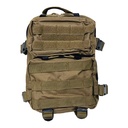
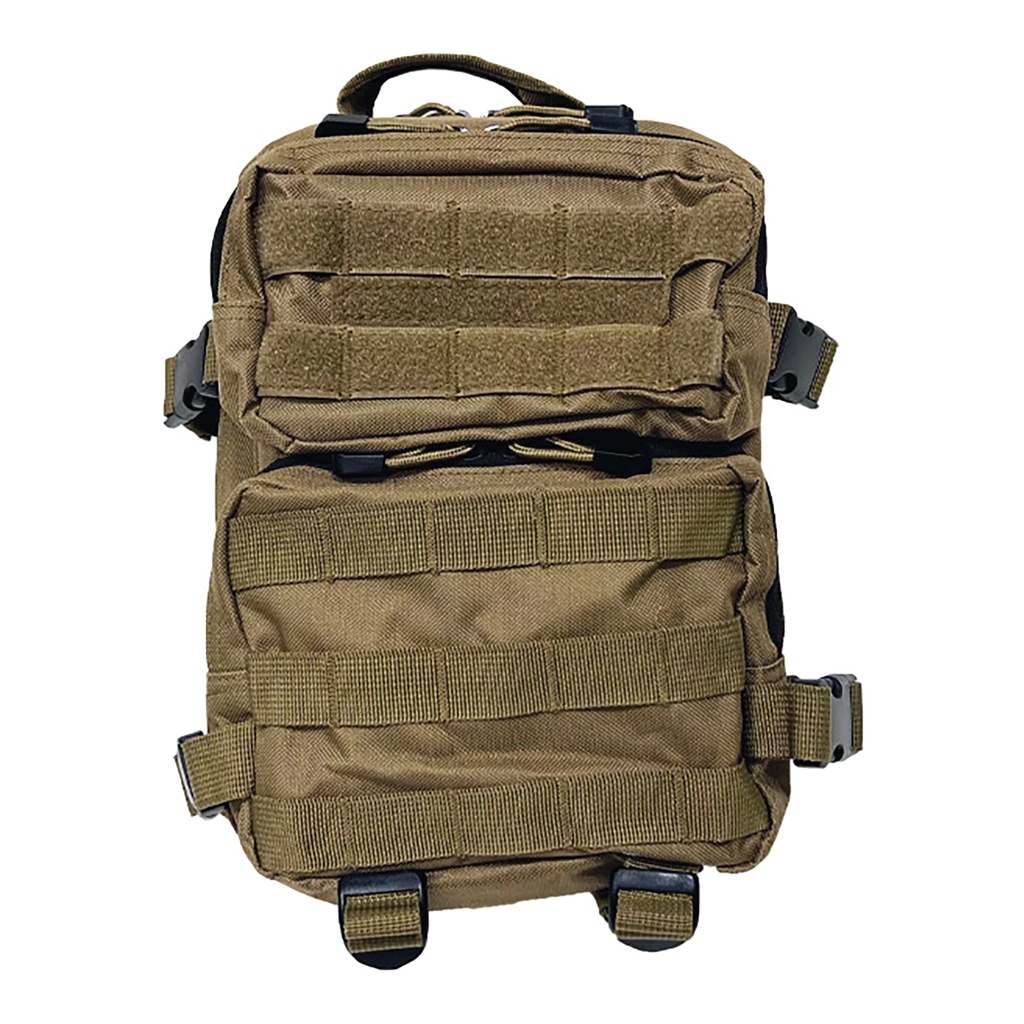
Built like a compact recon rig, this tactical backpack moves cleanly from trailhead to train platform. The modular MOLLE grid, hook-and-loop patch panel, and four compression straps let you tune the loadout instead of letting it slop around. A pair of bottom straps handles bedrolls or jackets without eating interior space. If your idea of EDC is more mission board than junk drawer, this desert tan pack is the low‑profile solution.
Desert Recon Modular Tactical Backpack Built for Real-World EDC
This isn’t a fashion pack with some token webbing slapped on. The Desert Recon Modular Tactical Backpack in desert tan is a compact EDC bag laid out like real field gear: full MOLLE grid, hook-and-loop patch panel, four compression straps, and dedicated bottom carry straps. It’s sized to move fast, but structured to carry like a scaled-down ruck, not a sagging school bag.
Modular Tactical Backpack for Sale with True MOLLE Utility
The front and side panels run proper MOLLE/PALS-style webbing, giving you real attachment space for extra pouches, IFAKs, admin panels, and tool sleeves. This isn’t decorative stitchwork; the rows are evenly spaced, box-stitched, and ready to take the torque of loaded external gear. For the user who already understands why MOLLE beats fixed-pocket layouts, this pack plugs straight into your existing ecosystem of pouches and organizers.
Front Hook-and-Loop Patch Panel for ID and Fast Recognition
The front hook-and-loop field earns its real estate. Run ID, blood type, unit tag, or just your favorite morale patch — the point is fast visual recognition in a stack of tan and black bags. In a car trunk, gear room, or overhead bin, this panel lets you mark your pack instantly without relying on color-pop fashion tricks.
Compression Straps That Actually Do Their Job
Four side compression straps with side-release buckles let you cinch the load down when the bag isn’t full, keeping the weight close to your spine instead of drifting outward. That means less sway when you move, less fatigue on long days, and fewer noisy, shifting contents. Real users know: compression isn’t decoration, it’s control.
Compact EDC Daypack That Carries Like Mission Gear
This is a compact tactical backpack by footprint, but the layout is unapologetically mission-driven. You get a main compartment for bulk items and a front zip pocket for quick-access gear. Dual zipper pulls with corded tabs allow you to get in and out even with gloves or cold hands. The top carry handle is reinforced so you can grab and drag without babying the stitching.
Bottom Straps for External Carry When Space Really Matters
Two adjustable bottom straps with buckles handle the gear that never rides well inside: a light jacket, poncho, compact bedroll, or tripod-style item. Keeping these pieces outside frees interior volume for the objects that actually need protection and organization, instead of forcing you to cram soft goods into hard-edged storage spaces.
Low-Profile Desert Tan That Blends, Not Shouts
Desert tan fabric with black hardware hits the sweet spot between overt tactical and bland commuter. In the field, it stays muted and functional. In the city, it reads as serious gear rather than cosplay. For users who prefer substance over neon branding, this colorway does its job and stays out of the conversation.
Why This Tactical Backpack Belongs in a Serious EDC Setup
Collectors obsess over knives; serious users obsess over the system that supports those knives — lights, med, tools, and the bag that carries it all. This modular tactical backpack respects that mindset. The MOLLE grid means you define the layout instead of surrendering to someone else’s idea of pocket hierarchy. The compact scale keeps you honest about weight and bulk. The compression and bottom straps let you move between light urban carry and fully built-out day missions without changing packs.
Think of it as a chassis: simple, rigid where it matters, adaptable everywhere else. It doesn’t try to be a rolling wardrobe. It’s a small, disciplined platform that rewards a user who actually curates their kit.
Carry Reality: From Trailhead to Train Platform
On the trail, this desert tan backpack carries hydration, layers, and essentials without ballooning into a hiking pack. On the commute, it takes tech, notebooks, and daily carry without looking like you raided a surplus store for cosplay. The rectangular profile rides close to the back, and the side cinch straps keep the center of gravity tight when you’re moving fast or weaving through crowds.
Attach an IFAK on the side, a utility pouch on the front, and you’ve got a dedicated everyday rig that stays consistent whether you’re on dirt or concrete. That consistency is what experienced users chase — one layout, learned once, used everywhere.
What Buyers Ask Before Purchasing an Automatic Knife
Are automatic knives legal?
Legality on automatic knives in the U.S. is a blend of federal baseline and state-level detail. Federally, the Switchblade Knife Act restricts interstate commerce and mailing of automatic knives, with carve-outs for military, law enforcement, and some occupational use. Day-to-day legality, though, comes down to your state and sometimes your city or county. Some states allow automatic knives with blade-length limits, others restrict carry but allow ownership, and a few still have outright bans. Before you buy or carry any automatic knife, check your current state and local laws — not last year’s forum posts — and verify whether automatic, OTF, or traditional side-opening autos are treated differently where you live.
What’s the difference between an automatic knife, OTF, and a switchblade?
In enthusiast language, “automatic knife” usually means a side-opening auto: you hit a button or switch, the blade swings out from the side under spring tension, and locks. An OTF (out-the-front) automatic deploys the blade linearly through a slot in the handle; double-action OTFs use the same control to fire and retract, while single-action OTFs auto-deploy and must be manually reset. “Switchblade” is the older, legally loaded term that U.S. law uses to describe automatic knives in general. Collectors tend to be precise: all OTFs are automatic knives, but not all automatic knives are OTFs, and “switchblade” usually gets reserved for legal discussion or classic side-opening autos.
What makes this automatic knife worth buying?
For a serious buyer, the value in an automatic knife comes from the action, lockup, and steel working together, not a flashy name. A good auto fires decisively every time without excessive blade play, uses a steel that can hold a working edge instead of just looking pretty, and is built on hardware that can survive thousands of cycles without loosening into a rattle. Add a handle design that actually respects grip under real use — wet, gloved, or cold — and you’ve got something worth slotting into an EDC rotation or a collection drawer. You’re not paying for the idea of "automatic"; you’re paying for a repeatable, trustworthy mechanical event every time you hit that actuator.
Choose Gear That Matches Your Intent
Whether you’re tuning an everyday loadout around a favorite automatic knife or building a lean urban/outdoor crossover kit, the Desert Recon Modular Tactical Backpack in desert tan earns its place by doing one job well: carrying your system without getting in the way. Serious users know — when the rest of the gear matters, the pack can’t be the weak link.