Signal Grid High-Visibility Tactical Backpack - Vibrant Pink
13 sold in last 24 hours
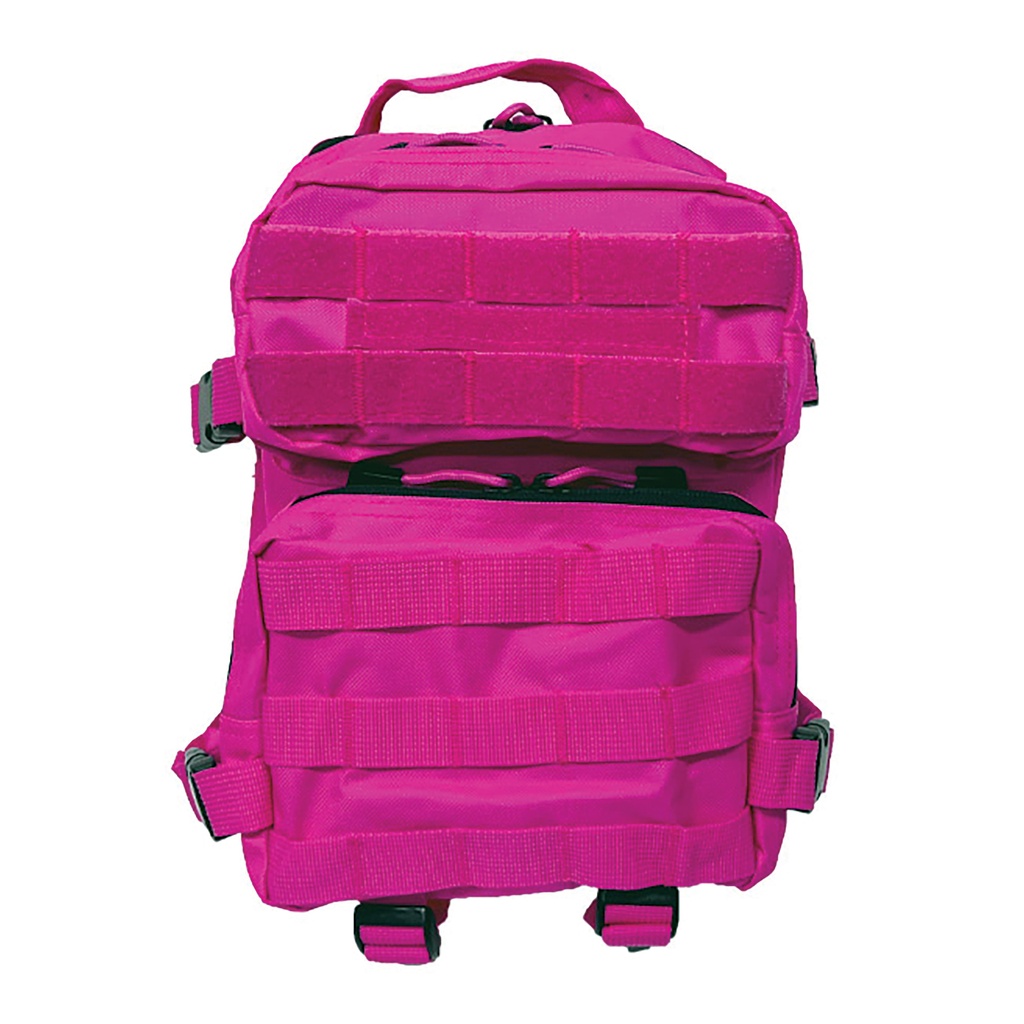
This isn’t another anonymous black bag. The Signal Grid High-Visibility Tactical Backpack takes true modular EDC architecture—MOLLE webbing, a patch-ready front panel, four compression straps, and dual bottom gear straps—and wraps it in uncompromising vibrant pink. With a 396 cu. in. main compartment plus two quick-access front pockets, it runs lean, fast, and organized. If your tactical backbone is squared away but you refuse to blend into the background, this is the pack that carries like gear, not fashion.
Signal Grid Tactical Backpack for Sale – Built Like Gear, Not Merch
The Signal Grid High-Visibility Tactical Backpack is what happens when you take a real modular loadout layout—MOLLE webbing, cinch straps, patch panel—and refuse to drown it in flat black or muddy camo. This is a tactical EDC daypack built like field gear but finished in unapologetic vibrant pink, for buyers who care more about function than following a dress code.
Why This Tactical Backpack Belongs in a Serious EDC Rotation
Forget disposable fashion packs. This bag is laid out like someone actually thought about how you stage, access, and secure your kit. A 396 cu. in. main compartment sits at the core—enough room for a tight daily carry loadout without encouraging you to haul your entire closet. Two front quick-access pockets sit on deck for the things you actually need on demand: chargers, med kit, notebook, flashlight, or whatever your version of "essentials" is.
Four side cinch straps and two adjustable bottom straps do the work cheap bags skip. Dial the profile down when the pack isn't full so it rides close and doesn't flop, or lash in extra gear—jacket, tripod, bedroll—without ballooning the silhouette. Everything is managed by real webbing and side-release buckles, not decorative strapping.
MOLLE, Patch Panel, and the Mechanics of Modular Carry
The front of the Signal Grid isn't just there for looks. The MOLLE webbing and hook-and-loop patch panel turn this from a simple backpack into a modular platform. If you run pouches, you already know why that matters: MOLLE rows let you push first-line gear—IFAK, tourniquet, multitool, admin pouch—onto the outside, where it stays accessible and offloads the main compartment.
Patch-Ready Front Panel: Identity Without Compromising Function
Above the webbing sits a rectangular patch panel. This is morale patch, blood type, unit tag, or club logo territory. It's a functional nod to law enforcement and military rigs, but you don't need a badge to appreciate fast ID. In a pile of bags at the gym, on a range table, or at a campsite, that front panel plus the vibrant pink shell means your pack won't go home with someone else by accident.
Compression and Bottom Straps: Load Discipline on the Move
Four cinch straps on the sides let you compress the entire load. Less bounce when you move, less sway on uneven ground, less fatigue over a day of carry. The two bottom straps are your external staging lane: stuff a rolled-up jacket, blanket, camping pad, or even a compact tripod under there and lock it down without stealing space inside. It's classic tactical pack logic, just executed in a compact EDC footprint.
High-Visibility Tactical Backpack for Sale – Why the Pink Actually Matters
The vibrant pink finish isn't a gimmick; it's a deliberate design choice. Traditional tactical gear leans on greens, tans, and blacks for concealment. Urban and everyday carry often benefit from the opposite. High-visibility color makes your pack easy to identify in a crowd, hard to forget in a vehicle, and simple to spot in low light. Whether you're navigating a campus, a festival, a range day, or a weekend trip, there’s real value in not blending in.
For buyers bored of yet another black rectangle but unwilling to give up MOLLE, compression, and real structural support, this backpack is the middle ground: full tactical layout, zero tacticool cosplay. You get the same modularity and strap logic you'd expect from a field pack, translated into an urban, unmistakable shell.
Carry Reality: How the Signal Grid Pack Works Day to Day
EDC lives or dies on how it carries, not how it poses in photos. This compact tactical backpack is built around a rectangular, structured silhouette with a reinforced feel. That boxy profile isn't an accident—it makes the pack stackable, easy to stage in a vehicle, and more efficient when packing flat items like tablets, notebooks, or organizers.
A top grab handle gives you a quick rip-and-go option for tight spaces—overhead bins, car floors, under desks—while padded shoulder straps handle sustained carry. Zippered compartments run on heavy-duty tracks with dual pulls, so you can open and close from either side instead of fighting a single slider. It’s the sort of detail you only appreciate when you’ve dealt with a cheap zipper blowing out at the worst possible time.
What Buyers Ask Before Purchasing an Automatic Knife
Are automatic knives legal?
Federal law in the U.S. (the Switchblade Knife Act) mainly regulates interstate commerce and shipping of automatic knives, not simple ownership. Whether an automatic knife is legal to carry depends on your state and sometimes even your city or county. Some states allow automatic knives with few restrictions; others limit blade length, opening mechanism, or who can carry them; a few still prohibit them outright. Before you buy or carry any automatic, OTF, or switchblade, check current local and state laws from an official source—statutes change, and "I didn’t know" never holds up in court.
What's the difference between an automatic knife, OTF, and a switchblade?
Collectors use these terms precisely. An automatic knife is any knife that opens its blade using a spring or stored energy with a button, lever, or similar control—most side-openers fall in this category. An OTF (out-the-front) knife is a sub-type of automatic where the blade deploys straight out of the handle’s front instead of pivoting from the side; it can be single-action or double-action, depending on whether the same control both opens and retracts the blade. Switchblade is the older legal and cultural term that usually refers to automatic knives in general, especially in statutes. In practice, all OTFs are automatics, but not all automatics are OTFs—and serious buyers make that distinction.
What makes this automatic knife worth buying?
When you're looking at an automatic knife for sale, the value comes from the details you can't fake: a reliable, consistent firing action that locks up solid without excessive play; steel that's heat-treated correctly so it takes and holds an edge instead of rolling the first time it meets real work; and hardware that's tuned and aligned so the blade tracks cleanly along its path. Add in ergonomics that let you index the release without shifting grip, and you’ve got a piece that earns carry time instead of sitting in a drawer with the novelty purchases.
Why This Pack Belongs Next to Your Knives and Not in a Closet
Serious automatic knife buyers think in systems: blade, light, med, notebook, tools, and the pack that keeps it all squared away. The Signal Grid High-Visibility Tactical Backpack plays that role without pretending to be a rucksack for a deployment you’re not on. It’s a compact, modular EDC platform with real MOLLE real estate, functional compression, and a patch-ready grid, all wrapped in a vibrant pink shell that refuses to disappear in a lineup.
If you’re the kind of buyer who notices hardware, layout, and how gear actually deploys and stows—not just the colorway—this pack is built to sit in the same ecosystem as your best automatic knife for EDC. It’s unapologetically tactical where it matters, unapologetically visible everywhere else.