Shadowline Stealth EDC Backpack - Midnight Black
13 sold in last 24 hours
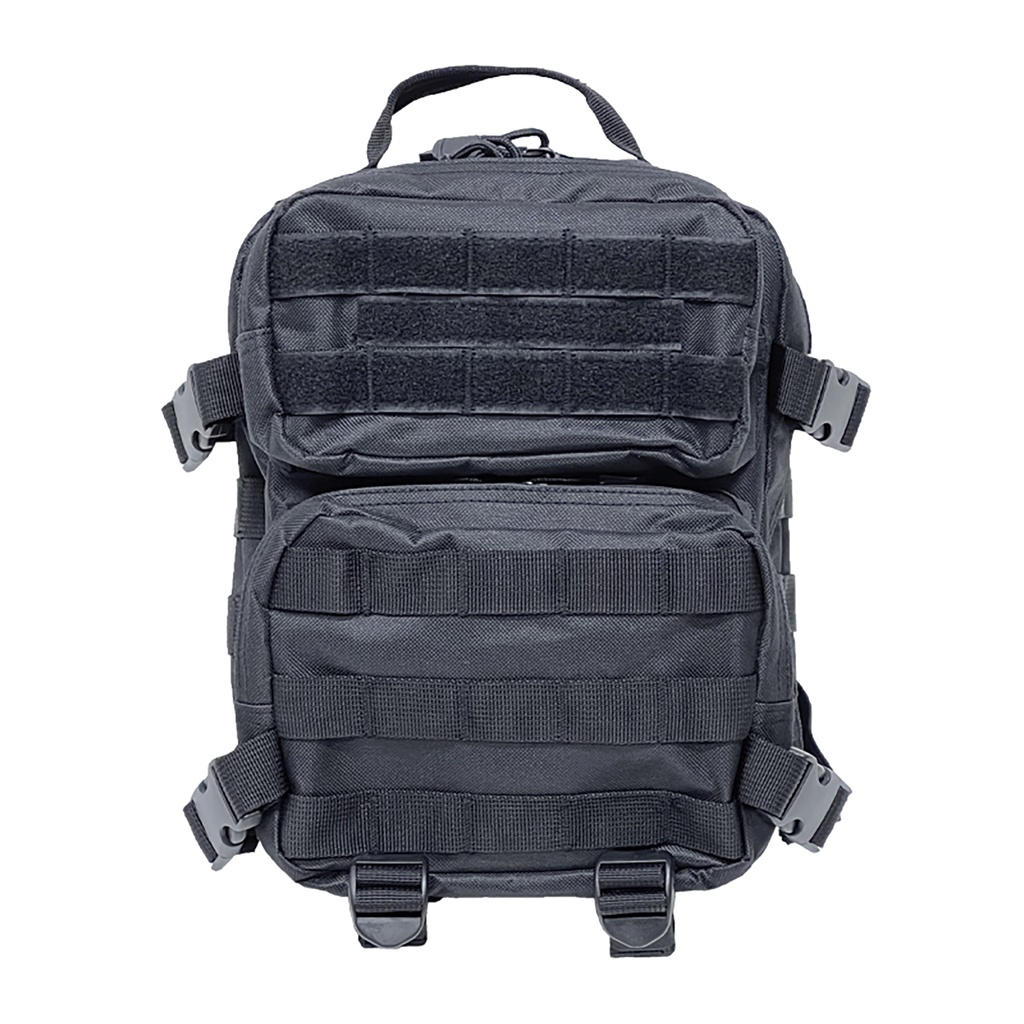
A tactical backpack should ride quiet and stay organized. The Shadowline Stealth EDC Backpack in midnight black does exactly that. A 396 cu. in. main compartment, dual quick-access pockets, and front MOLLE grid keep your layout tight and modular. Side compression straps lock the load down; a loop patch panel lets you mark your kit without shouting about it. For urban EDC, range runs, or low-profile duty carry, this pack stays out of the way until it’s time to work.
Shadowline Stealth EDC Backpack - Built Like Real Gear, Not Decor
The Shadowline Stealth EDC Backpack in midnight black is what happens when you take tactical DNA seriously and strip out everything cosmetic. No loud logos. No fake MOLLE. Just a compact, low-profile backpack built for people who think in terms of layout, access, and load discipline.
This isn’t a fashion bag playing soldier. It’s a quiet, modular EDC platform sized for everyday use but spec’d like gear you’d trust on a long shift or hard weekend.
Low-Profile Tactical Backpack for Serious Everyday Carry
Visually, this backpack disappears: full blackout exterior, clean rectangular profile, no contrast stitching, no shine. That’s deliberate. A proper low-profile tactical EDC backpack should blend into an office, a truck cab, or a night street without advertising what’s inside.
At 396 cu. in. of main compartment volume, it’s tuned for essentials, not camping trips. Think: med kit, tools, tablet, cable roll, gloves, light jacket—everything you actually use on a daily rotation. The single main compartment keeps bulk centralized, while the front pockets, MOLLE, and compression system handle the rest of the organization.
Tactical Layout: Where the "Grid" Earns Its Name
The defining feature is the lower front pocket wrapped in true horizontal MOLLE webbing. That grid isn’t decoration; it’s a mounting surface. Pouch your IFAK, a small admin panel, a light sheath, or a compact tool roll exactly where your hand expects to find it. The spacing is set to standard tactical dimensions, so the same accessories you’d run on a plate carrier or larger ruck will slot onto this pack.
Above that, a loop patch panel sits on the upper pocket. That’s there for two reasons: fast ID and quiet personality. Run a blood type, unit/department, or simple name tape if you’re working. Off duty, throw on a subdued morale patch and call it done. The loop area is large enough to be functional but not so oversized that it screams for attention.
Compact Capacity, Tight Load Discipline
Inside the 396 cu. in. main compartment, the philosophy is simple: one cavity, no gimmicks. That single space lets you run your own pouches and organizers instead of being locked into a manufacturer’s half-baked pocket map. It’s the same logic knife guys use when they say they’d rather pick their own sheaths and cases—control your own system, don’t fight someone else’s idea of organization.
Quick-Access Pockets Where They Belong
The two vertically stacked front zip pockets are built for the things you touch most: gloves, small notebook, charging gear, compact flashlight, multitool. Because they’re externally mounted, you don’t have to open the main compartment and expose everything just to grab one item. In an EDC context, that matters: less movement, less printing, faster retrieval.
Carry Mechanics: How This Pack Rides All Day
A tactical backpack that handles like a brick is a failure, no matter how tough the fabric is. The Shadowline is built to ride close and quiet. Adjustable shoulder straps with side-release buckles let you dial in the length, then drop the pack quickly when you’re back at the truck or desk. No overbuilt, over-padded clown harness—just lean straps that sit where they should and don’t get in the way.
The side cinch compression straps are where the mechanics really show. Lock them down and the pack flattens out, pulling the load tight to your back. That means less sway, less fatigue, and no floppy sack feel when the pack isn’t at full capacity. For anyone who’s spent a day chasing hot spots from a shifting load, that detail alone is the difference between gear and luggage.
Attachment Points That Actually Do Something
Bottom D-rings add another layer of modularity. Lash a rolled-up shell, light blanket, or even a compact tripod underneath using bungee or webbing. Paired with the MOLLE grid, you get vertical and horizontal mounting options without bloating the pack’s footprint.
Materials, Zippers, and the "No-Drama" Factor
The exterior fabric is a durable woven synthetic built to shrug off abrasion, doorframes, and concrete without babying it. Zippered closures on all compartments keep contents locked down and controlled—no drawstrings to fight, no magnetic gimmicks to fail at the worst time. A reinforced top carry handle rounds out the hardware: grab-and-go from a vehicle, locker, or under a desk without stressing weak stitching.
This is the same mindset you see in a good automatic knife action: no wasted motion, no fragile flourishes. Just reliable, repeatable performance.
How This Tactical EDC Backpack Fits Into Your Kit
For the automatic knife crowd—the buyers who obsess over deployment, lockup, and how a knife disappears in pocket—this backpack is the same philosophy at a larger scale. It’s a low-visibility carrier for the rest of your system: your EDC blade, light, med setup, and admin tools.
As a compact urban tactical backpack, it makes sense as:
- A discreet duty-adjacent pack that won’t draw eyes off-shift
- A range-day organizer for ammo, ears, gloves, and tools
- An office-to-street EDC platform that doesn’t clash with civilian clothes
- A minimalist go-bag base you can build out with MOLLE pouches
The low-profile black exterior keeps it from reading as overtly "military" to the untrained eye, while the MOLLE and attachment points give experienced users the modularity they expect.
What Buyers Ask Before Purchasing an Automatic Knife
If you’re here, you probably care about your automatic knives as much as your pack. This is where most serious buyers start.
Are automatic knives legal?
Under U.S. federal law, automatic knives—often called autos or switchblades—are regulated primarily by the Federal Switchblade Act. It restricts interstate commerce, mailing, and importation of automatic knives, but does not outright ban simple ownership nationwide. The real decision point is at the state and sometimes local level. Some states allow automatic knives with few restrictions, others limit blade length, carry method, or who can carry (e.g., law enforcement, military), and a handful still heavily restrict or ban them.
Before you buy or carry an automatic knife, verify your state and local laws from an up-to-date, credible source—especially if you intend to carry it concealed, across state lines, or use it on duty. Laws change, and "it was legal online" is not a defense.
What’s the difference between an automatic knife, OTF, and a switchblade?
In enthusiast terms:
- Automatic knife (side-opening auto): A knife where the blade is deployed by a button, lever, or similar actuator, and swings out from the side on a pivot. Think of it as a spring-driven folder.
- OTF (out-the-front) automatic: A subset of automatic knives where the blade travels linearly out the front of the handle. These can be single-action (spring only deploys) or double-action (spring deploys and retracts via the same slider).
- Switchblade: Legally, this term is often used to describe automatic knives in general under statutes. In collector and user language, it’s essentially synonymous with "automatic knife," though serious users tend to be more precise and specify side-opening auto vs. OTF.
All OTFs are automatic knives, but not all automatic knives are OTFs. Mechanism and blade path are the real dividing lines.
What makes this automatic knife worth buying?
When you’re evaluating an automatic knife, look past the buzzwords. A worthwhile auto has:
- Consistent action: Clean deployment without misfires, with spring strength matched to blade weight.
- Solid lockup: Minimal blade play in the open position, whether it’s a plunge lock, liner, or frame system.
- Proven steel: A blade steel with known edge retention and toughness, heat-treated correctly—not just stamped with a trendy alloy.
- Carry geometry: A handle and clip that disappear in pocket, deploy predictably, and don’t fight your grip.
- Legal viability: A configuration you can realistically carry in your jurisdiction without inviting legal problems.
The same mindset applies to this backpack: clean mechanics, real-world usability, and no gimmicks.
Why This Stealth Tactical Backpack Belongs in an Enthusiast’s Kit
If you’re the kind of buyer who can feel the difference between a lazy automatic action and a dialed-in one, this pack will make sense to you immediately. The Shadowline Stealth EDC Backpack is compact, modular, and intentionally understated—gear for people who care more about function and layout than logos.
Pair it with the automatic knife you actually trust, build out the MOLLE with the pouches you like, and you’ve got a low-profile tactical backpack that fits your identity as a serious everyday carrier—not a billboard for someone else’s idea of "tactical."