Green Beret Crest Field Survival Handbook - Olive Cover
4 sold in last 24 hours
This isn’t coffee-table military cosplay. The Green Beret Crest Field Survival Handbook is a compact Special Forces-style guide built for rucks, range bags, and glove boxes. Inside you get stripped-down instruction on survival basics, field medical, communications, and unconventional operations—laid out like a real handbook, not a YouTube transcript. The olive cover and DE OPPRESSO LIBER crest keep the profile low and professional. If you actually train, teach, or spend time in the field, this is the manual you hand to the person who needs to get serious.
Green Beret Crest Field Survival Handbook - Olive Cover
Some books are written to impress a coffee table. This one is meant to disappear into a ruck, get rained on, and come back out when the plan goes sideways. The Green Beret Crest Field Survival Handbook - Olive Cover is patterned after the kind of quiet, compact references Special Forces carry when there’s no time to argue, only time to execute.
Field-Ready Design That Matches Special Forces Intent
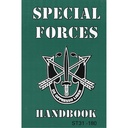
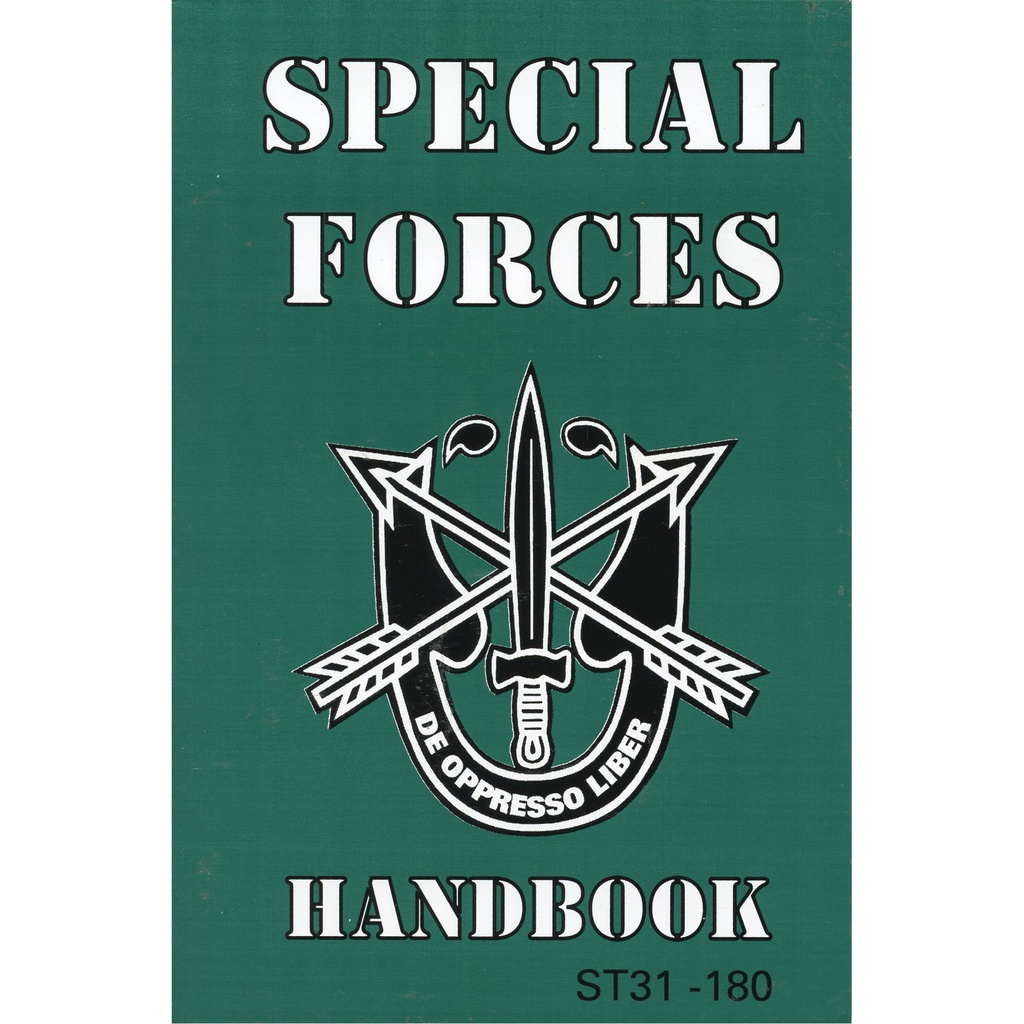
The first thing you notice is what isn’t there: no screaming graphics, no tacticool branding circus. Just an olive cover, bold SPECIAL FORCES HANDBOOK title, and the classic crest with dagger and arrows over the De Oppresso Liber motto. That restraint matters. In real field work, you don’t want reflective covers, neon art, or anything that looks like a movie prop. You want something that disappears into webbing, car seat fabric, or the shadows of a pack pocket.
The form factor tracks that same thinking: compact enough to ride in a cargo pocket or side pouch, thick enough to be useful. It’s a military survival guide built for reachability first—because a handbook you left at home is just decoration.
Core Content: Survival, First Aid, Communications, and Unconventional Thinking
This handbook doesn’t waste your time on motivational filler. It moves from survival basics to field medicine, communications, and unconventional operations in the same clipped, directive tone you’d expect from a Special Forces instructor who’s on a clock.
Survival Basics: Immediate, Practical, No Romance
Survival sections stay focused on what keeps you and your team alive: shelter priorities, fire under imperfect conditions, water sourcing and treatment, navigation without assuming your electronics will cooperate. It reads more like a pre-mission checklist than an Instagram caption—that’s the point.
First Aid and Communications in a Real-World Context
The first aid material is written from the assumption that medevac might be delayed or uncertain. It’s about managing bleeding, shock, fractures, and environmental hits long enough to hand a living body to higher care. The communications section treats radios and signals like what they are: lifelines that fail at the worst moment if you don’t understand them. Procedures, brevity, and redundancy take priority over gadget worship.
Unconventional operations content sits over all of it: think mindset, planning, and adaptation when the script gets burned. It’s not a Hollywood manual; it’s a reminder that in the field, the boring fundamentals are what let you improvise intelligently.
Why This Handbook Belongs in Your Kit
If you collect tactical gear the way some people collect watches, you already know the difference between shelf filler and something that actually earns space in a pack. This Special Forces-style handbook falls into the second category.
Built for Reference, Not Entertainment
The layout favors clarity over clever. Sections move logically from one discipline to the next, so even under stress you can thumb to what you need with minimal wandering. Font choice, spacing, and headings are all tuned for fast scanning, not dramatic design. It behaves like a tool, not a product demo.
The Collector Angle: Quiet Professional Heritage
Collectors of military manuals and tactical field gear will recognize the appeal immediately. The olive cover, the ST-style code on the front, and the Green Beret crest evoke genuine Special Forces documentation. It looks right sitting next to real-issue field manuals and training binders. For knife and gear enthusiasts already running military-pattern packs, plate carriers, or range setups, this handbook slots in as the one piece of paper kit that visually and functionally belongs.
How Serious Gear Owners Actually Use It
This Special Forces handbook is most at home in three places: in a ruck, in a glove box, or on a small shelf near the gear you actually train with. It’s compact enough to be forgiven when space is tight and valuable enough that, once you’ve worked through it a few times, you’ll keep it close for refreshers.
Trainers can hand it to students as a baseline text. Survival enthusiasts can pair it with their preferred field knife and med kit as the third leg of a proper setup: tool, treatment, and knowledge. Veterans and active-duty buyers will recognize the voice and use it as a quick way to knock the rust off procedures they don’t run every day.
What Buyers Ask Before Purchasing an Automatic Knife
Even though this product is a military survival handbook and not a blade, a lot of our customers are automatic knife owners and collectors. They toss this handbook into the same order as an automatic knife for sale or an OTF because they’re building out a complete, serious kit. So we answer their most common knife questions clearly.
Are automatic knives legal?
In the United States, automatic knife legality is a mix of federal baseline and state-specific rules. Federal law (the Switchblade Knife Act) primarily restricts interstate commerce and mailing of automatic knives, with carve-outs for military, law enforcement, and certain uses. Where it matters for you is at the state and local level: some states allow automatic knives and OTFs for general carry, some allow possession but restrict concealed carry or blade length, and others ban them outright except for narrow exemptions.
Before you buy an automatic knife, check your current state and local laws using up-to-date resources; don’t rely on rumor or decade-old forum threads. If you travel, remember that crossing a state line can change what’s considered an automatic knife legal to carry. When in doubt, err conservative, and treat your knife like the serious tool it is.
What’s the difference between an automatic knife, OTF, and a switchblade?
Enthusiasts separate these terms precisely:
- Automatic knife: Any knife where a spring-driven blade deploys with a button, switch, or lever, and the blade is under tension until that control is activated. Most side-open autos fall here.
- OTF (out-the-front): A specific type of automatic where the blade travels linearly out the front of the handle. An OTF can be single-action (spring only drives deployment, you manually reset) or double-action (spring drives both deployment and retraction via the same slider).
- Switchblade: In legal language, this usually means an automatic knife whose blade opens by a button, spring, or other mechanical device. In collector language, people often use it as a catch-all, but serious buyers keep the terms straight when they talk about OTF, side-opening autos, and assisted folders.
If you’re browsing automatic knives for sale, knowing these distinctions helps you choose the exact mechanism you want rather than whatever the marketing copy happens to call it.
What makes this automatic knife worth buying?
Translate that question to this product and you get: what makes this handbook worth the space it takes? The answer is the same standard you’d apply to a serious auto: reliability under stress. A good automatic deploys the same way every time; this handbook delivers the same concise, usable information every time you crack it open. No fluff, no fantasy scenarios, just practical guidance on survival, medical, comms, and mindset that pairs naturally with the automatic or OTF you actually carry.
Collectors appreciate that it looks at home next to their knives, lights, and field tools: olive, subdued, clearly tied to Green Beret heritage, and written like it expects to be used, not admired from a distance.
Built for the Same Buyer Who Chooses the Right Blade
If you’re the kind of buyer who reads steel composition charts, debates single-action versus double-action OTF, and doesn’t tolerate vague marketing, this Special Forces survival handbook is aimed squarely at you. It’s the paper counterpart to a well-chosen automatic: compact, efficient, and absolutely serious about the moment when gear stops being a hobby and starts being a lifeline.
Add it to your kit the same way you’d add a dialed-in automatic knife for sale to your rotation—deliberately, because you know exactly why it belongs there.