Duty-Bred FM 21-150 Combatives Field Manual - Yellow Cover
3 sold in last 24 hours
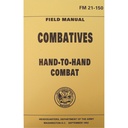
This isn’t a coffee-table book; it’s FM 21-150 in your hands. The Operator-Ready Combatives Field Manual is a faithful 1992 U.S. Army combatives reprint that walks you through rifle-bayonet fighting and hand-to-hand combat as an actual training progression, not theory. Range-based principles, clear line art, and doctrine-level sequencing make it ideal for instructors, serious martial artists, and anyone building a combatives curriculum. If you respect primary-source material over watered-down interpretations, this is the manual you train from.
Operator-Grade Combatives Knowledge, No Fluff, No Myth
The Operator-Ready Combatives Field Manual - Yellow Cover is a straight reprint of FM 21-150, the 1992 U.S. Army combatives standard. Same yellow cover, same seal, same doctrine. If you’re the kind of buyer who obsesses over lockup, edge geometry, and deployment in an automatic knife, you already understand why primary-source combatives material matters: the details are the difference between theory and something you can actually run under pressure.
Why This Field Manual Belongs Next to Your Automatic Knife for Sale Shelf
Walk any serious custom show and you’ll find the same pattern: the buyers who care about steel type and action tuning are usually the same ones who care about how blades are meant to be used. This combatives field manual is that missing piece—doctrine-level instruction on hand-to-hand combat and rifle-bayonet fighting, laid out the way the U.S. Army taught it in 1992.
Instead of Instagram techniques and buzzwords, you get a full, start-to-finish system: stance, movement, range, strikes, counters, takedowns, and rifle-bayonet applications. It’s the difference between buying an automatic knife because it looks aggressive and buying one because you understand how deployment speed, grip, and blade profile fit into a real combative context.
From Rifle-Bayonet to Empty Hand: A Complete Combatives Progression
This FM 21-150 reprint is structured like a serious training curriculum. You don’t just flip to a random page and get a technique; you move through a progression that makes sense for a unit, a class, or a dedicated training group. The content spans:
- Rifle-bayonet fighting – footwork, thrusts, parries, and buttstrokes built around military rifles with fixed bayonets.
- Striking and blocking – simple, gross-motor attacks and defenses suited for stress, gear, and uneven terrain.
- Throws, takedowns, and holds – control-focused solutions for close-quarters contact, not sport-rule-point-chasing.
- Weapon retention and counters – keeping your primary and secondary in the fight when someone tries to take them.
For the automatic knife enthusiast, this is context: why edge orientation, handle geometry, and deployment method matter when bodies collide at bad-breath distance.
Doctrine-Level Clarity: The Steel-Chart Equivalent for Combatives
Knife people love data: steel charts, Rockwell hardness, grind types. This manual is the combatives equivalent. It’s not a personality-brand interpretation—it’s the actual wording, diagrams, and methodology from the Headquarters, Department of the Army, Washington D.C., September 1992.
That means instructors can build lesson plans directly from a tested framework instead of reinventing a curriculum from YouTube clips. Serious students can cross-check what they’re being taught against a recognized standard, the same way they’d compare a knife-maker’s heat treat claims against known data on that steel.
Designed to Be Used, Not Admired
The yellow softcover is pure function: large, clear black text, simple line illustrations, and a layout built to be thrown on a table, tossed into a range bag, or marked up with notes. This isn’t a collector’s edition that you’re afraid to crease. It’s a working manual—just like a good automatic knife is a working tool, not a safe queen you’re scared to pocket.
What Buyers Ask Before Purchasing an Automatic Knife (and Why This Manual Still Matters)
Are automatic knives legal?
Under U.S. federal law, automatic knives (often called switchblades) are regulated primarily by the 1958 Federal Switchblade Act. Federally, the act focuses on interstate commerce and shipping—especially by mail—but it does not flatly ban ownership everywhere. The real complexity is at the state and local level. Some states allow automatic knife carry with few restrictions, others limit blade length or carry type, and a handful still prohibit them outright or restrict them to certain professionals.
The takeaway: always check your specific state and local laws on automatic knives and switchblades before you buy, carry, or ship. Treat it the same way you’d treat combatives training: you’re responsible for knowing the rules of your environment. This field manual won’t give you legal advice—but it will give you a realistic framework for how blades and bodies interact when force is on the table.
What’s the difference between an automatic knife, OTF, and a switchblade?
Enthusiasts know the distinctions, but the terms get abused in marketing:
- Automatic knife – Any knife where the blade deploys using stored energy (usually a spring) when you activate a button, lever, or similar mechanism. Most side-opening automatics fall here.
- OTF (out-the-front) knife – A specific type of automatic where the blade travels along the handle’s axis and exits the front. Single-action OTFs use a spring to deploy and manual retraction; double-action OTFs use an internal spring system to both deploy and retract via the same control.
- Switchblade – In casual speech, this usually means an automatic knife. Legally, "switchblade" is the term used in many statutes, referring to knives that open automatically by button, switch, or similar device.
This manual doesn’t teach OTF tuning or switchblade repair—but for anyone who buys an automatic knife for sale and actually trains, the combatives principles here explain why deployment speed, secure grip, and blade orientation are non-negotiable.
What makes this automatic knife–adjacent manual worth buying?
If you’re picky about detent strength and lock geometry, apply the same standard to your training material. This FM 21-150 reprint is worth owning because:
- It’s primary-source doctrine from the U.S. Army, not a diluted retelling.
- It delivers a full curriculum, from bayonet range to clinch, instead of disjointed techniques.
- It’s built for instructors and serious students who want structure, not hype.
- The softcover, yellow design is a working format you can annotate, bend, and drag to class.
In other words, it’s the combatives equivalent of a hard-use automatic knife: proven pattern, no-nonsense execution, and built to be run hard, not admired from a distance.
How Serious Knife Buyers Use a Manual Like This
Pair this manual with your training blades—folders, fixed, automatic, OTF—and you quickly see which designs make sense in a fight and which are just conversation pieces. Techniques in FM 21-150 highlight the importance of grip indexing, orientation under stress, and simple, gross-motor movements. That’s the same logic that makes a clean, reliable automatic more valuable than a flashy, overcomplicated one with questionable lockup.
For instructors, this manual becomes a framework to pressure-test how you integrate blades into your curriculum: when an automatic knife is introduced, how deployment is trained, how it slots into range-based combatives, and when it should stay in the pocket.
Build a Collection That Actually Trains: From Automatic Knife to Combatives Manual
Owning a serious automatic knife for sale is one thing; knowing how that blade fits into a complete combatives picture is another. The Operator-Ready Combatives Field Manual - Yellow Cover gives you tested doctrine to match your hardware. No myth, no martial arts marketing, just what the Army printed as FM 21-150 in 1992.
If you see knives, OTFs, and switchblades as tools, not props, this is the book that belongs on the same shelf—part of a collection built by someone who actually trains, not just someone who buys.