
Impact-Ready Dojo Training Katana Sword - Black Polypropylene
4 sold in last 24 hours
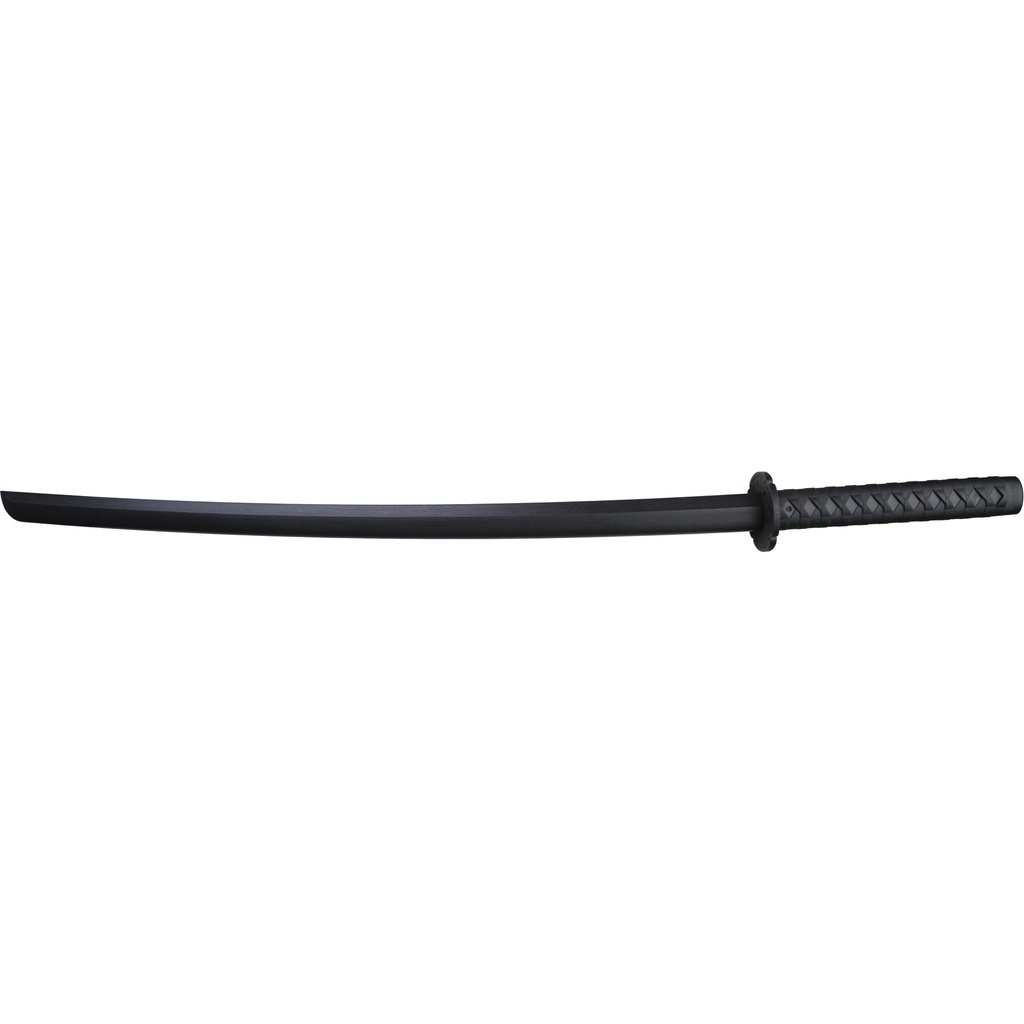
This is the training sword you don’t have to baby. The Impact-Ready Dojo Training Katana Sword in black polypropylene runs a full 39.25 inches, with a one-piece molded body that shrugs off contact drills and hard floor drops. The unsharpened blade tracks like a real katana, while the textured grip and solid tsuba keep your hands locked in during kata, partner work, and conditioning rounds. No splinters, no loose fittings — just a reliable tool for serious practice.
Impact-Ready Dojo Training Katana Sword - Built for Real Floor Time
The Impact-Ready Dojo Training Katana Sword - Black Polypropylene is what happens when you stop treating practice weapons like disposable props and start treating them like serious tools. Full-length katana profile, one-piece polymer construction, and a balance that feels like a real blade — without the edge, and without the maintenance drama.
This is not a wall sword. It’s a dojo workhorse designed for kata, partner drills, and full-contact conditioning where wooden bokken crack, chip, or start shedding splinters. If your training space sees weekly impact, this is the kind of sword that earns its rack space.
Why This Training Katana Works in a Serious Dojo
At 39.25 inches overall, this polypropylene trainer sits right in the pocket for a standard katana-length sword. That matters. Too short and your distancing, footwork, and timing are off. Too long and students cheat their angles just to reach. This one tracks naturally, allowing technique to translate when you pick up a live blade or an iaito.
The profile is classic: gently curved blade, round tsuba, and proportioned handle that gives you proper two-handed grip options. You’re not swinging a generic stick with a token curve — you’re working with something that actually respects the geometry of a katana.
One-Piece Polypropylene Construction: The Quiet Advantage
The real upgrade here is the material and how it’s used. The sword is built from heavy-grade, lead- and phthalate-free polypropylene in a single molded piece from tip to pommel. No separate fittings to loosen, no pins to shear, no wrap to unravel mid-class.
Impact Feel and Flex
Polypropylene brings a specific mix of stiffness and give. It’s rigid enough that cuts, blocks, and thrusts track cleanly, but it has just enough flex on hard contact to spare joints and reduce catastrophic breakage. Wood tends to fail suddenly and dangerously. Polypropylene tends to scar, not shatter.
The unsharpened blade and blunt tip are deliberately thickened for impact work. That extra mass along the length helps the sword move more like a live katana than a hollow plastic toy. When it hits, you feel the line of the cut without taking home a collection of new dents and splinters.
Textured Grip That Stays Put
The handle is molded with a crisscross pattern that mimics a traditional wrap without the upkeep. Under sweat, under speed, with gloves or bare hands — the grip stays predictable. There’s no tape to replace, no cord to shift, and no polished wood to turn slick just when a student overcommits to a strike.
Collector or Instructor? Why This Training Sword Belongs on Your Rack
If you collect training tools the way some people collect blades, this one earns its place by doing something very simple: it survives bad reps. New students hit too hard, block wrong, and collide edge-on-edge in ways every instructor hates. This sword is built for that reality.
For dojo owners, the low-maintenance factor is huge. You’re not constantly checking for splinters, oiled surfaces, or loose guards. Wipe it down, stand it up, it’s ready for the next class. For the enthusiast who already owns steel, this becomes the piece you reach for when you want to drill without thinking about damage.
Training Application: From Solo Kata to Full-Contact Rounds
This polypropylene katana is tuned for three main environments: solo kata, partner drills, and conditioning work.
Solo Kata and Form Work
The length and weight distribution allow you to practice cuts, transitions, and footwork without relearning your distances. The matte black finish keeps visual distractions down — you can focus on posture and lines instead of shiny ornament.
Partner Drills and Contact Training
In paired work, especially when you’re running repeated block-and-counter sequences, the uniform thickness and blunt edge mean both training partners can commit confidently. Mistimed entries and overzealous blocks don’t turn into sharp splinters or chipped lacquer — just honest impact you can correct and move on from.
For full-contact conditioning, where you’re working power, endurance, and structural integrity in your stance, the one-piece build comes into its own. You can drive this sword through heavy repetitions and know it isn’t slowly loosening around a hidden pin or joint.
What Buyers Ask Before Purchasing an Automatic Knife
This product is a training katana, not an automatic knife, OTF, or switchblade. But if you’re here because you’re cross-shopping edged tools and wondering about knife laws and mechanisms, these are the questions that usually come up when someone goes from swords to automatics.
Are automatic knives legal?
In the United States, automatic knife legality is a mix of federal baseline rules and state-specific laws. Federally, automatic knives (often called switchblades in legal text) are regulated mainly in interstate commerce — sale and shipment across state lines are restricted with specific exemptions for military, law enforcement, and certain uses. Day-to-day carry, possession, and in-state sales are governed almost entirely by state and sometimes local law.
Some states allow automatic knives with few limitations, others restrict blade length, opening mechanism, or where you can carry them (concealed vs open), and a handful still prohibit them outright. Before you buy an automatic knife or switchblade, you need to check your state and local laws, not just federal guidance. Laws change, and it’s your responsibility to confirm what’s legal to own and carry where you live.
What's the difference between an automatic knife, OTF, and a switchblade?
Mechanically, here’s how the terms break down:
- Automatic knife: A folding or OTF knife that opens via a spring when you press a button, lever, or similar control. You don’t assist the blade with your hand; the mechanism does the work.
- OTF (out-the-front) knife: A subtype of automatic where the blade travels straight out of the front of the handle instead of pivoting from the side. OTFs can be single-action (spring opens, you manually reset) or double-action (spring-driven open and close).
- Switchblade: In U.S. law, this is the term usually used for automatic knives — especially side-opening autos — that deploy with a button or switch. Among enthusiasts, “switchblade” is often reserved for traditional side-opening autos, while OTF is its own category.
This training katana is neither auto, OTF, nor switchblade — it’s a fixed, impact-only practice sword with no moving parts. But if you’re also building out an automatic knife lineup, those distinctions matter when you read specs and legal language.
What makes this training katana worth buying?
The value here isn’t in ornament; it’s in reliability. You’re getting a full-length, katana-profile trainer in heavy-grade polypropylene, molded in one piece so there are no obvious failure points. The unsharpened blade and blunt tip are built for repeated impact against other trainers, pads, and bags without the splintering you see in wood.
The textured black grip and solid guard keep your hands locked in while you focus on form, power, and timing — not on babying fragile fittings. If your training sessions are more than light tap drills, this is the kind of tool that keeps showing up ready, class after class.
Built for the Practitioner Who Actually Trains
If you’re the type who appreciates a well-tuned automatic knife for its mechanical precision, you’ll recognize the same attitude here: a tool designed to do one job well, with no unnecessary decoration to get between you and the work. The Impact-Ready Dojo Training Katana Sword - Black Polypropylene is for martial artists and instructors who respect equipment that can keep pace with real training, not just look good in photos.
Choose it because you’d rather spend time on the mat than in the repair pile — and because, like any serious enthusiast, you know the right tool changes the way you train.