Lifeline Breakthrough Assisted Rescue Knife - Gray Camo
3 sold in last 24 hours
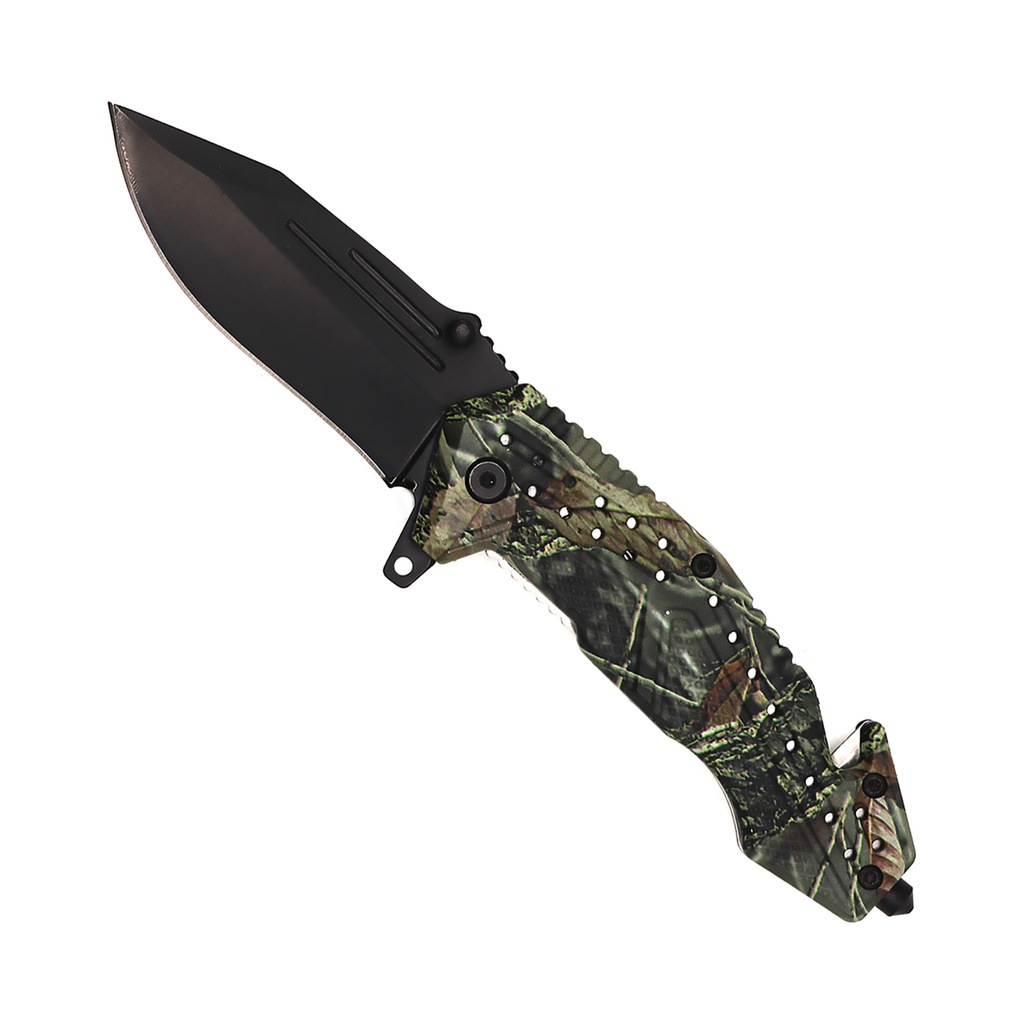
An automatic knife for sale doesn’t have to be overbuilt to be ready; this spring-assisted rescue knife proves it. The flipper-driven action snaps the black drop point into lockup with a confident liner lock, while the gray camo handle hides a seat belt cutter and glass breaker for real emergencies. At 3.25 inches of stainless working edge and a pocket-friendly profile, it’s a rescue-minded folder that carries like a straightforward EDC and works like a dedicated tool.
Automatic Knife for Sale, Built for Real Rescue Work
If you’re looking at an automatic knife for sale and you actually use your blades, you know the difference between a toy and a tool. This Lifeline Breakthrough Assisted Rescue Knife - Gray Camo lives squarely in the tool category. Spring-assisted, not full automatic, it’s tuned for that sweet spot where deployment is fast, deliberate, and controlled — exactly what you want when your hands are wet, adrenaline is high, and you’re cutting someone free from a seat belt.
Why This Spring-Assisted Rescue Knife Belongs Beside the Automatics
Let’s be mechanically accurate: this is a spring-assisted folding knife, not a button-fired automatic knife and not an OTF. The blade rides on a pivot with a torsion spring preloaded behind it. Nudge the flipper tab past the detent, and the spring takes over, snapping the 3.25-inch black drop point into lockup. No mystery, no hype — just a proven action type that first responders and working EDC carriers keep reaching for.
Where some cheap assisted folders feel gritty or hesitant, this one is set up for a clean, predictable deployment. The combination of flipper tab and thumb stud gives you two ways in: primary index-finger flip for speed, or thumb-open when you want a slower, more controlled roll-out. Either way, the liner lock engages with a solid, audible click that tells you the blade is ready to work.
Action and Lockup: The Mechanics Buyers Actually Care About
The action on this piece is driven by a coil-style assist, tuned so it doesn’t fight you at the start of the stroke. Once the blade clears the detent, the assist drives it home with enough force to feel confident, not theatrical. For anyone shopping automatic knives for sale and comparing deployment speed, this assisted opener will absolutely keep up with budget button-lock autos in real use.
The liner lock is cut with enough surface to disengage easily but not so thin that it feels spindly. Under spine pressure, the lock holds without flex, which is what you want in a rescue-oriented knife that might be asked to pry, twist, or saw through stubborn material. No lock is above physics, but this one is honestly spec’d for its price and intent.
Automatic Knives for Sale vs Assisted Rescue: Where This Knife Fits
If you’re browsing automatic knives for sale, you’re probably comparing mechanisms. This knife earns its place in that lineup because the deployment experience scratches the same itch: instant, repeatable, one-handed opening. The difference is the trigger — a flipper tab instead of a button or slide.
The 3.25-inch stainless steel drop point is a working profile, not a display queen. Stainless at this tier is about reliability over romance: it shrugs off sweat, moisture, and the grit that comes with riding in a pocket or a duty bag. The matte black blade finish cuts reflections and pairs with the gray camo handle like every other piece of tactical kit you actually use.
Rescue Features: Seat Belt Cutter and Glass Breaker Done Right
What separates this from a generic assisted folder — or even some entry-level automatic knife for sale — are the built-in rescue tools. The seat belt cutter is integrated into the spine of the handle, sharpened and protected so it can bite into webbing without threatening fingers. It’s designed for slicing stubborn harness material in one directional pull, not sawing away with the main blade near someone’s skin.
The glass breaker at the butt of the handle isn’t ornamental. That pointed metal tip is there for tempered automotive glass — side windows, not windshields — and gives you the option to shatter a pane without risking your blade tip. In the real world, that means one less excuse when seconds count.
Action, Steel, and Carry: The Mechanism Story That Matters
The blade’s stainless steel is a practical choice: corrosion resistance first, easy maintenance second. No, it’s not a boutique powder steel, but that’s not the assignment. In a rescue or EDC context, a steel you can touch up quickly on a basic stone or ceramic rod is worth more than chasing a few extra percentage points of edge retention you’ll never see because you’re cutting plastic, webbing, tape, and cardboard.
At 8 inches overall and 4.75 inches closed, it hits the usable EDC pocket knife sweet spot. The pocket clip rides it low, keeping the camo ABS handle mostly out of sight but easy to access. ABS is underrated here: light, tough, and grippy enough when textured, it shrugs off dings and doesn’t get precious about cosmetic scratches. This is a knife to throw into a glove box, go-bag, or duty pocket and forget until you need it.
Collector Detail: Camo Theme With Purpose
Collectors who haunt the automatic and assisted knife tables know the difference between gimmick camo and functional design. The gray camo here sits in that tactical middle ground — muted enough not to scream for attention, but visually tied to the rescue and outdoors role. It’s the kind of finish you don’t baby, and that’s the point.
Legal Reality: Where a Spring-Assisted Knife Stands
When you’re browsing any automatic knife for sale, legal questions are never far behind. This knife’s mechanism gives it an advantage: it is spring-assisted, not a true automatic switchblade. That distinction matters. Under U.S. federal law, automatic knives (switchblades) are regulated under the Switchblade Knife Act, especially in interstate commerce. Many states add their own restrictions on possession and carry of automatic and OTF knives.
Spring-assisted folders like this one are legal to own and carry in far more jurisdictions than button-fired automatic knives. However, state and local laws vary widely — some areas regulate blade length, opening method, or how a knife is carried (concealed vs open). Before you buy an automatic knife, assisted opener, OTF, or any switchblade-adjacent design, you should always confirm your current state and local laws from an official source, not a rumor or a forum post.
What Buyers Ask Before Purchasing an Automatic Knife
Are automatic knives legal?
Under U.S. federal law, automatic knives — commonly called switchblades — are regulated mainly in interstate commerce and in certain federal jurisdictions (like federal buildings and some federal properties). The real complexity lives at the state and local level. Some states allow automatic knives and OTFs with few restrictions; others limit blade length, restrict carry, or ban them outright.
This particular knife is spring-assisted, not a true automatic knife. Assisted openers are generally treated more like standard folding knives and are legal in more places, but that is not universal. Before you buy or carry any automatic knife, OTF, switchblade, or assisted opener, check your state statutes and, if necessary, local ordinances. Laws change, and the responsibility is always on the owner to stay current.
What’s the difference between an automatic knife, OTF, and a switchblade?
Mechanically, a true automatic knife uses a spring-driven blade that deploys when you actuate a button, lever, or slide in the handle — one action, fully automatic opening. A switchblade is the classic legal and cultural term for this category of automatic knife.
An OTF (out-the-front) automatic knife is a specific subtype where the blade travels along the axis of the handle and exits straight out the front, usually via a thumb slide. A side-opening automatic operates like a conventional folder but uses a button or release to pivot the blade out under spring tension.
This rescue knife is neither of those. It is a spring-assisted folding knife: you manually start the blade using a flipper or thumb stud, and a spring helps complete the opening once you pass a certain point. Enthusiasts shop automatic knives for sale and assisted openers in the same breath because the end experience — fast, one-handed deployment — feels very similar, even though the mechanics and legal status are different.
What makes this automatic-style rescue knife worth buying?
What makes this piece worth owning is the honest intersection of mechanism, purpose, and price. The assisted action is reliable and quick, the liner lock is solid for the tasks it’s built to handle, and the blade profile is a no-drama drop point that handles daily EDC cutting without complaint.
Layered on top of that are real rescue tools — a functional seat belt cutter and a glass breaker — that elevate it above the usual entry-level assisted or automatic knife for sale. This is the kind of knife you can stash in a vehicle, carry on shift, or clip into your pocket and know it will do more than just look tactical when things go sideways.
For Enthusiasts Who Choose Their Blades on Purpose
If you’re the kind of buyer who compares every automatic knife for sale by action, lockup, and real-world utility, this assisted rescue knife belongs in your rotation. It’s not pretending to be a custom piece, but it behaves like a tool designed by someone who understands what first responders and serious EDC carriers actually ask of their knives. You’re not just buying another camo folder — you’re choosing a purpose-built, rapid-deployment rescue knife that earns its pocket space every time you clip it on.
| Blade Length (inches) | 3.25 |
| Overall Length (inches) | 8 |
| Closed Length (inches) | 4.75 |
| Blade Color | Black |
| Blade Finish | Matte |
| Blade Style | Drop Point |
| Blade Edge | Plain |
| Blade Material | Stainless Steel |
| Handle Finish | Matte |
| Handle Material | ABS |
| Theme | Camo |
| Pocket Clip | Yes |
| Deployment Method | Spring-assisted |
| Lock Type | Liner lock |