

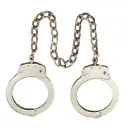
Micro Control Double-Locking Thumb Restraint - Nickel Steel
9 sold in last 24 hours
This is not a toy cuff. The Micro Control Double-Locking Thumb Restraint is compact nickel-plated steel built for real control in tight spaces. Double-locking hardware prevents over-tightening and accidental release, giving professionals a secure, low-profile option when full-size handcuffs are too much or too visible. Smooth edges, solid bite, and pocketable size make these thumb cuffs a serious piece of restraint gear, not a novelty.
Micro Control Double-Locking Thumb Restraint – Nickel Steel
The THUMBCUFF is exactly what it sounds like: a compact, nickel-plated steel thumb restraint built for real-world control, not costume duty. Where full-size handcuffs are obvious and bulky, this double-locking thumb cuff rides quietly in a pocket, kit, or duty bag until you need decisive, close-quarters restraint.
Serious Restraint Gear, Not a Gimmick
Most people see thumb cuffs and think novelty. Professionals know better. A properly designed thumb restraint focuses all its control on a small contact area, which means the mechanism and material matter more, not less. This piece uses nickel-plated steel for strength, corrosion resistance, and a smooth bearing surface where the locking pawl meets the ratchet.
The result is predictable engagement: when you seat the cuff around the thumbs and ratchet it down, it bites once and stays put. No flexy sheet metal, no questionable cast pot metal, just a straightforward steel restraint that does its job without drama.
Double-Locking Mechanism: Why It Matters
"Double locking" isn’t marketing fluff—it’s the line between controlled restraint and avoidable injury. On basic cuffs, the single lock holds as long as pressure doesn’t drive the arm deeper into the ratchet. With a double lock engaged, the ratchet can’t tighten further until deliberately unlocked, preventing over-tightening from movement or struggling.
How the Double Lock Works
Inside this thumb cuff is a simple but proven system: a spring-loaded pawl engages the serrated teeth of the shackle. Once you set the desired tightness, the secondary lock is triggered (typically via a pin or key action), freezing the shackle in place. The pawl can’t advance, and the shackle can’t back out until the lock is released with the correct key.
That’s why professionals look for double-lock thumb cuffs: once they’re set, they won’t cinch down further in the heat of a struggle, and they won’t back off unless you decide they do.
Nickel-Plated Steel: Small Form, Real Durability
The nickel plating over steel isn’t cosmetic. It hardens the surface, improves wear resistance at the tooth and pawl interface, and offers corrosion resistance against sweat and humidity. On something this compact, you can’t afford sloppy tolerances or rough engagement. Nickel-plated steel delivers a smoother rotation and more consistent locking action compared to bare mild steel or cheap alloy bodies.
Why Thumb Cuffs Belong in a Professional Kit
Full-size handcuffs are the standard, but they’re not always the best choice. Thumb restraints like this shine in a few specific roles:
- Close-quarters control: When you need a subject’s hands neutralized quickly and space is tight, thumb cuffs are faster to position.
- Low-profile restraint: Easier to conceal, carry, and deploy discreetly in plainclothes or off-duty scenarios.
- Backup option: If primary cuffs fail, are lost, or are already in use, a thumb restraint is a legitimate secondary solution.
The Micro Control Double-Locking Thumb Restraint doesn’t replace a full cuff; it supplements it—a compact precision tool alongside your primary gear.
Fit, Finish, and Handling Details Collectors Notice
Even with a simple tool like this, the small things separate throwaway hardware from kit-worthy gear.
- Clean ratchet engagement: Each click is distinct, with no skip or mushiness as you tighten.
- Smooth, de-burred edges: Reduces hot spots and unnecessary abrasion when properly applied.
- Consistent plating: Even nickel coverage means fewer corrosion points and better long-term reliability.
- Positive lock feedback: You can feel the double lock engage, so you’re not guessing whether it’s set.
This is the level of attention that makes sense to anyone who cares about how mechanisms feel in the hand, not just how they look in a product photo.
Carry, Deployment, and Real-World Use
The advantage of a thumb cuff like this is simple: minimal footprint. It disappears in a pocket, organizer pouch, or vest compartment and won’t compete with your primary tools for space.
- Compact profile: Easy to palm, position, and secure quickly.
- Rapid application: Once you’ve practiced the motion, it’s a straightforward, repeatable sequence.
- Keyed release: Standard-style keys provide controlled, deliberate unlocking.
Like any restraint, it demands training and responsible use. The mechanism will do what it’s designed to do—control. It’s on the user to apply it ethically, legally, and with proper technique.
What Buyers Ask Before Purchasing an Automatic Knife
Even though the THUMBCUFF is a restraint device and not an automatic knife, the same kind of buyer often shops in both categories—people who care about mechanisms, legality, and real-world performance. Here’s how those common automatic knife questions translate to this piece of gear.
Are automatic knives legal?
In the United States, automatic knife legality is a mix of federal boundaries and state-level rules. Federally, the Switchblade Act restricts interstate commerce of automatic knives in certain contexts, but it doesn’t outright ban ownership nationwide. The real answers live at the state and sometimes local level: some states allow automatic knives for everyday carry, others restrict blade length, opening mechanism, or who can possess them (for example, law enforcement or active-duty military exemptions).
Restraint devices like these nickel-plated thumb cuffs typically fall under a different set of laws than automatic knives, often wrapped into security, law enforcement, or personal defense regulations. Before you carry or deploy either an automatic knife or a thumb cuff in public or professional settings, you should review your state and local statutes or consult with legal counsel if you’re unsure. Owning serious gear means knowing the rules that come with it.
What’s the difference between an automatic knife, OTF, and a switchblade?
The terminology gets tossed around loosely, but there are clear mechanical distinctions:
- Automatic knife: A folding knife where the blade is deployed by pressing a button, lever, or switch. A spring does the work once the mechanism is triggered, and the blade usually pivots from a side-folded position.
- OTF (out-the-front) knife: A subset of automatic knives where the blade travels linearly out the front of the handle rather than pivoting from the side. Can be single-action (trigger deploys only) or double-action (same control deploys and retracts).
- Switchblade: In U.S. legal language, this is essentially the statutory term for an automatic knife—any knife that opens automatically by pressing a button or similar device in the handle.
The THUMBCUFF isn’t an automatic knife at all, but if you’re the kind of buyer who cares about how a double-action OTF feels as it fires, you’ll recognize the same mechanical satisfaction in a thumb cuff that locks, double-locks, and releases cleanly every time.
What makes this automatic knife worth buying?
Applied to this thumb restraint, the logic is the same: you’re buying for mechanism, material, and reliability.
- Mechanism: A true double-locking system that prevents accidental tightening and unintentional release.
- Material: Nickel-plated steel that stands up to repeated use, sweat, and handling without turning into a corroded liability.
- Purpose-built design: Compact form factor for close-quarters, backup, or low-profile restraint.
- Predictable action: Consistent ratchet and key operation—no surprises when it counts.
That’s the same purchase logic serious automatic knife buyers apply to their blades: is the mechanism honest, is the material up to the job, and does it perform the same way every single time?
For Buyers Who Respect Mechanisms and Control
If you’re the kind of person who can feel the difference between a dialed-in automatic knife and a sloppy action, you already understand the appeal of a well-made restraint like the Micro Control Double-Locking Thumb Restraint. It’s compact, focused, and engineered to do one job with as few moving parts as possible.
Add it to your kit for the same reason you’d buy a serious automatic knife for sale instead of settling for a gas-station special: because when the tool matters, shortcuts don’t.