Phantom Vector Tactical Throwing Axe - Earth-Tone Grip
15 sold in last 24 hours
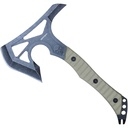
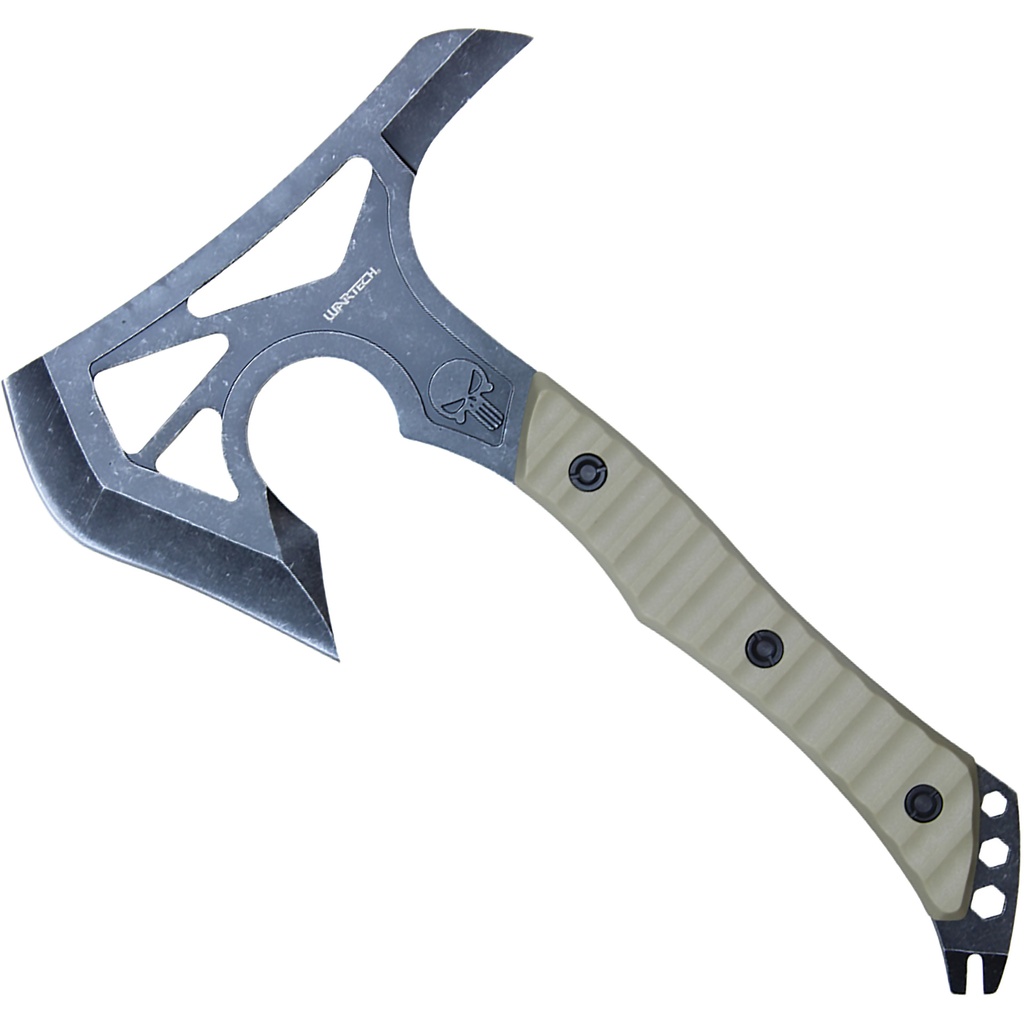
This isn’t a wall-hanger; it’s a purpose-built throwing axe. The Phantom Vector brings full‑tang steel, a skeletonized head, and an earth‑tone textured grip together for clean, repeatable rotation and confident impact. Cutouts and circular voids pull weight forward for a predictable throw, while the forked pommel adds control and utility. Whether you’re dialing in backyard bullseyes or stocking a range that takes throwing seriously, this axe feels like it belongs in motion, not on a shelf.
Phantom Vector Tactical Throwing Axe - Built for Real Throwers
The Phantom Vector Tactical Throwing Axe - Earth-Tone Grip is what happens when someone actually thinks about how a throwing axe flies instead of how it photographs. Full-tang construction, a skeletonized head, and a forked pommel aren’t decoration here – they’re the balance equation that decides whether you stick clean or walk downrange disappointed.
Balanced Throwing Axe for Sale – Designed Around the Rotation
A proper throwing axe should disappear the moment it leaves your hand and reappear in the target, edge-first, without drama. This balanced throwing axe for sale is tuned around that moment in flight:
- Skeletonized head: The triangular and circular cutouts aren’t just for style – they strip nonessential steel, tighten the rotational profile, and pull weight where it matters: into the cutting edge and beard.
- Forward-biased head weight: The broad bearded edge and top spike put mass up front, so the axe wants to rotate through and bite deep instead of slapping flat.
- Full-tang spine: Steel runs the full length, so every throw, impact, and inevitable miss is absorbed by one solid piece, not a bolted-on compromise.
If you’ve thrown enough house axes to feel when a head is fighting you in the air, this one is a relief. The head geometry and cutouts work together to give you that predictable, repeatable rotation that lets you focus on distance and release, not compensating for clumsy balance.
Head Geometry, Steel Finish, and Grip – Where the Control Comes From
Control in a throwing axe starts long before your hand opens. It’s in the geometry, surface, and grip that get you to that release consistently.
Stonewashed Tactical Head with Purposeful Edges
The wide bearded head gives you a generous sweet spot for sticking, while the pointed beard and top spike increase the chances of a bite even if your throw lands a touch short or long. The stonewashed gray finish does more than look "tactical": it breaks up glare under range lights or bright sun and helps mask wear. The more you throw, the more the axe develops that broken‑in steel character instead of loud scratches.
Earth-Tone Textured Grip that Actually Locks In
The ribbed, earth‑tone synthetic scales are there for one reason: consistency at release. Unlike slick metal or glossy wood, this grip bites into your fingers just enough to anchor your hand placement without grabbing your skin. You can throw bare-handed or with light gloves and still feel a clean, predictable let-go. That’s what tight groupings are built on.
Throwing Axe for Sale with Range-Ready Features
This is a throwing axe for sale that’s meant to live at the line, not in a display case:
- Nylon sheath included: Range days usually mean travel, and the included nylon sheath makes it easy to sling this in a pack or truck without chewing up everything around it.
- Forked steel pommel: The exposed tang at the base ends in a forked impact/pry profile – useful for light camp or range tasks and as a tactile index point at the end of your grip.
- Modern tactical styling: Skull emblem, hex-hardware, and cutouts hit that modern combat‑inspired aesthetic without compromising the actual throwing performance.
The overall footprint lands squarely in the sweet spot for a throwing axe: long enough for confident one‑hand throws with controllable rotation, compact enough to carry easily and store with a range set.
Mechanics of a Well-Tuned Throwing Axe
Knife and axe people get obsessive about mechanics for a reason: balance is everything. On this Phantom Vector, a few details stand out once you start throwing it side by side with generic hardware-store hatchets:
- Mass distribution: The large circular void and triangular cutouts in the head reduce dead weight but keep the edge heavy. That creates a smooth, nose-over rotation instead of a clunky, uneven tumble.
- Spine alignment: The full-tang spine tracks straight through the centerline of the handle. When your release angle is clean, the axe flies true on that axis instead of wobbling around an off-center head.
- Grip indexing: The ribbed handle texture and handle screws give your fingers repeatable landmarks. If you throw from the same grip every time, your rotation timing stops being guesswork.
This is the kind of design that rewards progression. As your distances stretch, the axe doesn’t suddenly fall apart on you – it keeps telling you the truth about your release.
What Buyers Ask Before Purchasing an Automatic Knife
This isn’t an automatic knife, OTF, or switchblade – it’s a fixed-blade throwing axe. But the same buyers who obsess over automatic knife mechanisms tend to care just as much about tool legality, distinctions, and whether a piece earns its place in the kit. Here’s how those questions translate for this axe.
Are automatic knives legal?
Under U.S. federal law, automatic knives (often called switchblades) are regulated mainly in terms of interstate commerce, military and law enforcement channels, and import. Actual carry and ownership rules are almost entirely state and local business. Some states allow automatic knives and OTF knives with very few restrictions; others limit blade length, opening mechanism, or who can carry them; a few still ban them outright. The only responsible move is to check your current state and local statutes – and any city ordinances – before you buy or carry an automatic knife. Laws change, and "I didn’t know" doesn’t carry much weight if you’re stopped.
This Phantom Vector, being a manual fixed-blade throwing axe with no spring or button deployment, lives in a different legal category. Most jurisdictions that are hard on switchblades are far more relaxed about axes and hatchets used for sport or utility, but you should still review local rules on blade length, public carry, and transporting edged tools.
What’s the difference between an automatic knife, OTF, and a switchblade?
Collectors tend to be precise with terminology, and they should be:
- Automatic knife: A knife that opens via spring tension when you activate a button, lever, or similar control. The blade moves from closed to locked by stored energy, not your wrist.
- OTF (out-the-front): A specific type of automatic where the blade travels linearly out the front of the handle. Many are double-action, meaning the same control deploys and retracts the blade.
- Switchblade: In U.S. law, this is essentially the legal term for an automatic knife – usually side-opening, activated by a button in the handle. In casual speech it gets used loosely, but mechanically it’s a spring-driven automatic.
The Phantom Vector isn’t any of these. It’s a fixed-blade throwing axe – no springs, no deployment mechanism – but it appeals to the same mindset that cares about how a double-action automatic cycles or how clean an OTF track feels. Here, that mechanical satisfaction lives in balance, not buttons.
What makes this throwing axe worth buying?
If you already own a pile of cheap hatchets, the difference shows up the moment you start throwing this one in sequence:
- Purpose-built balance: Most hardware-store axes are designed to chop, not rotate. This one’s skeletonized head and mass distribution are tuned for throwing from the start.
- Durable, range-friendly construction: Full-tang steel, synthetic scales, and a stonewashed finish shrug off misses, overstrikes, and repeated impacts without turning into a rattletrap.
- Grippable, repeatable handle: The earth‑tone textured grip gives you a stable index that translates into tighter groupings over time.
- Ready-to-go package: A nylon sheath means it’s immediately packable for league nights, road trips, or range rental fleets.
If you’re the kind of buyer who can tell when an automatic knife’s action has been dialed in, you’ll feel the same kind of intentional tuning in the way this axe flies and hits.
For the Enthusiast Who Cares How Their Tools Fly
The Phantom Vector Tactical Throwing Axe - Earth-Tone Grip is for the same mindset that won’t settle for vague talk about "great quality" in an automatic knife for sale. It’s for the thrower who wants to understand why this head shape, this balance, and this grip produce cleaner rotations and more satisfying impacts. If you build your kit around tools that have clearly been thought through, this axe earns its place in that lineup.