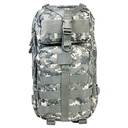
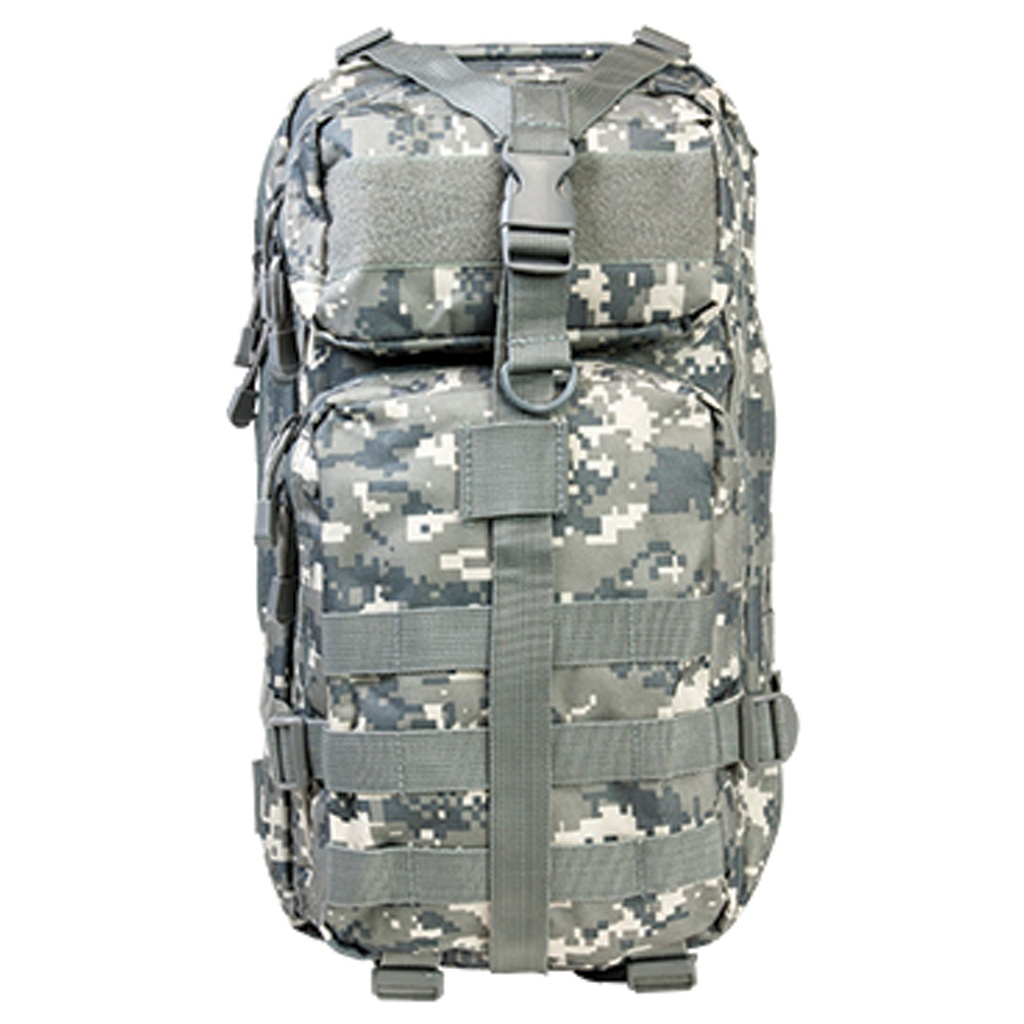
Pixel Recon Compact Duty Pack - Digital Camo
7 sold in last 24 hours
This isn’t a fashion backpack; it’s a compact duty pack built like real kit. With 669 cu in of main storage, 330 cu in in the middle, dual front pockets, and full MOLLE webbing, the Pixel Recon Compact Duty Pack runs modular. The hydration compartment and compression straps keep weight tight to your back, while the grey digital camo and patch-ready loop field keep it firmly in the tactical lane. Ideal for range runs, urban EDC, or a stripped-down go-bag.
Compact Tactical Backpack Built for Real-World Recon Carry
The Pixel Recon Compact Duty Pack - Digital Camo is what happens when you strip a tactical backpack down to what actually matters and leave the cosplay gear on the shelf. This is a compact tactical backpack sized for everyday movement, but spec’d like real kit: full MOLLE fields, hydration-ready, compression-tuned, and laid out for fast, repeatable access under stress.
Digital Recon MOLLE Tactical Backpack for Sale with Purpose-Driven Layout
Most packs advertised as “tactical” are just black nylon with extra zippers. This compact MOLLE tactical backpack earns the label with a layout that feels familiar if you’ve ever built a plate carrier or war belt.
- Main compartment – 669 cu in: Sized for core loadout: jacket, med kit, range gear, or a stripped-down 24-hour pack. The boxy shape means usable volume, not marketing numbers.
- Middle compartment – 330 cu in: Ideal for admin: notebooks, cables, small tools, loaded pistol mags, or IFAK components you want separated from soft goods.
- Two front pockets: Designed for rapid-access gear – tourniquet, multitool, gloves, keys, snacks, or anything you need without digging through your main compartment.
The result is a tactical backpack that carries like a compact urban EDC pack but organizes like gear you’d trust at the range or on a call-out.
Why This Compact MOLLE Tactical Backpack Carries Better Than It Looks on a Screen
On paper, every backpack looks the same. In hand, the details separate throwaway nylon from something you’ll actually keep in rotation.
Compression, Control, and a Stable Ride
Side compression straps and a front vertical strap do more than look "tactical." They pull the load tight to your spine, so the pack doesn’t sway when you move fast, climb, or get in and out of vehicles. When you cinch it down, the profile slims, making this compact tactical backpack feel even tighter and more controlled on your back.
MOLLE Where It Matters, Not Just for Show
Front and side MOLLE webbing let you build out a mission-specific loadout: add a med pouch, radio pouch, admin panel, or dump pouch exactly where muscle memory wants it. The MOLLE isn’t decorative; it’s a grid that turns this backpack into a modular platform instead of a fixed-layout bag.
Bottom attachment loops give you a place for a bedroll, poncho, or extra layer, keeping inside volume reserved for what actually needs protection.
Digital Camo Aesthetic with a Job to Do
The grey digital camouflage isn’t about standing out. It’s a nod to modern service patterns: low-profile, blended, and more urban-relevant than high-contrast woodland variants. It reads serious, not loud.
- Grey digital camo: Blends into urban concrete, vehicles, and kit without screaming for attention.
- Patch-ready loop field: The loop panel on the upper front pocket is there so you can mark your role, unit, blood type, or just plant your morale patch and be done with it.
Visually, the vertical front strap, D-ring, and orderly MOLLE rows frame the pack with a sense of structure. Nothing feels ornamental. Everything reads like load-bearing kit.
Hydration-Ready Compact Backpack That Handles Range Days and Urban EDC
A hydration compartment is one of those details you miss exactly once. This compact tactical backpack includes a dedicated hydration sleeve so you can run a bladder without sacrificing main compartment organization.
EDC to Range: One Pack, Two Lives
As an urban EDC backpack, the main and middle compartments handle laptop sleeves (if you choose to add one), notebooks, light jackets, and the usual daily clutter. As a range or recon pack, that same layout adapts seamlessly to mags, eye/ear pro, gloves, tools, and a stripped-down med setup.
The top carry handle and compact silhouette make it easy to grab-and-go from trunk to trail to training line. It’s big enough to matter, compact enough not to slow you down.
What Buyers Ask Before Purchasing an Automatic Knife
Even though this product is a compact tactical backpack, most serious gear buyers also care about their edged tools. If you’re pairing this pack with an automatic knife for sale, here’s what comes up the most.
Are automatic knives legal?
In the United States, automatic knives are treated under a mix of federal and state law. Federally, the Switchblade Knife Act restricts interstate commerce in certain automatic knives, with exceptions for military, law enforcement, and some occupational uses. Day-to-day carry, however, is governed almost entirely at the state and sometimes local level. Some states allow automatic knives with few or no restrictions, others limit blade length or carry type, and a few still prohibit them outright. Before you buy an automatic knife or drop one into this pack, you should check your current state and city laws from a reliable, up-to-date source or consult an attorney if you’re unsure. Nothing in this description is legal advice; it’s a reminder that legality changes by jurisdiction and you’re responsible for knowing your local rules.
What’s the difference between an automatic knife, OTF, and a switchblade?
Mechanically, an automatic knife is any knife where a concealed spring or stored energy deploys the blade with the press of a button, switch, or lever, and the blade is fully contained in the handle when closed. A switchblade is the older, popular term that U.S. law still uses for many automatic knives, but enthusiasts usually reserve “automatic” as the broader, more precise term.
An OTF (out-the-front) knife is a specific type of automatic where the blade travels linearly out the front of the handle, instead of pivoting out from the side like a classic side-opening automatic. Double-action OTF automatics use the same control to extend and retract the blade under spring tension; single-action OTFs fire automatically but typically require manual retraction. All OTFs are automatics, but not all automatics are OTFs, and “switchblade” is more of a legal and cultural label than a mechanical category.
What makes this automatic knife worth buying?
When you evaluate an automatic knife to ride in a pack like this, you’re looking for three things: reliable action, steel that holds an edge, and a build that survives real carry. A good automatic knife for EDC will have a consistent, confident deployment without grit or hesitation, a lockup that doesn’t chatter under torque, and steel heat-treated for a balance of hardness and toughness rather than just marketing numbers. Collectors also pay attention to grind symmetry, pivot tuning, and how the handle ergonomics work with the button or trigger placement. The pieces that are worth owning feel like tools first, collectibles second — and they stand up to being tossed in and out of a tactical backpack without babying.
Gear Built for Enthusiasts Who Actually Use Their Kit
If you’re the kind of buyer who reads steel charts before you buy an automatic knife for sale, you already know the difference between showpiece gear and tools that earn their keep. The Pixel Recon Compact Duty Pack - Digital Camo sits firmly in the second category. Compact, MOLLE-ready, hydration-capable, and laid out for real use, it’s a tactical backpack that plays well with serious blades and serious loadouts — and doesn’t pretend to be anything else.