Sentinel Duty-Grade Hinge-Lock Handcuffs - Stainless Silver
3 sold in last 24 hours
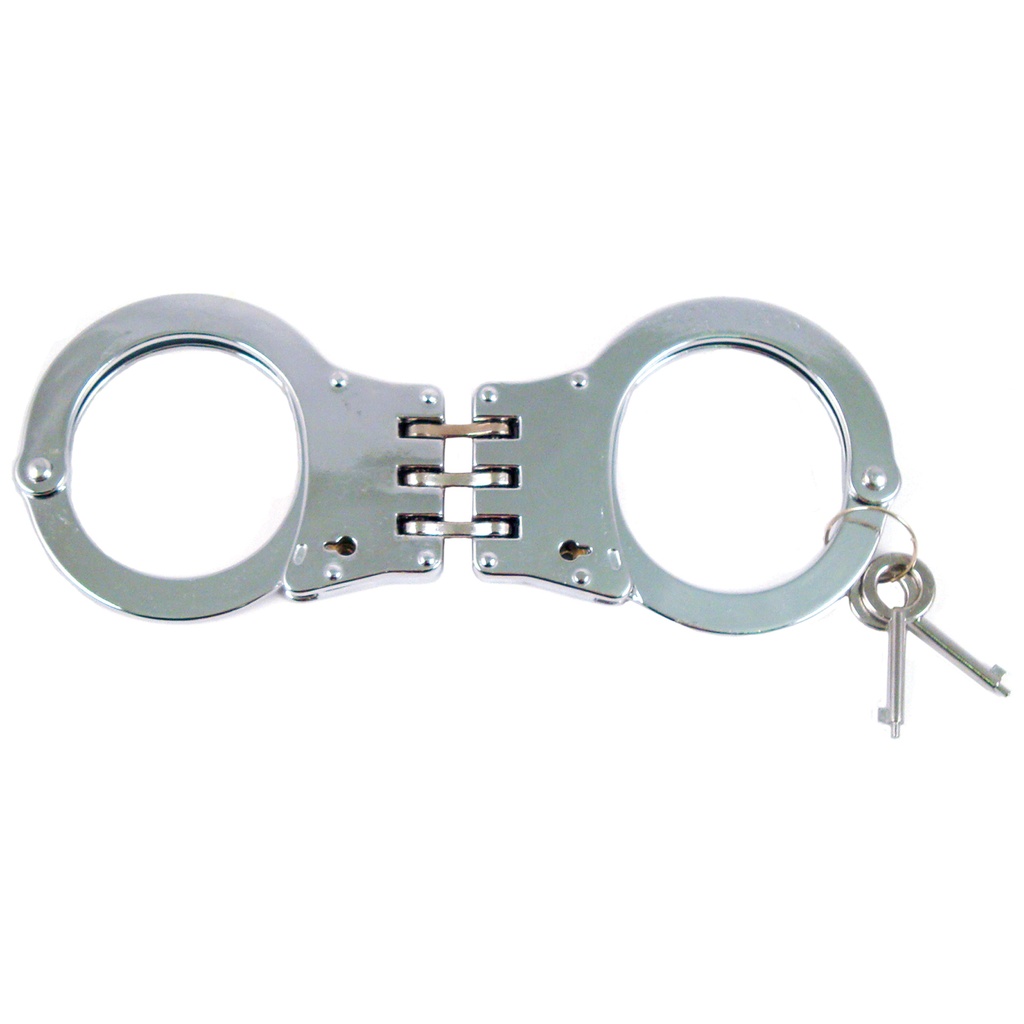
These aren’t novelty cuffs; they’re duty‑grade hinged handcuffs built for real control. The rigid hinge limits wrist rotation, giving officers and security pros tighter subject management than chain cuffs. Die-cast stainless steel, NIJ approved, with a positive double-lock to stop over-tightening and reduce injury risk. At 10 ounces, they carry serious torque resistance without feeling clumsy. Two standard keys included, polished stainless finish, and a compact profile that stands up to training, transport, and daily duty use.
Sentinel Duty-Grade Hinged Handcuffs Built for Real Control
When you close a pair of true police-grade hinged handcuffs, you can feel whether they were built for show or for work. These Sentinel Duty-Grade Hinge-Lock Handcuffs land firmly in the second category: rigid, deliberate, and tuned for officers and security professionals who actually have to control a resisting subject, not just wear the badge.
The triple-hinge spine, die-cast stainless steel construction, and NIJ-approved geometry are all doing the same job — turning a simple restraint into a precision control tool that holds up under torque, transport, and repetition.
Why Hinged Handcuffs Change the Control Equation
Chain cuffs are forgiving. Hinged handcuffs are decisive. That’s the point.
The rigid triple-hinge design dramatically reduces wrist rotation compared to chain-style cuffs. Less rotation means you can translate small movements into real compliance, especially during escort and takedown transitions. The hinge acts like a short lever arm: once the cuffs are on, the subject has fewer ways to twist, slip leverage, or turn their wrists into a tool against you.
Triple-Hinge Spine for Tighter Subject Management
These cuffs use a three-link hinge setup between the bracelets, not a loose, floppy connection. That tighter hinge brings the wrists closer together and keeps them there, making it harder for a restrained subject to spin their hands, reach gear they shouldn’t, or build momentum for a strike. For transport and hallway movement, the difference feels immediate.
Double-Lock Mechanism to Prevent Over-Tightening
The double-lock system is there for two reasons: safety and liability. Once the cuff is ratcheted to the correct size, engaging the double lock prevents further tightening under movement, impact, or struggling. That reduces nerve compression, bruising, and injury risk — and it keeps you inside department policy and best practice. The double-lock ports are clearly accessible, designed to be hit quickly with the key or tip during the check phase.
Professional-Grade Build: Stainless Steel, NIJ Approved
Handcuffs live a hard life. They ride in gear, they hit concrete, they get torqued, kicked, and used as leverage by people who absolutely want them to fail. That’s why material and certification matter.
These Sentinel hinged handcuffs are die-cast from stainless steel, then finished in a polished stainless silver that resists corrosion and cleans quickly. Sweat, rain, training-grit — they’re meant to handle all of it without binding or pitting.
Torque Resistance You Can Feel in the Heft
At roughly 10 ounces, these cuffs are not toy-light. That mass comes from real steel and real structure, and it pays off when someone tries to muscle against them. The frame is built to resist prying, spreading, and twisting force — the kind of abuse that ruins bargain restraints and turns training days into gear replacement days.
Rivets and hinge pins are set for repeat use, with tolerances tight enough that the hinge tracks straight but not so tight that they seize under grit or impact. It’s the same philosophy you see in quality duty gear: strength first, smooth function right behind it.
Duty-Ready Details: Fit, Finish, and Everyday Reality
There’s no branding circus here — just a clean, professional profile that looks like it belongs on a duty belt or security rig. The polished stainless silver finish does two things well: it projects authority and it makes visual inspections fast. Cracks, bends, and foreign material stand out immediately against the bright metal.
Two standard-style keys are included, compatible with conventional handcuff key geometry so you’re not locked into a proprietary ecosystem. The inner edges of the bracelets are smooth and rounded to minimize unnecessary abrasion while still presenting a secure, unforgiving restraint when applied correctly.
What Buyers Ask Before Purchasing an Automatic Knife
Are automatic knives legal?
Under U.S. federal law, automatic knives (often called switchblades) are regulated primarily by the Federal Switchblade Act. That act restricts interstate commerce — how automatic knives move across state lines — more than it dictates everyday carry for private citizens. Actual ownership and carry rules are set at the state and sometimes local level.
In some states, automatic knives are broadly legal to own and carry; in others, they’re restricted to law enforcement, active military, or have blade length limits, opening mechanism definitions, or concealed carry rules. Before you buy or carry any automatic knife, you need to check your specific state statutes and, if you’re in a city with its own ordinance stack, local regulations as well. Laws also change, so relying on an old forum thread is a good way to get bad information.
Bottom line: this product is a set of hinged handcuffs, not an automatic knife, but if you’re also shopping for an automatic knife for sale, you are responsible for knowing your jurisdiction’s knife and carry laws before you clip one into your pocket or onto your duty gear.
What’s the difference between an automatic knife, OTF, and a switchblade?
Mechanical definitions matter. An automatic knife is any folding knife that opens its blade via a spring or stored energy when you press a button, lever, or switch on the handle. A side-opening automatic looks like a conventional folder but kicks the blade out sideways under spring pressure.
An OTF (out-the-front) automatic knife deploys the blade straight out of the front of the handle. Most modern OTF automatics are double-action: the same slide or switch both deploys and retracts the blade, riding on an internal track system that has to be machined correctly to run reliably. Single-action OTFs deploy under spring power but require manual reset.
"Switchblade" is largely a legal and cultural term — in most U.S. statutes it refers to what knife people call an automatic knife: a blade that opens automatically by a button or similar device. In enthusiast circles, we tend to say "automatic" or "OTF" for precision, but the laws usually say "switchblade." Whatever you call it, the key is that it opens under spring power, not by your hand alone.
What makes this automatic knife worth buying?
If you’re digging into the mechanics of an automatic knife for sale, the same mindset that evaluates a good set of hinged handcuffs applies: you’re looking for precise action, durable materials, and a design that’s built for real use, not display-case fantasies. On a serious automatic, that means a reliable firing system that locks up cleanly, a blade steel that holds an edge instead of folding after a cardboard box, and a handle built to manage recoil and torque when the spring snaps the blade into lock.
Collectors and professionals both know that a well-engineered automatic knife, like a well-built pair of hinged handcuffs, pays for itself every time it does exactly what it’s supposed to do, with no drama. When you buy automatic, you’re buying mechanics. The value lives in the build quality, not the marketing copy.
Who These Hinged Handcuffs Are Really For
These Sentinel Duty-Grade Hinge-Lock Handcuffs are aimed at the same buyer who doesn’t settle for sloppy gear anywhere else on their belt. Law enforcement officers, armed security, corrections staff, and serious trainers will appreciate the NIJ-approved design, hinge-driven control, and double-lock safety that actually works under pressure.
If you’re the kind of buyer who cares about how an automatic knife deploys, how a lock engages, and how steel behaves under stress, you’ll read the cues on these cuffs immediately: proper materials, honest weight, and a hinge that turns restraint into leverage. This is professional-grade restraint hardware for people who take control and compliance as seriously as every other piece of kit they carry.