Shadow Vector Rapid-Assisted EDC Knife - Blackout
4 sold in last 24 hours
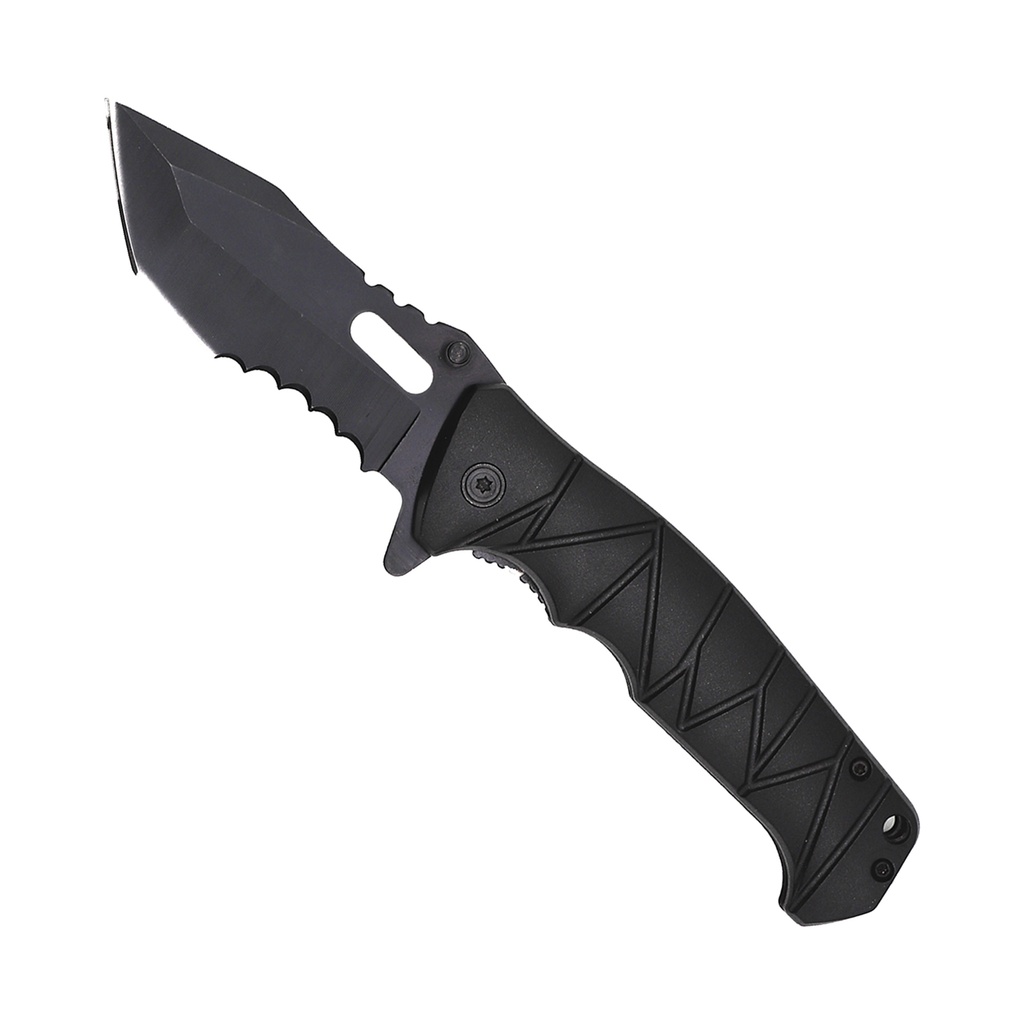
This is the assisted knife you grab when speed actually matters. The Shadow Vector Rapid-Assisted EDC Knife - Blackout uses a thumb-hole starter and tuned assist to snap the American tanto blade into a secure liner lock. Partial serrations chew through webbing and cord, while the textured ABS handle, jimping, and finger grooves lock your grip in. It rides slim, deploys fast, and turns pocket space into real cutting ability for the buyer who cares how their mechanism actually runs.
Shadow Vector Rapid-Assisted EDC Knife - Blackout
If you care how a knife actually runs, this one earns its pocket clip. The Shadow Vector Rapid-Assisted EDC Knife - Blackout is a purpose-built tactical EDC folder for buyers who understand the difference between soft-spring novelty and a properly tuned assisted mechanism that fires on demand.
Assisted Knife Action for Buyers Who Care About Mechanics
This is not an automatic knife, not an OTF, and not a gimmick switchblade. It’s an assisted opening folding knife built around a thumb-hole starter and a decisive internal assist spring. You start the motion with a controlled push through the thumb hole; once you clear the detent, the assist takes over and drives the blade into lockup with authority.
That matters for two reasons:
- Control on the front end – You’re in charge of the initial movement, so it won’t fire in your pocket or when you re-adjust your grip.
- Consistency on deployment – Once you hit the engagement point, the assist does the same thing every time: straight, fast, and fully into the liner lock.
For a working EDC knife, that blend of manual start and assisted finish is the sweet spot between a pure manual folder and a full automatic knife.
Why This Blade Geometry Works in the Real World
The Shadow Vector runs an American tanto profile with a matte black finish. That’s not just about looking tactical. The geometry buys you three real advantages in daily carry use:
American Tanto Tip and Secondary Point
The angular transition from primary edge to tip gives you a reinforced point for controlled piercing — opening heavy plastic clamshells, starting cuts in strapped packages, or indexing into tough material without feeling like you’re going to snap a delicate tip.
Partial Serrations Where They Belong
The lower section of the edge is aggressively serrated, putting the “saw” portion of the blade exactly where your power stroke lives. Webbing, nylon straps, paracord, zip ties, and stubborn cardboard all give up fast to that section of the edge, while the plain portion toward the tip stays clean for push cuts and detail work.
Combined with the 3.375" blade length and 8" overall length, you’re in the sweet spot: compact enough for pocket EDC, long enough to actually work.
Grip, Lockup, and Carry: The Part Collectors Actually Notice
Open the Shadow Vector and you see the design priorities immediately. The liner lock engages cleanly along the base of the tang with solid surface contact — not a shallow corner barely catching the blade. That translates to less lock rock and better long-term reliability with repeated openings.
Textured ABS Handle That Works Wet or Dry
The blackout ABS handle scales are molded with an angular zig-zag texture and finger grooves that tell your hand where to go. Add in jimping on the spine and you get a three-point control system: index finger in the groove, thumb on the jimping, palm locked into the pattern. It’s simple, and it works.
ABS may not be exotic, but it’s light, tough, and takes this kind of molded detail well — exactly what you want on a knife that’s going to live in pockets, tool bags, and glove compartments.
EDC Reality: Clip, Closed Length, and Draw
Closed, you’re at 4.75", which puts this squarely in full-size EDC territory without being a pocket anchor. The pocket clip keeps the knife riding consistent and ready, while the lanyard hole gives you options if you like a fob or need retention on gear.
On the draw, the thumb hole is positioned where your thumb naturally lands, so you’re not hunting for a stud or flipper tab. That’s the difference between a knife you play with at your desk and a knife you can open when you’re hanging onto something with your off hand.
Not an Automatic Knife, But Built for the Same Mindset
If you’re shopping automatic knives for sale, you’re probably here because you care about deployment speed and mechanical feel. Assisted folders like the Shadow Vector live in that overlap: they aren’t automatic knives under most legal definitions, but they scratch the same itch — fast, one-handed opening and a decisive lockup.
Where a true automatic knife uses a button or slide to release a fully spring-driven blade, this assisted knife demands your input first. That manual start keeps it on the right side of many state statutes that restrict automatics, OTF knives, and traditional switchblades, while still giving you that satisfying snap into lock.
What Buyers Ask Before Purchasing an Automatic Knife
Are automatic knives legal?
Under U.S. federal law, automatic knives (often called switchblades) are regulated primarily by the Federal Switchblade Act. It restricts interstate commerce, importation, and mailing of true automatic knives, especially across state lines, but it does not outright ban ownership. The real complexity comes from state and sometimes local laws.
Many states now allow some form of automatic knife carry, often with conditions on blade length, intent, or who may carry (for example, active duty military, law enforcement, or individuals with specific permits). Other states still prohibit automatic knives outright or restrict how they can be carried (open vs. concealed).
This Shadow Vector is an assisted opening folding knife, not a true automatic knife, OTF, or classic switchblade. In a lot of jurisdictions, assisted knives are treated more like conventional folders because they require manual pressure on the blade to begin opening. Even so, the only answer that truly matters is: check your current state and local laws before you carry anything with a spring in it. Laws change; your responsibility doesn’t.
What’s the difference between an automatic knife, OTF, and a switchblade?
In enthusiast language and legal language, the distinctions matter:
- Automatic knife / switchblade – In U.S. law, “switchblade” is the term of art. Mechanically, it’s a knife where a spring-opened blade is released by a button, lever, or similar device in the handle. Side-opening autos swing out from the side like a normal folder, but the spring does nearly all the work once you hit the release.
- OTF (out-the-front) knife – A specific type of automatic where the blade travels in line with the handle instead of pivoting out from the side. Double-action OTF knives both deploy and retract under spring tension with a thumb slider. Single-action OTFs auto-deploy and must be manually reset.
- Assisted opening knife – Like this Shadow Vector. There’s a spring, but it only activates once you manually start opening the blade via a thumb stud, thumb hole, or flipper. The assist finishes what you started; it doesn’t initiate the opening on its own.
Collectors use these terms precisely. Calling every spring-loaded knife a switchblade is how you lose the serious buyers in one sentence.
What makes this assisted knife worth buying?
If you’re the buyer who cares how a knife opens, closes, and actually cuts, this one hits a smart balance point:
- Tuned assisted action that snaps to lock without feeling sloppy or over-sprung.
- American tanto with partial serrations for a genuinely useful cutting profile instead of a fashion blade.
- Secure liner lock engagement you can see and feel when you check lockup.
- Textured ABS handle, jimping, and finger grooves that keep the knife in your hand when it’s wet, cold, or gloved.
- EDC-sized footprint at 4.75" closed and 8" overall, with a pocket clip and lanyard option.
It’s a blackout tactical EDC built for users who care more about deployment feel and cutting geometry than about chasing the latest blade steel label.
For Enthusiasts Who Choose Their Mechanisms on Purpose
If you’re the person who can explain the difference between an assisted opener and a double action automatic knife for sale, this knife speaks your language. The Shadow Vector Rapid-Assisted EDC Knife - Blackout is for buyers who want fast, reliable deployment, solid lockup, and working geometry in a discreet package — and who appreciate a mechanism that demands their input instead of a button doing all the thinking.
Call it what it is: a tuned assisted opening EDC that earns its place in the pocket of someone who actually pays attention to how their knives are built.
| Blade Length (inches) | 3.375 |
| Overall Length (inches) | 8 |
| Closed Length (inches) | 4.75 |
| Blade Color | Black |
| Blade Finish | Matte |
| Blade Style | American Tanto |
| Blade Edge | Partial-Serrated |
| Blade Material | Steel |
| Handle Finish | Matte |
| Handle Material | ABS |
| Theme | None |
| Pocket Clip | Yes |
| Deployment Method | Thumb hole |
| Lock Type | Liner lock |