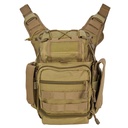
Split-Second Access First Responder Bag - Coyote
13 sold in last 24 hours
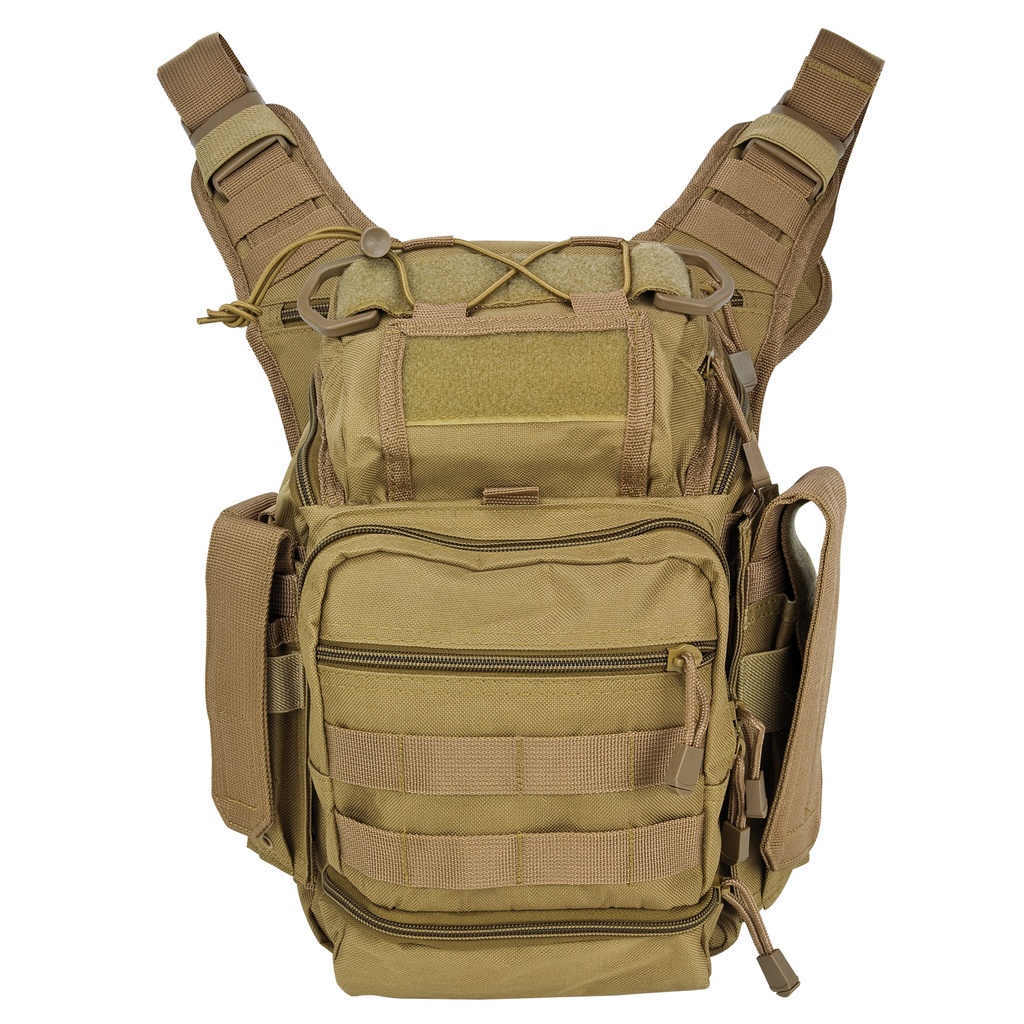
This first responder bag is built for split-second access, not guesswork. Seven smart compartments, full PALS/MOLLE coverage, and a concealed rear pocket keep medical, range, or duty essentials exactly where your hands expect them. The padded shoulder strap rides high and stable, while breathable mesh backing keeps the bag from turning into a sweat trap. Magazine pouches, hook-and-loop real estate, and shock cord lashing round out a compact, coyote-toned platform that stays organized when everything else isn’t.
Split-Second Access First Responder Bag Built for Real-World Response
The Split-Second Access First Responder Bag - Coyote is what happens when you design a compact tactical pack around muscle memory instead of marketing. Every compartment, every run of PALS webbing, every zipper pull is laid out so you don’t have to look for it when things go sideways. This isn’t a casual daypack; it’s a purpose-built first responder bag for patrol, range, and duty use.
Why This First Responder Bag Earns a Place on Your Kit
Start with the footprint: a vertically oriented shoulder/crossbody bag that rides high on the torso. That position matters. It keeps the load centered, clears your waist for a duty belt or pistol, and puts your gear in a natural reach zone whether you’re standing, kneeling, or working from cover. The seven-compartment layout gives you structure without turning into a black hole of loose gear.
The front panel carries dual zip compartments, with the larger pocket ready for trauma supplies, admin tools, or range essentials, and the smaller front zip ideal for gloves, shears, or slim lights. A side-mounted pouch takes radios, tourniquets, or a multi-tool without fighting for interior real estate. Up top, a dedicated pocket with shock-cord lacing gives you fast access to bulkier items you still want under control—think gloves, soft gear, or a compact wind layer.
PALS Matrix Layout: Real Modularity, Not Decoration
The PALS matrix on this bag is not cosmetic. The horizontal webbing on the front compartment and shoulder strap is correctly spaced and bar-tack reinforced, so standard MOLLE-compatible pouches actually mount solid, without that sloppy sag you get on cheaper builds. This means you can configure the bag exactly how your job or range setup demands:
Modular Loadout Options
- Attach additional mag pouches where you want them, not where someone guessed you might.
- Add an IFAK, radio, or utility pouch to the exterior without losing interior organization.
- Shift critical items between this bag and your plate carrier or belt while preserving layout.
The result is a compact, PALS-driven platform that behaves like a scaled-down chest rig. You’re not stuck with a fixed pocket map; you’re building your own.
Comfort and Access: Built to Move, Not Just Sit in a Trunk
Plenty of “tactical” bags look the part until you actually wear them loaded. This first responder bag is designed to be carried hard. The back panel is backed with breathable mesh, so it doesn’t turn into a sweat-soaked slab the moment you’re on foot. That mesh also adds a bit of padding and airflow without bulking the profile.
The shoulder strap is wide, padded, and fully adjustable, with additional webbing channels for routing cables or mounting small pouches. Side-release buckles and hardware are set up for quick donning and doffing—sling it, cinch it, and it stays put whether you’re climbing stairs or moving through brush.
Rear Concealed Pocket: Low-Profile, High-Utility
On the back side, a concealed compartment rides tight to the body. Some will run it as a low-profile CCW pocket; others will use it for flat medical items, restraints, or documents that shouldn’t live in the main gear flow. Either way, it adds a layer of separation between mission-critical tools and admin clutter.
Coyote Colorway: Purpose Over Flash
The coyote exterior does what it’s supposed to do: blend into real environments without screaming for attention. It plays well with common duty uniforms, plate carriers, and range gear. In vehicles, on patrol, or around civilians, it reads as professional equipment, not cosplay.
Reinforced stitching at all the load-bearing points, bar-tacked webbing, and layered fabric panels give the bag structure without making it rigid. It keeps its shape when partially loaded so you can index gear by feel instead of fighting a collapsing shell every time you unzip a pocket.
Range, Patrol, or Everyday Kit: Who This Bag Is For
If you’re running medical, duty, or range support gear and need it partitioned, visible, and fast, this first responder bag fits. Law enforcement and security can stage it as a patrol-side trauma and support bag. Range officers can build a dedicated med and tools rig that lives separate from ammo and targets. Prepared civilians can set up a realistic, grab-and-go kit that isn’t a giant hiking pack with a patch slapped on.
Magazine pouches, hook-and-loop panels for ID or morale, and externally accessible pockets give you the ability to stage different loadouts: medical-first, mag-heavy, admin-centric, or mixed. You’re not locked into a single mission profile.
What Buyers Ask Before Purchasing an Automatic Knife
Even though this product is a first responder bag and not an automatic knife, the same kind of buyer often cross-shops duty-grade blades and tactical load-bearing gear. If you’re also looking for an automatic knife for sale to ride in this bag, these are the questions that usually come up.
Are automatic knives legal?
In the United States, automatic knives (often called switchblades in legal language) are regulated primarily at the state level, with a federal overlay. Federal law (the Switchblade Knife Act) restricts interstate commerce and mailing of automatic knives but does not outright ban simple possession for most civilians. The real determining factor is your state and local law: some states allow ownership and carry of automatic knives with few restrictions; others limit blade length, restrict concealed carry, or prohibit them entirely. Before you drop an automatic knife into this first responder bag, check your state statutes and any city or county ordinances, and remember that crossing state lines can change the rules instantly.
What's the difference between an automatic knife, OTF, and a switchblade?
Mechanically, an automatic knife is any knife where the blade is deployed by pressing a button, lever, or switch that releases spring tension—no manual wrist flick needed. Most folder-style autos pivot open from the side. An OTF knife (out-the-front) is a specific automatic where the blade travels linearly out the front of the handle, single- or double-action, instead of rotating on a pivot. Switchblade is the legacy legal term that usually refers to automatic knives in general in statutes. In enthusiast circles, we tend to say automatic, side-opening automatic, or OTF to be precise about the mechanism and action.
What makes this automatic knife worth buying?
When you’re pairing an automatic knife with a first responder bag like this, the knife needs to justify its place. You’re looking for a reliable action that locks up consistently under stress, a steel that balances toughness with edge retention, and ergonomics that still work when your hands are wet, gloved, or shaking. A good duty-grade automatic will open cleanly from compromised grips, ride safely in a dedicated pocket or sheath inside the bag, and take up minimal space while still giving you a usable edge length. If you can’t trust it to fire and lock every time, it doesn’t belong in your response kit.
Build Out Your Kit Like You Mean It
The Split-Second Access First Responder Bag - Coyote is for buyers who set their gear up on purpose. The ones who know where their tourniquet sits with their eyes closed, who can grab a pouch or an automatic knife in the dark without hunting. It’s a compact, PALS-driven platform that respects your layout, your training, and your time. Configure it once, run it hard, and let the bag disappear so the work can take center stage.