Stormproof Ember-Link Fire Starter Kit - Natural Beige
12 sold in last 24 hours
EmberLink Slow-Burn Tinder Sticks are the fire starter you pack when failure isn’t an option. Each 4-inch, break-away stick lights quickly, then holds a steady ember for about five minutes, giving you time to structure your fire instead of fighting it. The compressed, fibrous blocks shrug off damp, stay pocket-sized and lightweight, and burn clean and non-toxic. In wet mornings, windy ridgelines, or cold camps, this 12‑pack is the quiet, reliable ignition source that makes every other part of your kit work.
Reliable Fire Starter for Serious Backcountry Use
When the weather turns, your knife, your shelter, and your fire starter all get judged the same way: do they work when it actually matters? EmberLink Slow-Burn Tinder Sticks aren’t gimmick cubes or perfume-scented wax logs. They’re compressed, fibrous tinder blocks engineered to do one thing well—light fast, burn long, and buy you the time you need to build a real fire in less-than-ideal conditions.
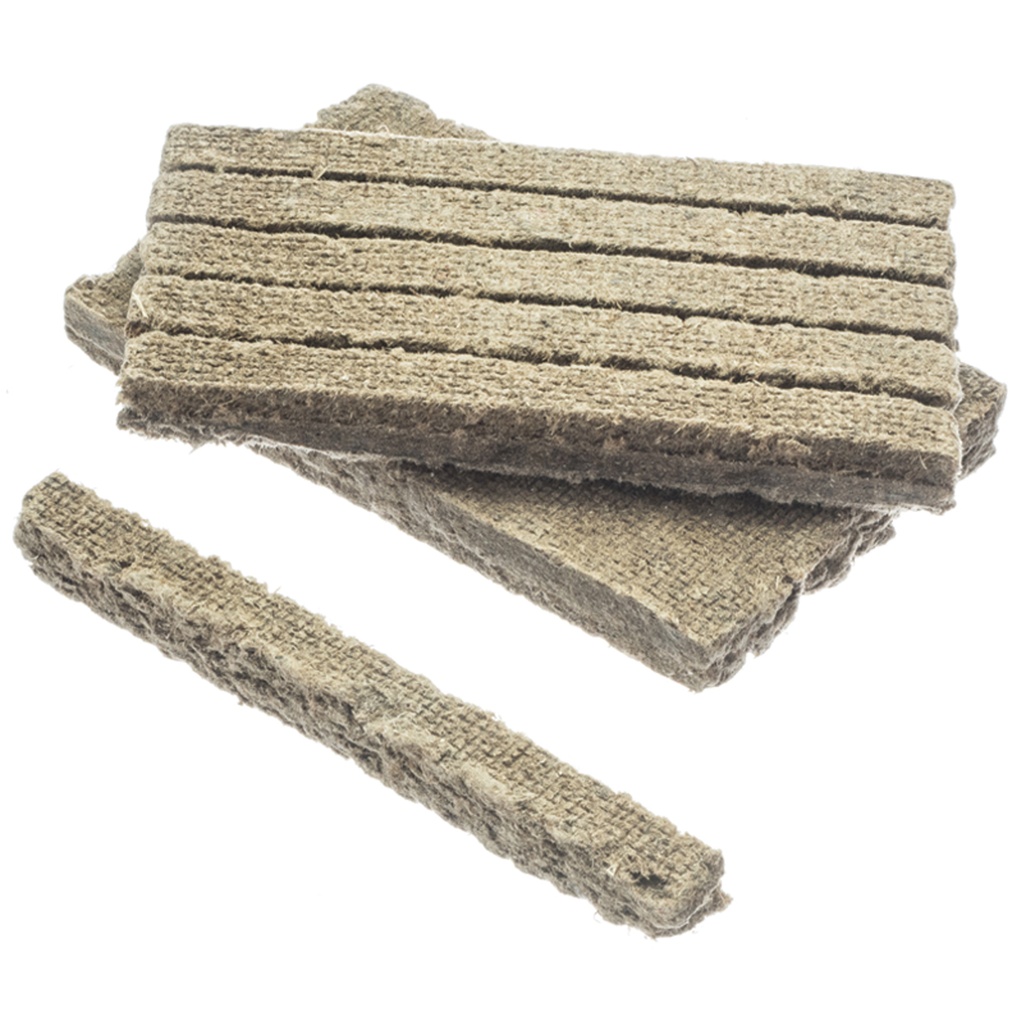
Each 4-inch stick breaks cleanly from the scored panel, takes a spark or flame easily, then holds an ember for roughly five minutes. That slow, controlled burn is your margin of safety in wind, damp air, or when your kindling isn’t as dry as you pretended it was when you left home.
How These Slow-Burn Tinder Sticks Actually Work
The visual tells the story: fibrous, natural beige panels scored into long, narrow strips. That texture isn’t an accident. The fibers give flame a path to crawl, not just flash and die. Think of it like engineered kindling on a miniature scale—structured fuel, not fluff.
Break-Away Design for Controlled Ignition
Each panel is cut into uniform, narrow tinder sticks. Snap off a 4-inch strip, rough up one end to expose more fibers, and you’ve got a focused ignition point that lights cleanly from match, lighter, or ferro rod. No guesswork, no carving feather sticks in cold rain with numb fingers.
Five-Minute Ember Window You Can Work With
A fast flare that dies in 30 seconds is useless. These sticks hold a usable ember for about five minutes. That means you can light one, feed its flame into a pyramid of pencil-lead twigs, and then graduate to thumb-thick sticks without panic. The slow-burn profile spreads heat steadily instead of blowing everything out in one bright, useless burst.
Water-Resistant Tinder That Stays Calm When It Gets Damp
Real trips mean real moisture: fog, wet ground, gear that’s been bounced around in a pack. These tinder sticks are water-resistant by design. The compressed fiber construction resists casual splashes and damp air, so a quick pat-down is usually all it takes before they light. You still respect the elements, but you’re not held hostage by a little bad weather.
That’s the difference between a campfire accessory and genuine survival-adjacent gear. With EmberLink in your pocket, you’re not praying your improvised tinder will catch—you’re managing a predictable burn you can build around.
Pack-Light, Pocket-Sized Fire Starting That Earns Its Space
Every ounce and every cubic inch in your pack has to justify itself. A full 12-pack of EmberLink Slow-Burn Tinder Sticks rides flat, light, and unobtrusive. Slide a panel into your cook kit, first-aid pouch, or the same pocket as your folding knife. Forget it’s there until the sky opens up and you suddenly remember why you packed it.
Non-toxic construction means you’re not breathing a chemical cocktail just to get warm. The natural beige blocks don’t stain gear, don’t stink up your pack, and don’t announce themselves until you put flame to fiber.
Why Serious Campers Choose These Tinder Sticks
Enthusiasts obsess over steel type, grind, lock strength, and deployment because they know details matter. Fire is no different. These tinder sticks offer the same sort of quiet, mechanical reliability you expect from a well-tuned folder:
- Predictable ignition: The fibrous structure takes a spark and transitions to a stable ember without drama.
- Controlled burn rate: Around five minutes of ember per stick gives you time to manage kindling instead of fighting the clock.
- Scalable use: Use a fraction of a stick in good conditions or a full strip when everything’s stacked against you.
- Redundancy friendly: At this size and weight, carrying multiple panels is trivial—one in your main pack, one in your possibles pouch, one in the glove box.
This is fire starting the way serious gear should be: simple, reliable, and tuned for real-world failures, not catalog photography.
What Buyers Ask Before Purchasing an Automatic Knife
This product is tinder, not an automatic knife, OTF, or switchblade—but if you’re the kind of buyer who cares about mechanism and legality for your blades, you usually care about the rest of your kit too. So let’s address the two big automatic knife questions you’re already carrying in your head.
Are automatic knives legal?
Under U.S. federal law, interstate commerce in automatic knives is regulated, but possession and carry are largely dictated by state and sometimes local law. Many states now allow automatic knives or switchblades outright; others limit blade length, restrict concealed carry, or ban them entirely. A true automatic knife deploys its blade via a button, switch, or similar device in the handle—those are the models most state statutes are targeting.
Before you buy or carry an automatic knife, check current state law (and municipal codes where you live and travel). Statutes change frequently, and what’s legal in one state can be a problem across the state line. When in doubt, look up your state’s knife rights organization or an updated legal guide rather than relying on hearsay.
What’s the difference between an automatic knife, OTF, and a switchblade?
Collectors use these terms precisely, and the law often does too:
- Automatic knife: Any knife whose blade opens automatically by pressing a button, switch, or similar control in the handle. Most side-opening autos fall here.
- OTF (out-the-front): A subtype of automatic where the blade travels along the handle’s long axis and exits the front. Double-action OTF knives both deploy and retract the blade using the same sliding control.
- Switchblade: Usually a legal term—many statutes use it to describe automatic knives generally. Enthusiasts tend to use “automatic” for mechanical accuracy and reserve “switchblade” for legal discussion or classic designs.
These EmberLink tinder sticks won’t replace your automatic knife, but they do fill the same niche your blade does: a purpose-built tool that behaves exactly how you expect under pressure.
What makes this automatic knife worth buying?
Applied to this product: what makes these tinder sticks worth buying over improvised fire starting? It’s the same reasoning you use for a well-made automatic knife—consistency, control, and confidence. With EmberLink, you know roughly how long each stick will burn, how it will behave in damp or windy conditions, and how easily you can integrate it into your fire-building routine.
Instead of gambling on whatever you can scrape together after a storm, you’re running a known, repeatable system: break a stick, rough the fibers, light it, structure your fire. That’s the kind of predictability serious outdoorspeople and serious knife owners both respect.
Build Your Kit Like a Serious Enthusiast
The same mindset that pushes you toward a properly tuned automatic knife—precise action, reliable mechanics, confidence under stress—should shape the rest of your gear. EmberLink Slow-Burn Tinder Sticks are the fire-starting equivalent: compact, predictable, and built to perform when conditions are bad, not when they’re perfect.
If you like knowing your automatic knife will deploy the same way every time, you’ll appreciate a tinder system that lights the same way every time. Pack EmberLink, tune the rest of your kit around it, and stop treating fire like a hopeful improvisation. This is how serious enthusiasts and collectors build a kit they actually trust.