Trail Signal High-Visibility Survival Paracord - Pink Camo
10 sold in last 24 hours
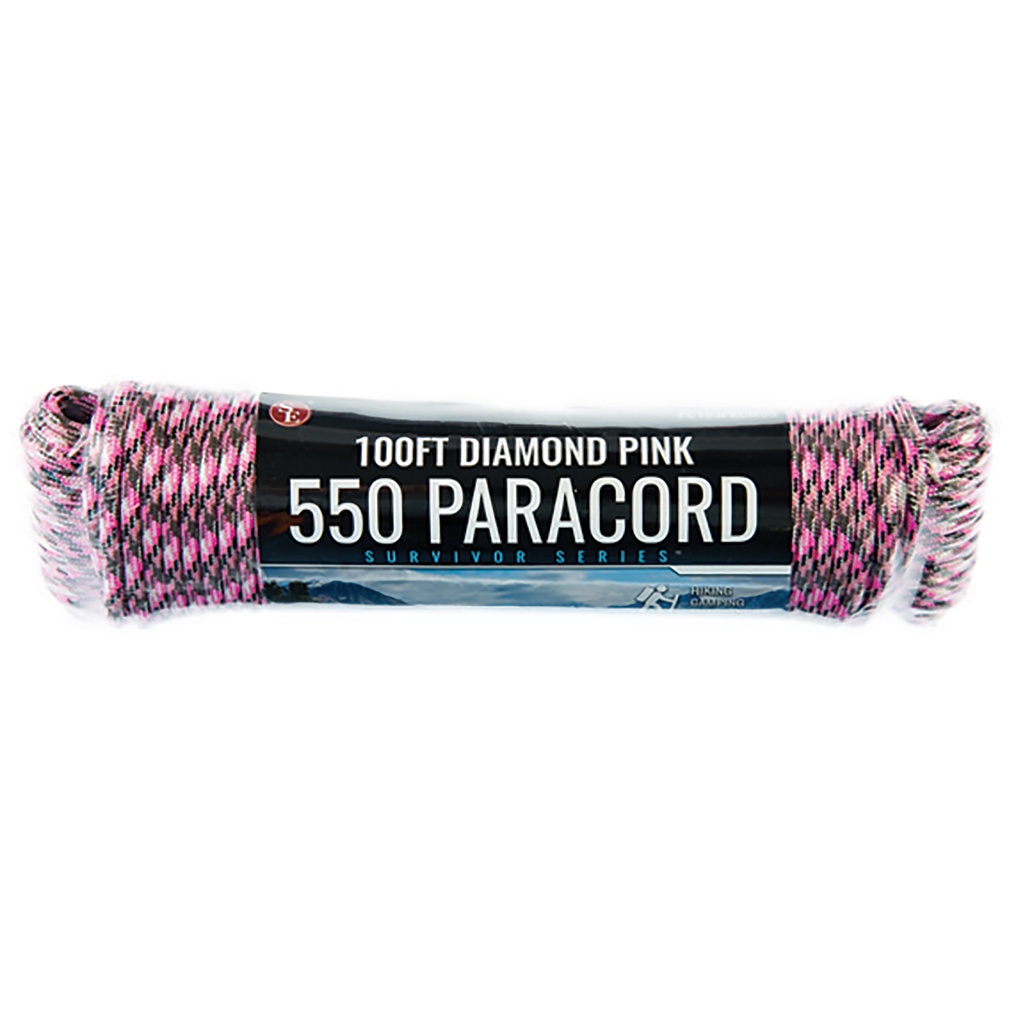
This isn’t craft cord, it’s real 550 survival paracord dressed in a signal-bright pink camo sheath. A 7‑strand nylon core, 5/32" diameter, and 100 feet of line give you serious outdoor utility: rig shelters, lash gear, build camp systems, or strip the core for improvised fixes. The high‑visibility pattern makes trail markers, guy‑lines, and emergency signals pop against brush and dirt, so you can find your setup fast when the light, weather, or terrain turn against you.
Trail Signal Paracord for Buyers Who Actually Use Their Gear
Some cord is for craft tables. This isn’t that. Trail Signal High-Visibility Survival Paracord in Pink Camo is real 550 paracord built for people who camp, hike, hunt, or run search-and-rescue style systems and actually rely on their line. You’re getting a 7-strand nylon core, 5/32" (about 4 mm) diameter, and 100 feet of dependable outdoor cordage dressed in a signal-ready diamond pink camo sheath.
If you already carry an automatic knife for cutting cordage and building camp, this is the kind of paracord it deserves: consistent weave, predictable handling, and enough visibility that you don’t trip over your own guy-lines in low light.
Why This 550 Survival Paracord Earns a Spot in Your Kit
550 paracord has a simple promise: around 550 pounds of rated tensile strength from a 7-strand nylon core, wrapped in a braided sheath that takes knots well and holds up in the field. Where a lot of bargain cord cheats is consistency — uneven weave, sloppy diameter, mystery fibers inside. That’s how you end up cutting out bad sections instead of working.
Trail Signal Survival Paracord sticks to the classic 7-strand core construction that outdoors people and preppers trust. Each internal strand can be pulled for finer tasks — sewing, fishing improvisation, or light lashing — while the outer sheath holds its round profile for knots that bite and release the way they should.
7-Strand Core: The Real Survival Benchmark
The reason 7-strand 550 paracord is the standard in survival circles is simple: redundancy and versatility. Seven inner strands nested inside a tightly braided sheath mean you can split this cord into multiple functional layers without wasting material. Strip the sheath and you’ve got separate inner strands for snares, repair stitching, or light bindings, while the empty sheath still serves for bundling, wrapping, or color marking.
5/32" Diameter That Handles Predictably
At about 5/32" thick, this line hits the sweet spot: big enough to grab and work with gloves on, small enough to coil tight and disappear into a pack. That matters when you’re running guy-lines from a low shelter, hanging a bear bag, or tensioning a ridgeline — your knots seat right without the mushy, flat feel of cheaper cord.
High-Visibility Pink Camo That Actually Shows Up Outside
The pink camo pattern isn’t a gimmick. On the trail, color contrast is a performance feature. Earth tones vanish in brush, deadfall, and dusk; bright line stands out when you need to spot it fast. This pink camo sheath mixes bright pink with darker accent tones to punch out visually against bark, dirt, and undergrowth.
That makes it ideal for marking camp boundaries, staking out low-profile shelters so no one clotheslines themselves at night, or building quick signal markers if plans go sideways. In an emergency context, high-visibility cord gives you one more way to draw the eye — to a trail, a cache, or a hazard someone else needs to avoid.
Built for Real Outdoor Use, Not Just Display
Outdoor cordage lives a hard life: sun, moisture, dirt, and repeated stress cycles. Nylon 550 paracord has earned its reputation because it shrugs off that abuse better than cotton or cheap poly blends. It resists rot, tolerates getting wet and drying out again, and holds enough strength margin that you can trust it for non-critical load-bearing tasks around camp.
Pair it with a sharp field knife or automatic knife in your EDC rotation, and you’ve got a fast, precise way to size line for every task: cut clean sections for guy-lines, strip inner strands for repairs, and retire worn ends without nursing frayed, fuzzy cord because you’re worried about wasting material.
Clean Coils, Fast Deployment
This 100-foot bundle is tightly and evenly coiled, which sounds like a small thing until you’re trying to deploy line in the dark or in wind. A neat coil plays out without instant knots and bird’s nests, so you can run a ridgeline, hang tarps, or rig a quick drag line without wasting time unknotting a mess you paid for.
How Serious Knife and Gear Users Put This Paracord to Work
Gear people think in systems. Your automatic knife or folding blade is only as useful as what you pair it with. High-visibility 550 paracord like this becomes the backbone of a camp system:
- Shelter rigging: Ridgelines, side tie-outs, and storm-ready guy-lines.
- Trail and camp marking: Mark routes, food hangs, or gear stashes with visible, consistent color.
- Pack and cargo management: Lash sleeping pads, tripod legs, or awkward loads without relying on flimsy bungee cords.
- Improvised fixes: Bootlace replacement, zipper pull repair, or field-expedient slings and wraps.
Because this is true 550 survival paracord, you can strip out the seven inner strands if you need finer line. Keep the sheath for wrap jobs (knife handles, tool grips), and put the inner threads to work where lighter cord excels.
What Buyers Ask Before Purchasing an Automatic Knife
If you’re here for serious gear, odds are you’re also the person asking the right questions about the knife you’ll use alongside this paracord. These are the questions that always come up when someone’s ready to buy an automatic knife to build or refine their kit.
Are automatic knives legal?
In the United States, automatic knife legality has two layers: federal and state. Federal law (the Switchblade Knife Act) mainly restricts interstate commerce and shipment of automatic knives and switchblades, with exemptions for military, law enforcement, and certain uses. Day-to-day carry and ownership are decided at the state — and sometimes city — level.
Some states allow automatic knives and OTF knives with few restrictions, others limit blade length or carry type, and a few still prohibit them outright. Before you buy an automatic knife, you should check current laws for your state and local jurisdiction, including any updates to concealed carry or transport rules. Laws change; staying current is part of being a responsible enthusiast.
What’s the difference between an automatic knife, OTF, and a switchblade?
Mechanically, the distinctions matter:
- Automatic knife: A folding knife where the blade is deployed by a button, lever, or similar control, powered by an internal spring. The blade swings out from the side of the handle.
- OTF (out-the-front) knife: A type of automatic where the blade travels linearly out the front of the handle instead of pivoting. Many OTF knives are double-action, meaning the same control deploys and retracts the blade.
- Switchblade: In casual language, this often means any automatic knife, but legally it typically references knives covered by the federal Switchblade Knife Act — most modern automatic and OTF patterns fall under this umbrella.
Serious buyers use the terms precisely: “automatic” for side-openers, “OTF” for front-deployers, and “switchblade” when they’re talking legal categories or vintage patterns.
What makes this automatic knife worth buying?
When you evaluate an automatic knife for sale, you’re looking past marketing copy to the mechanics:
- Action tuning: Does it fire with authority but lock up solid without bounce?
- Lock integrity: How firm is engagement after repeated cycling?
- Steel choice: Edge retention, toughness, and corrosion resistance that match how you actually cut — rope, cardboard, paracord, or food.
- Ergonomics: Can you work it safely and confidently under stress or with gloves?
A well-built automatic is like a good piece of paracord: predictable, repeatable performance every time you ask it to go to work.
Gear That Belongs in a Serious EDC and Field Kit
Trail Signal High-Visibility Survival Paracord in Pink Camo earns its space the same way a solid automatic does: by doing exactly what it’s supposed to do, every time. Real 550 construction, 7-strand core, a sheath you can see in real terrain, and handling that rewards people who know how to tie and tension a proper line.
If you’re the kind of buyer who notices the difference between a sloppy action and a dialed-in automatic knife — and you choose your tools accordingly — this is the paracord you pair with that mindset. It’s built to be used, not babied, and it stands out when the rest of the trail blends in.