Waypoint March Tactical Lensatic Compass - Military Green
4 sold in last 24 hours
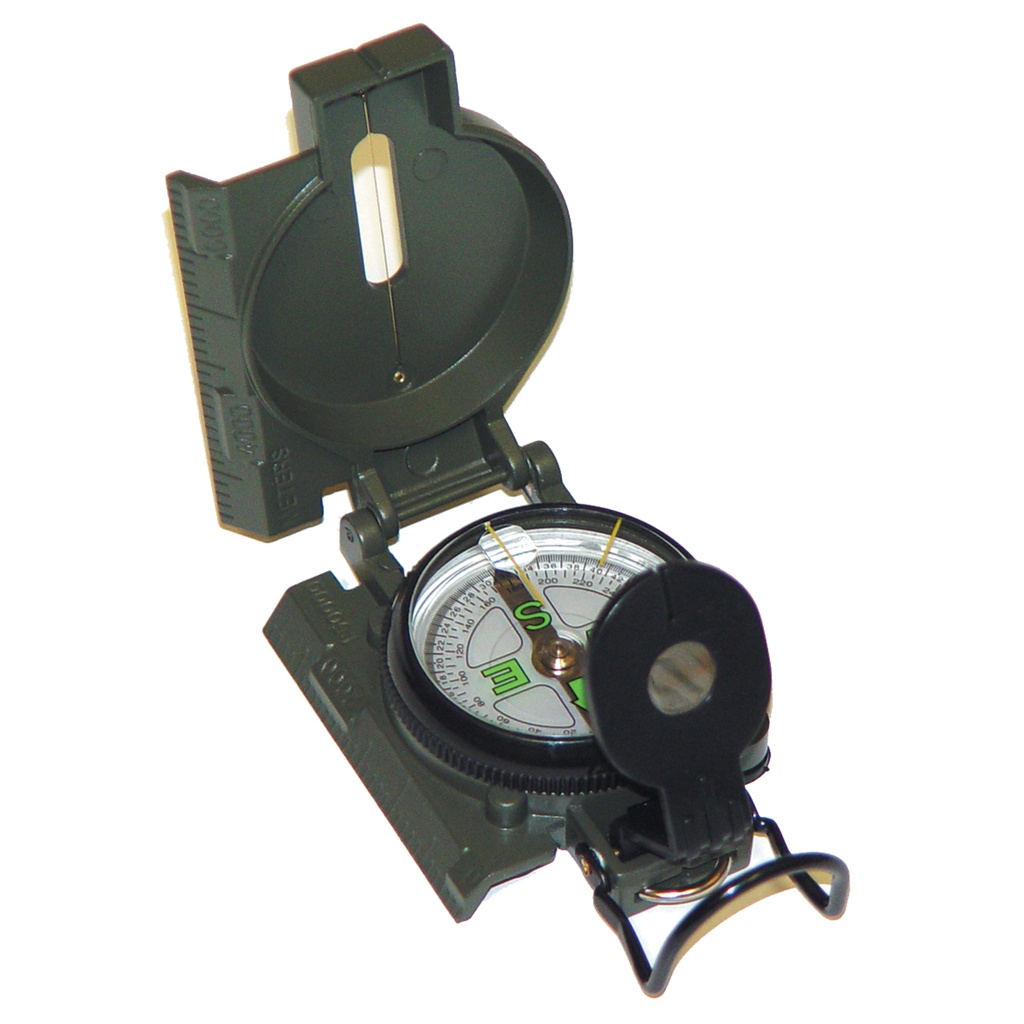
This isn’t a souvenir-store button compass. The Waypoint March Tactical Lensatic Compass in military green is built for real navigation when GPS dies or batteries freeze. A metal housing protects a precise 2-inch dial with a clicking bezel, lensatic sighting system, and 1:50,000 map scale along the body. The folding thumb ring locks your grip so you can sight a bearing, mark it, and move without second-guessing. It’s compact, field-tough, and ready to earn its place in your kit.
Field-Grade Navigation You Can Actually Trust
The Waypoint March Tactical Lensatic Compass - Military Green is built for people who still believe in real land navigation. No apps, no batteries, no drama. Just a metal-bodied, lensatic compass that does exactly what it’s supposed to do when you’re cold, tired, and a few miles from where you thought you were.
This is patterned after classic military field compasses: folding lid with sighting wire, lensatic rear sight, clicking bezel, and a thumb ring that locks the whole setup into a stable, repeatable grip. It’s not pretty gear; it’s gear that works.
Why a Lensatic Compass Still Matters in the Field
A lensatic compass is built around one job: taking accurate bearings under stress. Unlike a simple baseplate or novelty compass, this design lets you brace the body, sight a distant landmark, and read your bearing through the lens without breaking position.
Lensatic Sighting: Stability Equals Accuracy
Open the lid, hook your thumb through the folding ring, and bring the compass up to eye level. The sighting wire in the lid and the rear lens form a precise line with your target. Because your hand, thumb, and forearm are locked together, you get far less wobble than with a loose, handheld dial. The result: tighter bearings and less drift as you move.
The lens magnifies the dial index so you’re not guessing at degrees. You see your heading, commit it, and move. That’s the entire point of a proper lensatic compass.
Built Like a Field Tool, Not a Toy
The first clue this is a real field compass is the metal housing. The military green body takes hits, drops, and pack abuse without the lid snapping off or the dial capsule cracking. The matte finish cuts glare so you’re not flashing sunlight from a ridgeline.
Clicking Bezel and 2-Inch Dial
The black bezel ring surrounding the 2-inch dial doesn’t just spin freely; it clicks. That tactile feedback matters when you’re working in the dark or with gloves. Each click lets you index your azimuth or set a back bearing without constantly looking down. Once set, the bezel resists accidental bumps, so your reference stays honest.
The 2-inch dial gives you a readable, stable needle swing. Degree markings are clear, with high-contrast directional letters and luminous accents on the needle tips and key points so you can keep moving at last light instead of stopping to wait for sunrise.
Map-Real Navigation: 1:50,000 Scale Built In
On the side of the body you’ll find a 1:50,000 map scale etched in. That’s not decoration. That’s the scale you see on serious topo maps. Being able to go from grid line to ground line without pulling a separate ruler is exactly the kind of small advantage that adds up during long days on foot.
Plot a route, measure distance, translate that into time and pace count, then use the lensatic sighting to hold a clean bearing. This compass is designed to move you smoothly from map to terrain and back again.
Carry and Field Use: Compact, Braced, and Ready
Folded, the Waypoint March rides easily in a pocket, admin pouch, or top lid. The lid closes over the dial to keep dust, grit, and pack contents from scratching the crystal. When it’s time to actually use it, the folding thumb ring is the unsung hero.
That ring gives you a repeatable hand position every time: thumb in the ring, fingers wrapped around the body, forearm aligned. It’s the same muscle memory that military land-nav courses drill because it works when you’re exhausted, cold, or moving fast.
What Buyers Ask Before Purchasing an Automatic Knife
Even though this product is a compass, automatic knife buyers, collectors, and preparedness-focused customers often cross-shop navigation gear alongside their blades. The questions below come up constantly in that world, so we answer them directly here.
Are automatic knives legal?
Under U.S. federal law, automatic knives (often called switchblades) are regulated primarily by the Federal Switchblade Act. In simple terms, federal law restricts interstate commerce and certain importation of automatic knives, but it does not outright ban ownership nationwide. The real deciding factor for everyday carry is state and local law.
Some states allow automatic knives and OTF (out-the-front) autos for general carry, some allow possession but restrict concealed carry or blade length, and others heavily limit or prohibit them. Before you buy or carry an automatic knife, you need to check the current statutes where you live and where you travel—state code, city ordinances, and any specific restrictions on blade type, opening mechanism, or carry method. Laws change, and it’s on the buyer to stay current.
What’s the difference between an automatic knife, OTF, and a switchblade?
In enthusiast terms, an automatic knife is any knife where the blade is deployed by pressing a button, lever, or hidden release, and a spring drives the blade open to locked position. A side-opening automatic looks like a conventional folder but snaps open from the side under spring tension once you hit the release.
An OTF—out-the-front—automatic is a subset of automatic knives where the blade travels linearly out the front of the handle rather than pivoting from the side. Many OTFs are double action: the same sliding control both deploys and retracts the blade under spring tension. A switchblade is the older, legal/regulatory term typically used in statutes to describe automatic knives in general, especially side-opening autos. Enthusiasts usually reserve “OTF” for front-deploy autos and “automatic” for the broader category.
What makes this automatic knife worth buying?
If you’re an automatic knife enthusiast, you already know what separates a serious piece from a gas station special: clean lockup, consistent spring strength, controlled deployment speed, and steel that’s matched to real-world use instead of spec-sheet bragging rights. The same mindset applies to navigation tools like this lensatic compass.
This compass is worth buying for the same reasons a good automatic knife is: reliable mechanics, field-ready construction, and design decisions that prioritize function over flash. Metal housing instead of flimsy plastic, a clicking bezel you can feel and trust, a 1:50,000 map scale you’ll actually use, and a lensatic sighting system that turns rough bearings into precise movement. It’s gear built for people who care about how things work.
Why This Compass Belongs in a Serious Kit
Collectors and prepared users don’t buy gear to fill a drawer; they buy gear to fill a role. The Waypoint March Tactical Lensatic Compass fills the navigation role with the same quiet competence a good EDC auto fills your cutting tasks.
You get a compact, metal-bodied compass with real military field DNA: lensatic sighting for accurate bearings, a 2-inch dial with luminous reference points for low light, a positive-click bezel for repeatable azimuths, and a 1:50,000 scale that talks the same language as your topo maps. No gimmicks. No overpromises. Just a tool that does its job in the background while you focus on the terrain in front of you.
If you’re the kind of buyer who compares spring tension, lock geometry, and blade grind before you buy an automatic knife, you’ll recognize the same design integrity here. This compass earns its space next to your best folders by delivering exactly what it promises: honest, repeatable navigation when it matters.
Whether your pack already carries a favorite automatic knife for EDC or you’re building a lean, capable field kit, this lensatic compass is the quiet workhorse that keeps you oriented while your blade handles the cutting.