Archive Ordnance Field Manual Reference Book - Yellow Cover
3 sold in last 24 hours
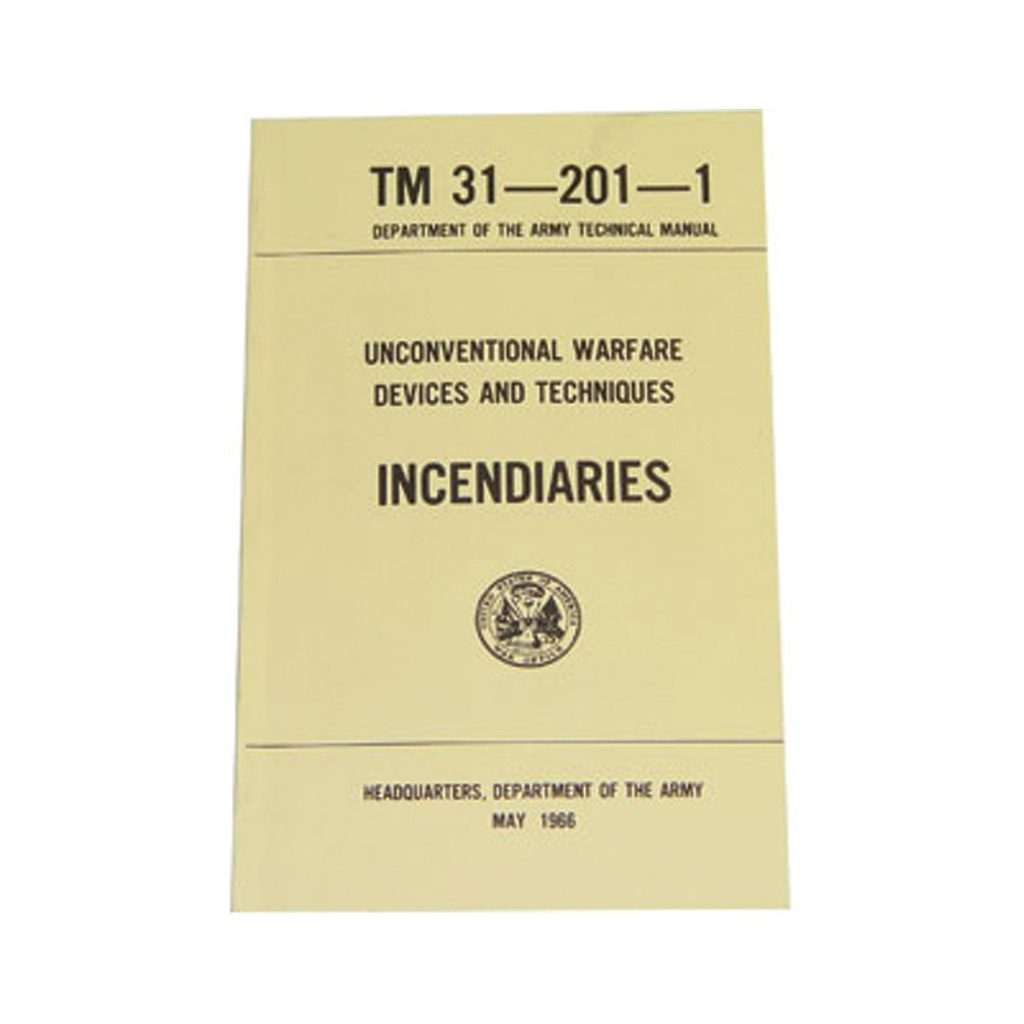
This is not a coffee-table prop. The Archive Ordnance Field Manual Reference Book – Yellow Cover is a straight reprint of a 1966 Department of the Army technical manual on incendiaries and unconventional warfare devices. Clean diagrams, disciplined terminology, and structured doctrine make it a serious reference for historians, professionals, and shop owners who want real military documentation on the shelf—not Hollywood fantasy.
Why This Field-Issue Ordnance Manual Belongs on a Serious Shelf
The Archive Ordnance Field Manual Reference Book – Yellow Cover is a direct line back to May 1966, when the Department of the Army published TM 31-201-1 as a working technical manual, not entertainment. It reads like what it is: an official field-issue reference on incendiaries and unconventional warfare devices and techniques. Clean text, formal structure, and government-issue layout. No drama, no marketing, just doctrine.
If you collect serious military material—whether you’re the type who owns more automatic knives than dress shoes or a historian who actually cites sources—this manual fits the same mindset: equipment and information that were built to work, not to be flashy.
More Than a Prop: A Technical Manual Built for Real Use
This isn’t a fictional "field guide" or a novelty "survival" pamphlet. It’s an English-language, Department of the Army technical manual originally issued at headquarters level. The pale yellow cover, the TM 31-201-1 designation, the seal, the May 1966 imprint—everything about it signals Cold War-era ordnance doctrine meant for people who had to get the details right the first time.
Inside you’ll find the institutional voice that knife and gear professionals recognize: short, precise instructions, standardized terminology, and diagrams designed to be understood under pressure. It’s the same mentality that separates a well-engineered automatic knife from a bargain-bin switchblade lookalike—clarity, repeatability, and reliability.
How Collectors Actually Use This Manual
Collectors and professionals don’t buy a field-issue manual like this to cosplay. They buy it because it fills specific roles on the shelf and the bench:
- Context for equipment: When you’re looking at mid-century military blades, ordnance, and field gear, this manual anchors the era’s doctrine—what the Army expected people to know and do.
- Reference for terminology: The same way serious automatic knife buyers care about the difference between automatic, OTF, and traditional switchblade, historians care about the difference between incendiaries and other ordnance categories. This manual nails that language.
- Authenticity check: Shops and collectors use manuals like this as a reference backdrop. When a piece claims to be "Army-style," this is one of the standards you measure it against.
Field-Issue Design: Built Like a Tool, Not a Novelty
The design is part of the value. The yellow softcover, minimalist typography, and clean layout mirror the original Army technical manual format. It’s meant to disappear behind the content, the way a properly tuned automatic mechanism disappears behind flawless deployment.
Readable Under Stress
The original field-issue design assumed use in bad light, bad weather, and worse conditions. Large type, logical headings, and clear sectional structure mean you can flip to the needed information fast. The reprint preserves that clarity for modern readers who actually intend to study the material, not just display the cover.
Shop and Bench Appeal
On a retail shelf next to automatic knives, tactical folders, and ordnance-themed gear, this manual immediately signals that the shop curates real references. In a workshop or study, it slots in with armorers’ texts, ballistics references, and maintenance manuals as another piece of serious documentation.
Responsible Content for Serious Readers
Any time you’re dealing with incendiaries, unconventional warfare, or weapons-adjacent material, responsibility matters. This manual presents historical, doctrinal information in a sober, institutional tone. It’s not a how-to guide for casual dabblers; it’s a snapshot of period doctrine for historians, professionals, and academic-level readers.
Think of it like owning an issued automatic knife versus a gas-station switchblade. One comes with context, standards, and a clear operational framework. The other just looks the part. This manual is firmly in the first category—substance over spectacle.
What Buyers Ask Before Purchasing an Automatic Knife
Our core audience is automatic knife enthusiasts and collectors, and manuals like this sit on the same shelf—literally and philosophically—as precision OTF and side-opening autos. Here’s how the common automatic knife questions intersect with owning serious reference material.
Are automatic knives legal?
Under U.S. federal law, automatic knives (often called switchblades in statutes) are regulated primarily by the Federal Switchblade Act. Federal rules mainly affect interstate commerce—manufacture, shipment, and sale across state lines—but they do not outright ban simple possession at the federal level for most buyers.
The real complexity is at the state and local level. Some states allow automatic knives and OTF designs for general carry, some allow possession but restrict concealed carry, blade length, or specific mechanisms, and a few still prohibit them outright or limit them to law enforcement and military. Local city or county ordinances can tighten those rules further.
The responsible approach is simple: check your current state and local laws by name—"automatic knife," "switchblade," "gravity knife," and "spring-assisted" can all be treated differently in statutes. When in doubt, consult an attorney or your local jurisdiction. Manuals like this one are historical references, but when it comes to modern carry, up-to-date legal research is non-negotiable.
What’s the difference between an automatic knife, OTF, and a switchblade?
Collectors draw clean lines here, and the law often does too:
- Automatic knife (side-opening): A folding knife where the blade is held closed and deploys using stored spring energy when you press a button, lever, or similar control in the handle. The blade pivots out from the side.
- OTF (out-the-front) automatic: A subtype of automatic knife where the blade travels linearly out the front of the handle instead of pivoting from the side. Double-action OTFs deploy and retract under spring power; single-action OTFs deploy under spring power and are manually reset.
- Switchblade: In enthusiast language, "switchblade" is often a generic term for automatic knives, especially traditional side-opening autos. In legal language, it usually refers to any knife where a blade opens automatically by button, switch, or similar mechanism.
Why mention this on a book page? Because the same precision that matters when you distinguish between automatic, OTF, and traditional switchblade also matters when you distinguish between types of ordnance. This manual comes from a world where definitions weren’t negotiable.
What makes this automatic knife worth buying?
Translate that question: what makes this manual worth buying if your benchmark is the same seriousness you bring to an automatic knife purchase?
- Authentic institutional origin: A genuine Department of the Army technical manual, not a fan rewrite.
- Period-correct presentation: Yellow cover, seal, layout, and language consistent with mid-1960s military documentation.
- Content with real backbone: Clear, structured doctrine on incendiaries and unconventional warfare techniques, offering genuine historical and professional insight.
- Collector and shop credibility: On a shelf next to high-end automatic knives, this manual signals that you take the subject matter seriously, not theatrically.
For a buyer who chooses automatic knives based on mechanism, steel, and provenance—not hype—this manual scratches the same itch on the reference side of the house.
For Enthusiasts Who Care About Provenance as Much as Performance
The Archive Ordnance Field Manual Reference Book – Yellow Cover isn’t here to impress casual browsers. It’s here for the same crowd that knows why double-action OTFs feel different from side-opening autos, that reads steel charts for fun, and that wants their shelf to say something about how seriously they take the craft.
If your collection already includes carefully chosen automatic knives for sale from reputable makers and dealers, this manual is the logical companion: a historically grounded, technically disciplined piece of military documentation that matches your standards for the gear you carry and the references you trust.