
Special Forces Incendiary Systems Training Manual - Black Edition
14 sold in last 24 hours
This Special Forces Incendiary Systems Training Manual - Black Edition is a compact technical reference modeled after military field manuals. Across 155 illustration-packed pages, it breaks down incendiary systems, tools, initiators, fuse cord, improvised string fuse, sugar–chlorate mixes, thermite subigniters, napalm-style compounds, fire bottles, and more. Sized at 5.5" x 8.5", it reads like a serious tactical text, not a novelty. Ideal for collectors of military manuals and controversial reference works who want the look and feel of an authentic, black-cover SPECIAL FORCES booklet.
Not a Novelty: A Field-Style Incendiary Systems Manual for Serious Reference Collectors
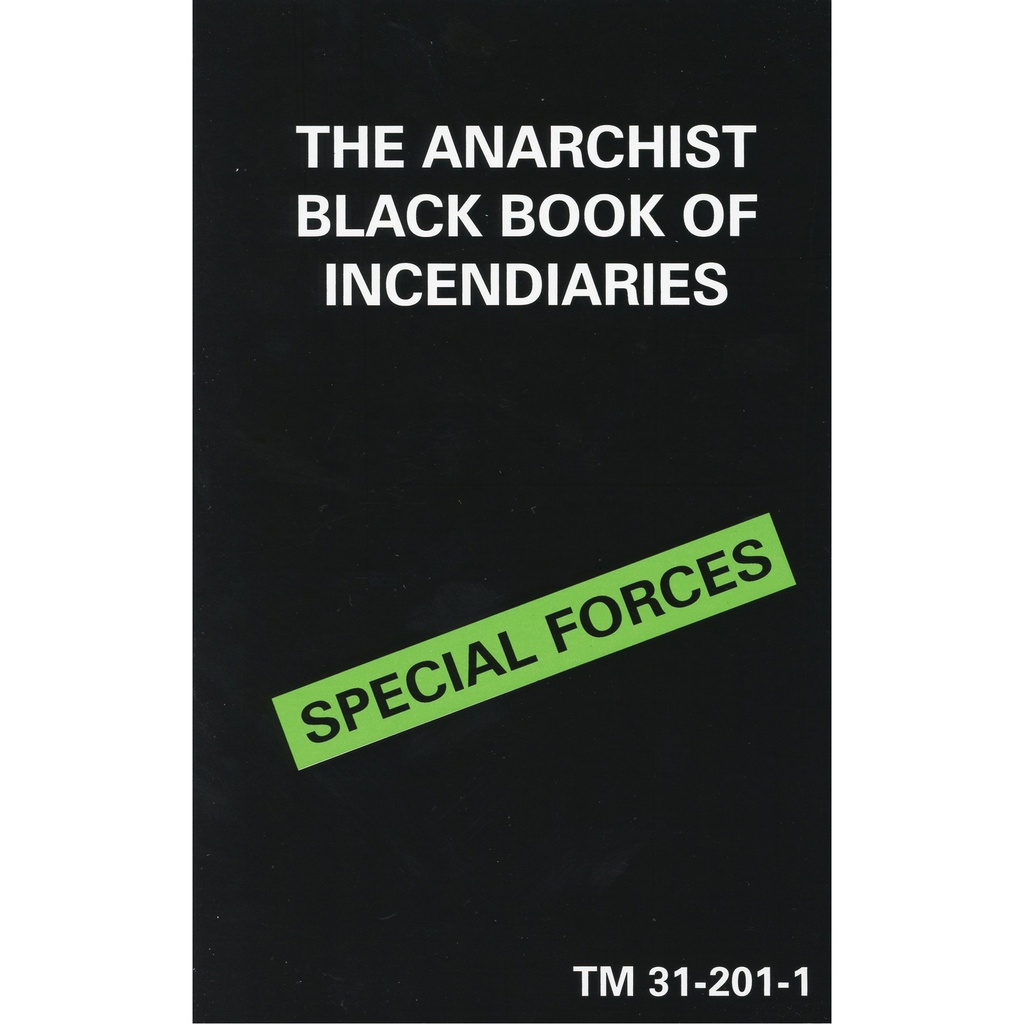
The Special Forces Incendiary Systems Training Manual - Black Edition looks and reads like what it imitates: a compact technical booklet patterned after military manuals. No marketing fluff, no comic-book graphics — just a stark black cover, a bold SPECIAL FORCES banner, and a TM-style code that telegraphs exactly what lane this book lives in: tactical reference and controversial military-style documentation.
This is a 155-page paperback, sized at 5.5" x 8.5", packed with line illustrations and step-structured content. If you collect field manuals, reprints, or offbeat defense-related literature, this sits on the shelf right next to your classic TM series, not your coffee-table books.
Inside the Manual: Systems, Initiators, and Improvised Techniques
This volume is built like a technical manual, not a casual read. It breaks down incendiary systems in layers — tools, materials, and methods — the way an ordnance or engineering text would walk you through a process flow.
Incendiary Systems, Tools, and Techniques
The early sections focus on the structure of incendiary systems: how a device is conceptualized, which tools interface with which materials, and how timing, heat, and confinement interact. Rather than loose anecdotes, you get a methodical breakdown: systems, components, and operational considerations.
Collectors who appreciate technical accuracy will recognize the pattern: define the parts, then walk through the assembly and function. It reads like a training aid that expects the reader to follow a sequence, not improvise blindly.
Initiators, Fuse Cord, and Improvised String Fuse
Another section dives into initiators and fuse systems — the start-point of any incendiary chain. Fuse cord, improvised string fuse, and similar low-tech ignition paths are examined with the kind of detail you’d expect from an old-school engineer’s notebook: burn rates, reliability trade-offs, and the impact of environment on performance.
For manual collectors, this is where the book earns its keep. The diagrams and process notes echo the style of classic ordnance publications — simple, matter-of-fact art focused on function over aesthetics.
Materials Focus: From Sugar–Chlorate Mixes to Napalm-Style Compounds
Where many fringe books drift into folklore, this one drills into materials and mixtures in a structured way. You see why certain components show up repeatedly in improvised incendiary systems and what roles they play in burn characteristics, adherence, and ignition.
Thermite, Sugar–Chlorate, and Subigniters
Thermite and sugar–chlorate combinations are treated as core case studies. The manual explores subigniters — smaller, more easily lit charges designed to bring a higher-threshold mix to life. This is the type of hierarchy a technical reader expects: primary composition, then the specialized ignition layer that makes it realistically usable.
Again, the tone is textbook-dry rather than theatrical. It’s closer to reading a stripped-down lab notebook than a dramatized how-to.
Napalm (Improvised), Paraffin–Sawdust, and Fire Bottles
The text also walks through improvised gelled fuels and sticky incendiary mixtures — napalm-style compounds, paraffin–sawdust blends, and classic fire-bottle configurations. The emphasis is on structure and behavior: how viscosity, clinging capability, and oxygen access affect performance.
For a collector, this gives the manual a particular niche: it doesn’t just list “recipes,” it organizes them the way a technical course would group related technologies and variations. That structure is what separates manuals from rumor.
Who This Manual Is Really For
This is not light entertainment. The Special Forces Incendiary Systems Training Manual - Black Edition will appeal to a specific slice of buyers:
- Military manual collectors who appreciate TM-style design and organization
- Technical readers interested in how incendiary systems are conceptualized and broken down
- Students of military history and doctrine who track how irregular tactics and improvised systems are documented
- Reference completists building a shelf of controversial or restricted-knowledge facsimiles
Everything from the black, minimal cover to the compact footprint is tuned toward that market. It’s meant to disappear into a row of black spines, not scream from across the room.
Responsible Ownership, Legal Context, and Use
This manual documents dangerous material. That has legal and ethical implications.
- In many jurisdictions, owning or reading technical information is protected, but using it to manufacture prohibited devices, damage property, or harm people is criminal.
- Certain regions may restrict possession, import, or distribution of material that’s deemed instructional for illegal activity.
- Your responsibility is to know and follow local, state, and national law before buying, owning, or sharing this content.
This book is offered as a reference and collectible document. How you use the knowledge it contains is your legal and moral line to manage. Treat it like you would any serious ordnance or explosives text: with respect, caution, and a clear understanding that the content is not a toy.
Collector Value: Why This Manual Earns Shelf Space
As with a precision-built automatic knife, the value here is in the details:
- Authentic aesthetic: It looks and feels like a compact TM-style field manual, not a flashy paperback.
- Illustration density: “Lots of illustrations” across 155 pages means it reads like a real training aid, not a wall of text.
- Focused subject matter: It doesn’t wander. Incendiary systems, materials, and deployment are the spine of the content.
- Controversial niche: It occupies a narrow category in the reference world — too technical for casual readers, too specific to be generic.
- Compact footprint: At 5.5" x 8.5", it sits easily alongside other field manuals and pocket guides.
If you’re the kind of buyer who chooses a tool because of how it’s engineered, you’ll recognize the same appeal here. It’s a structured, technical, specialty manual — and if that’s your lane, it belongs in your collection.
What Buyers Ask Before Purchasing an Automatic Knife
Are automatic knives legal?
Automatic knife laws in the United States are a layered mix of federal and state rules. Federally, the Switchblade Knife Act mainly restricts interstate commerce, importation, and shipment of automatic knives and switchblades, with carve-outs for military, law enforcement, and certain one-armed users. Day-to-day carry and possession, however, are governed by state and local law, which vary widely — some states allow automatic knives for EDC, others limit blade length, opening mechanism, or where you can carry them, and a few still restrict civilian possession outright. Before you buy or carry any automatic, OTF, or switchblade, you need to check your current state and local statutes, plus any city ordinances. Laws change, and "legal to own" does not always mean "legal to carry everywhere." Nothing in this manual or on this page is legal advice; it’s on you to verify the rules where you live.
What's the difference between an automatic knife, OTF, and a switchblade?
In enthusiast terms, an automatic knife is any knife whose blade opens from the closed position to the locked position by pressing a button, switch, or similar control in the handle — the spring does the work, not your thumb. A switchblade is essentially the same thing in legal language; U.S. statutes often use “switchblade” as the umbrella term for these button- or switch-activated automatics. An OTF (out-the-front) knife is a specific subtype of automatic where the blade deploys straight out of the front of the handle rather than pivoting from the side like a traditional auto or side-opener. Many OTFs are double-action — the same slider both extends and retracts the blade under spring tension — while most side-opening automatics are single-action, using spring power only for deployment and manual force to close. Mechanically, that distinction in how the blade travels and resets is what collectors care about.
What makes this automatic knife worth buying?
When collectors talk about whether an automatic knife for sale is worth the money, they drill straight into action, lockup, steel, and execution. A serious auto earns its place with a crisp, authoritative deployment that doesn’t hesitate, minimal blade play when locked open, and steel selected for real-world edge retention rather than just brochure numbers. Hardware matters too — pivot construction, spring design, and how cleanly the button or slider breaks and resets over time. The difference between a disposable auto and one you’ll actually carry comes down to those mechanical decisions: how consistently it fires, how confidently it locks, and how easy it is to maintain. If you’re buying for EDC, you’re paying for a mechanism that behaves the same on the thousandth deployment as it did on the first.
For the Collector Who Appreciates Serious Manuals as Much as Serious Steel
If you’re the kind of buyer who reads action tuning threads, debates spring geometry, and cares how things actually work, the Special Forces Incendiary Systems Training Manual - Black Edition will feel familiar. It’s the same mindset — structured, technical, no-nonsense — just applied to incendiary systems instead of blades. Add it to the shelf next to your favorite automatic knives and field manuals, and you’ll know you chose it for the right reasons: not hype, but substance.