

Barracks Lifesaver Official Reprint First Aid Manual - Yellow Cover
9 sold in last 24 hours
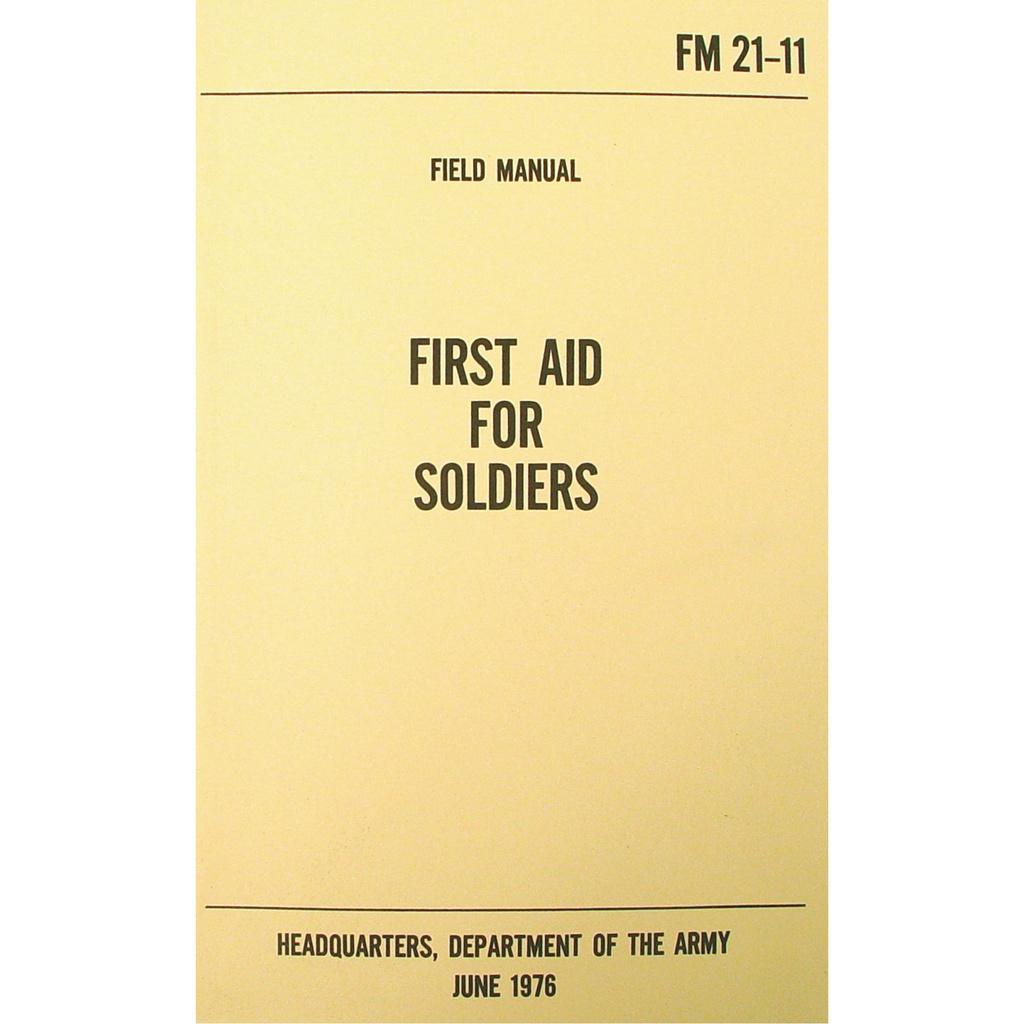
This isn’t a coffee-table survival book—it’s a barracks-ready first aid manual that matches the mindset of anyone who carries serious gear. An official reprint of the 1976 U.S. Army “First Aid for Soldiers” FM 21-11, it walks through bleeding control, shock, burns, fractures, and more in clear, executable steps. The high-visibility yellow cover makes it easy to grab from a kit, range bag, or glove box when seconds count. Pair your automatic knife with the kind of medical reference that’s actually been fielded.
Why Serious Gear People Still Keep This Barracks First Aid Manual Close
Anyone who obsesses over the mechanics of an automatic knife understands this instinct: when things go wrong, equipment either works or it doesn’t. This Barracks Lifesaver Official Reprint First Aid Manual – Yellow Cover sits in the same mental toolbox as a reliable double-action OTF or a dialed-in side-opening automatic. It’s not pretty, it’s not decorative, and it doesn’t care about your coffee table. It’s designed to live in barracks, range bags, vehicle kits, and deployment duffels—and get used when it matters.
Built Like Field Gear, Not Like a Gift Shop Book
This is an authentic reprint of the U.S. Army’s “First Aid for Soldiers” field manual, FM 21-11, dated June 1976. The same doctrine that taught soldiers how to keep each other alive in the field now fits cleanly into your kit. No glossy photos, no lifestyle filler—just direct, procedural guidance on what to do when someone is bleeding, burned, in shock, or broken.
The softcover binding keeps it flexible enough to cram into a pack, glove box, or ammo can. The stark yellow cover with bold black text isn’t a design whim; it’s a visibility choice. When your hands are shaking and adrenaline is up, you want the book you can spot instantly, not the one that blends into your gear pile.
Field-First Content for People Who Actually Use Their Gear
If you’re the type who carries an automatic knife because deployment speed and repeatable mechanics matter, you’ll recognize the logic in how this manual is laid out. It breaks problems down the way a good mechanism breaks down a motion—step by step, with no ambiguity.
Clear, Executable First Aid Procedures
Inside, you’ll find structured guidance on:
- Bleeding control: direct pressure, bandaging, and when to escalate
- Shock management: recognizing signs early and stabilizing a casualty
- Burns and heat injuries: what to do—and what not to do—immediately
- Fractures and sprains: improvised splints and safe movement
- Airway and breathing problems: basic interventions in plain language
It’s written in the blunt, procedural style of a military field manual: identify the problem, follow the steps, keep the person alive until higher care takes over. No theory lectures, just “do this, then this.”
Why Knife People Should Care About a First Aid Manual
Owning a well-built automatic knife or OTF means you respect edges, force, and the reality that accidents and bad days happen. This book is the logical counterpart to that mindset. You already think about lock strength, deployment reliability, and blade control. This manual teaches you how to think just as mechanically about bleeding control, shock, and burns.
Pairing quality tools—whether that’s a double-action automatic knife for EDC or a fixed blade in your pack—with real medical knowledge is what separates a casual buyer from someone who truly prepares.
Automatic Knives, Real-World Kits, and Why This Manual Belongs Next to Them
Most serious automatic knife owners build systems, not just collections. A side-opening automatic rides in the pocket, a backup OTF lives in the truck, and a fixed blade sits in the range or field kit. Add this manual to that ecosystem and your gear setup stops being just sharp and starts being genuinely capable.
It fits anywhere you’d reasonably keep a knife and a tourniquet: under a seat, in a ruck, in the lid of a range bag, or next to your home-defense setup. Military content, straightforward language, and a format that assumes stress and urgency—this is doctrine written for fatigue, sweat, and low light, not quiet Sunday reading.
Legal Reality: Where Medical Gear and Automatic Knives Diverge
Unlike an automatic knife, this first aid manual doesn’t trigger legal debates. Books are not weapons under any U.S. federal weapons framework, so there’s no special restriction on owning, carrying, or shipping this manual across state lines.
That’s a sharp contrast to automatic knife and switchblade laws, where federal transport rules and state-by-state carry restrictions come into play. While you may need to research whether your best automatic knife for EDC is legal to carry in your state, this manual is universally safe to toss into a range bag, vehicle kit, or suitcase with zero legal friction.
In other words: you may leave an automatic knife at home depending on local rules, but there’s no excuse to be without medical knowledge. This is the one piece of gear every loadout can legally include.
Collector Value: Authentic Military Doctrine in Your Kit
Collectors of automatic knives understand authenticity. You know when a knife is a genuine production from a respected maker versus a knockoff riding the brand’s name. This manual hits that same authenticity nerve. The cover reads like exactly what it is: “FIELD MANUAL,” “FM 21-11,” “HEADQUARTERS, DEPARTMENT OF THE ARMY,” “JUNE 1976.” That’s original doctrine, not an internet-summary survival pamphlet.
For military enthusiasts, kit builders, and anyone who respects real field history, owning this reprint is like owning a properly marked, correctly tuned production automatic knife instead of a loose, nameless clone. It’s the real document, preserved so that modern buyers can still learn from it and drop it straight into service.
Yellow Cover, Real-World Purpose
The high-visibility yellow cover is more than an aesthetic quirk. In a duffel full of earth tones and black nylon, yellow is the color you can grab without thinking. That’s the same logic behind choosing a high-visibility handle on a field knife or bright paracord on key gear. In low light, in a cluttered truck, or in a dark room, this manual stands out where a muted cover would vanish.
What Buyers Ask Before Purchasing an Automatic Knife
Are automatic knives legal?
In the U.S., automatic knife legality has two layers. Federally, the Switchblade Knife Act regulates interstate commerce and possession in certain federal jurisdictions, but it does not create a blanket ban on ownership. The real complexity comes from state and sometimes local laws: some states allow automatic knives and OTFs for everyday carry, some restrict blade length, some limit carry to law enforcement or military, and a few still prohibit them outright. Before you buy automatic knife models for EDC, check your specific state and city statutes—what’s legal in one state can be a problem across the border. This manual itself has no such restrictions; it can ship and ride anywhere.
What’s the difference between an automatic knife, OTF, and a switchblade?
Mechanically, here’s how it breaks down:
- Automatic knife (side-opening): A folding knife where the blade is deployed by a button, switch, or lever and swings out from the side under spring tension. Press, and it fires open; the spring does the work.
- OTF (out-the-front): A subtype of automatic where the blade travels linearly out the front of the handle. In a double-action OTF, the same slider both deploys and retracts the blade. In a single-action OTF, a button or switch fires the blade out, and you manually reset it.
- Switchblade: In U.S. legal language and common speech, “switchblade” is essentially the umbrella term for automatic knives, including many OTF designs. Enthusiasts tend to use “automatic” and “OTF” for mechanical clarity, and “switchblade” mostly in legal or historical contexts.
If you’re shopping for an automatic knife for sale, knowing this distinction helps you read specs like an insider instead of wading through vague marketing talk.
What makes this automatic knife worth buying?
Applied to this manual, the same logic holds: you judge gear on function, not adjectives. What makes this field-ready first aid manual worth putting next to your best automatic knife for EDC is a combination of authenticity, clarity, and practicality:
- It’s an official reprint of FM 21-11, not a generic survival booklet.
- It’s structured for stress—simple steps, direct language, and clear priorities.
- The yellow cover is built for real-world visibility in a kit or vehicle.
- It complements edged tools and serious gear by filling the medical gap.
If you care enough to debate action types and steel formulas, you’re the type who should have real first aid doctrine within arm’s reach.
For the Enthusiast Who Carries on Purpose, Not by Accident
The same mindset that leads you to seek out a quality automatic knife for sale—the one with a crisp lockup, consistent deployment, and real steel—should push you toward equally serious medical prep. This Barracks Lifesaver Official Reprint First Aid Manual – Yellow Cover isn’t glamorous, but it’s the kind of gear that quietly upgrades every kit you drop it into.
Collectors chase action, steel, and history. This manual gives you history and real-world function in one compact, high-visibility package. If you’re the buyer who chooses tools for the right reasons, this belongs beside your blades.