Signal Standard Field Rigging Reference Manual - Signal Yellow
13 sold in last 24 hours
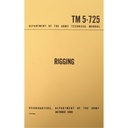
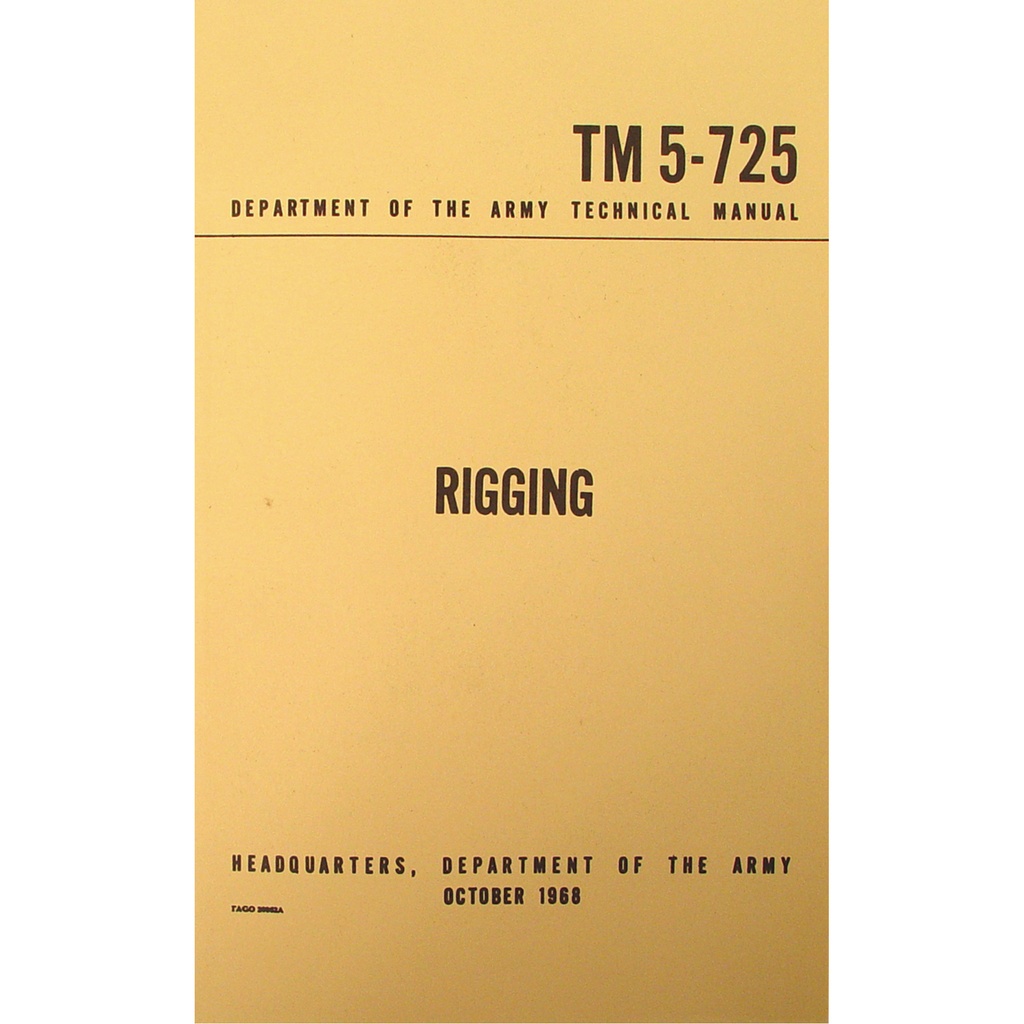
For the same reason you won’t trust a sloppy automatic action, you shouldn’t trust guesswork in a lift. This 1968 Army rigging manual reprint is the reference crews actually use: wire rope, chain, fiber line, knots, hitches, splices, and safe‑load math laid out like a technical manual should be. The signal‑yellow cover stays visible on the bench or in the rigging box, and the content reads like a seasoned rigger who’s seen it all and still checks every calculation twice.
Why a Serious Knife Collector Cares About a Rigging Manual
If you’re the type who can feel the difference between a dialed-in automatic and a gritty one, you already understand rigging. Both are about controlled force. In an automatic knife, a coil or leaf spring stores energy and releases it in a predictable, repeatable way. In lifting, wire rope, chains, hooks, and anchors do the same job at a different scale. This Signal Standard Field Rigging Reference Manual - Signal Yellow is the 1968 Army technical baseline for how that force gets managed safely.
Where most shop posters and quick charts give you fragments, this manual is the full mechanical picture: wire rope construction, working load limits, knots and hitches that hold when it matters, and the math behind “safe enough.” It’s the rigging equivalent of knowing why a double-action OTF behaves differently from a side-opening automatic instead of just saying “it opens fast.”
Field-Proven Rigging Manual for Sale – Built Like a Technical Standard
Let’s be clear: this is not coffee-table nostalgia. This is a rigging manual for sale that came out of the Department of the Army’s need to standardize how heavy things get lifted without killing people. Originally published in October 1968 as Technical Manual TM 5-725, it’s been reprinted here with the same blunt, no-nonsense layout and content.
For shops that already stock the best automatic knives for EDC and field work, this manual occupies the same role as a torque spec sheet or heat-treat chart: the quiet authority in the background that keeps good gear from being used stupidly. You get structured sections on:
- Wire rope: constructions, strengths, how bend radii and angle affect capacity
- Chains: grades, inspection standards, when to retire a link
- Fiber rope: natural vs synthetic, stretch, and safe use
- Knots, hitches, and splices: field-proven configurations with clear use cases
- Safe-load calculations: working load limits, sling angles, and quick math you can trust
It’s written like a good spec sheet: direct, organized, and merciless about cutting fluff.
Mechanics and Method: The Same Discipline as a Well-Tuned Automatic
Ask any automatic knife enthusiast why they care about spring geometry, lock engagement, or blade steel, and you’ll hear the same thing: predictable performance. That’s exactly what this rigging manual is built to protect in lifting operations.
From Wire Rope to Working Load – No Guesswork
Where casual references say “don’t overload the sling,” this Army text walks you through why. It details how diameter, lay, and construction of wire rope affect capacity. It forces you to respect sling angle as much as you respect lockup on a side-opening automatic. The quick-reference safe-load tables are basically the equivalent of hardness and edge retention charts for steel—numbers you can work from, not marketing copy.
Knots, Hitches, and Splices – The ‘Locking Mechanisms’ of Rigging
Every knot in here has a purpose, just like every locking mechanism on a quality automatic or OTF. You’ll see which hitches resist slip under steady load, what to use for shock, and where a splice beats any hardware you can bolt on. If you like knowing why a plunge lock behaves differently than a button lock, you’ll appreciate how this manual distinguishes one knot or hitch from another under real-world strain.
Signal-Yellow Cover, Field-Bred Purpose
The signal-yellow cover isn’t an aesthetic flex; it’s an operational decision. On a crowded shop bench, in a rigging shed, or tossed in with slings and shackles, you can spot this book instantly. The big RIGGING title, the TM 5-725 designation, and the Department of the Army imprint tell you what it is at a glance: not a suggestion, a standard.
If you keep your automatic knife edges dialed and your gear squared away, this manual fits into that same ecosystem. It’s the reference your better crews will dog-ear, annotate, and treat like the minimum acceptable baseline for any lift that can go wrong in a hurry.
What Buyers Ask Before Purchasing an Automatic Knife
Are automatic knives legal?
In the U.S., automatic knife legality is a mix of federal rules and state laws. Federally, the 1958 Switchblade Knife Act mainly restricts interstate commerce in automatic knives (including many OTF and classic switchblade designs), with carve-outs for military, law enforcement, and certain occupational uses. It does not outright ban ownership. The real friction is at the state and sometimes city level: some states allow you to buy automatic knives and carry them with few restrictions; others limit blade length, opening mechanism, or how you can carry (open vs concealed); a handful still prohibit automatic or switchblade-style knives outright.
If you’re looking for an automatic knife for sale and planning to carry it, you need to check your specific state and local code, not just federal law. When in doubt, consult current statutes or an attorney—laws move faster than most printed guides.
What’s the difference between an automatic knife, OTF, and a switchblade?
Mechanically, here’s how serious users separate the terms:
- Automatic knife (side-opening automatic): A folding knife where a spring drives the blade open when you hit a button or actuator. The blade pivots out from the side, like a conventional folder, but under spring power.
- OTF (out-the-front) automatic: The blade travels linearly, in and out of the handle. A true double-action OTF uses the same control to deploy and retract the blade under spring tension; single-action OTFs deploy under spring power but require manual retraction.
- Switchblade: In U.S. legal language, this is usually a catch-all term for knives that open automatically by button, switch, or similar device—including both side-opening automatics and many OTF designs.
Collectors and makers prefer automatic and OTF for mechanical clarity, and reserve switchblade mostly for legal or historical discussion.
What makes this automatic knife worth buying?
Translating that question to this rigging manual: what makes it worth a spot in your kit next to your best automatic? The answer is the same as why you choose a reputable maker over a gas-station folder: standards and proven practice. This 1968 Army reprint distills real-world rigging into procedures and calculations that assume the cost of failure is unacceptably high. You’re not buying pretty diagrams; you’re buying a way of thinking about load, angle, and hardware that matches the way you already think about steel, lock geometry, and deployment.
For anyone who treats an automatic knife for sale as more than an impulse buy, this manual is the rigging counterpart: serious, tested, and built to keep both people and equipment out of the failure column.
For the Enthusiast Who Takes Mechanics Seriously
There’s a certain buyer—maybe you—who won’t touch an automatic until they know the spring design, lock type, and steel heat treat. This manual belongs in that same mental toolbox. It’s not a knife, but it speaks the same language: loads instead of lockup, wire rope lay instead of edge geometry, working load limits instead of Rockwell hardness.
If you’re the kind of enthusiast who doesn’t just buy automatic knives but understands them, this Signal Standard Field Rigging Reference Manual - Signal Yellow will feel familiar. It’s gear for people who respect mechanics, understand risk, and prefer hard numbers to vague reassurance—whether they’re tuning an automatic action or planning a critical lift.