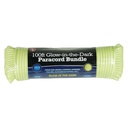
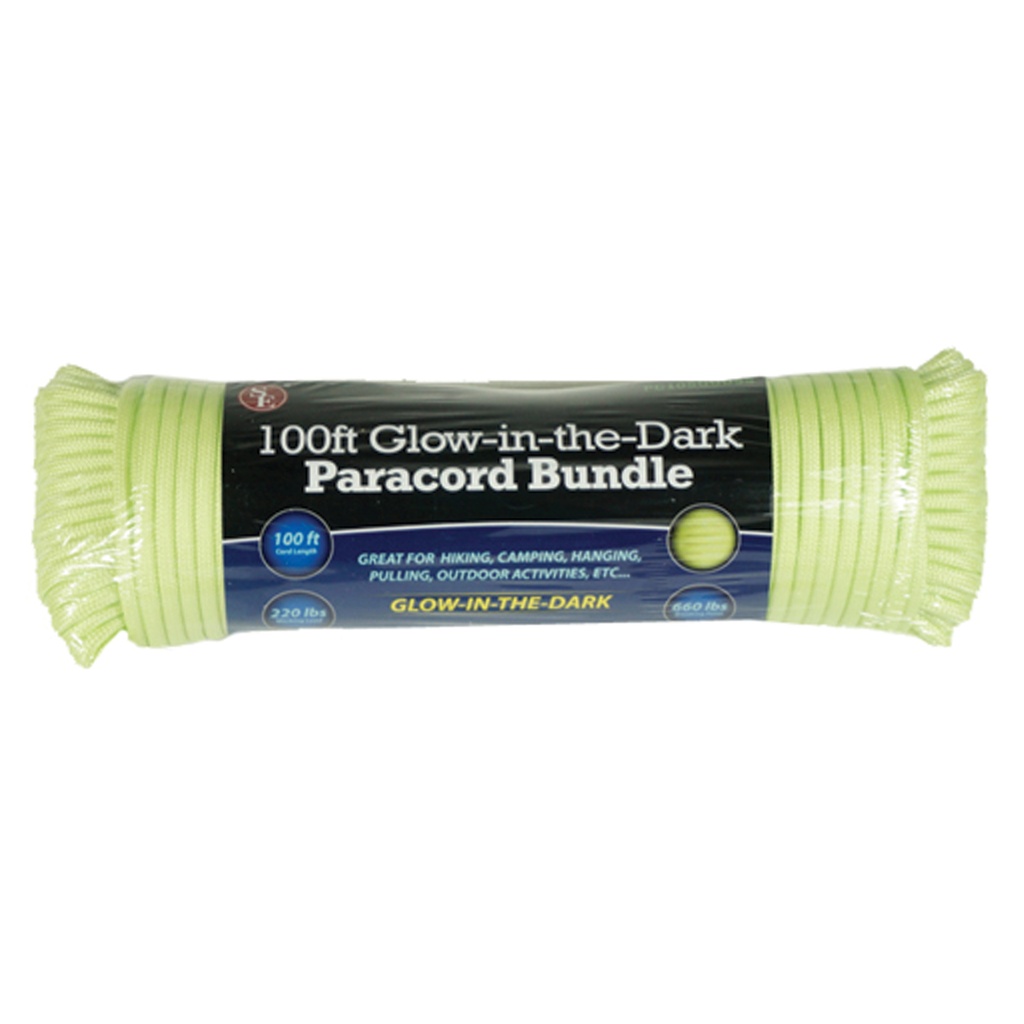
Night Signal Glow-Ready Survival Paracord - Luminous Green
5 sold in last 24 hours
Night Signal Glow-Ready Survival Paracord - Luminous Green is built for the people who actually rig shelters, not just braid bracelets. Charge this glow-in-the-dark paracord with any light and your lines, guylines, and lanyards stay visible when the headlamps click off. The 7-strand core, 5/32" profile, 220 lb working load, and 660 lb break strength hit the real-world sweet spot: slim enough for clean knots, strong enough for serious camp and survival work.
Night Signal Glow-Ready Survival Paracord - Built for Real Night Use
Most cord disappears when the sun drops. Night Signal Glow-Ready Survival Paracord - Luminous Green is designed for the hours after last light, when you’re moving around camp, grabbing gear, or getting up in a storm and don’t have time to trip over an invisible guyline. This isn’t novelty glow rope; it’s a 7-strand survival paracord with real tensile numbers and a sheath engineered to drink in light and give it back when you actually need it.
Why This Cord Replaces the Random Line in Your Pack
Standard paracord works fine until you’re fumbling in the dark. This chargeable glow-in-the-dark paracord solves that with three things that matter when you’re not just camping for Instagram:
- Chargeable glow sheath: Hit it with a flashlight, headlamp, or lantern and the luminous green outer jacket charges fast, then stays visible after you kill the beam.
- Legit survival build: Classic 7-strand core with a woven sheath, not gimmick rope. You get consistent diameter, predictable knots, and dependable strength.
- Balanced rating: 220 lb working load, 660 lb break strength. That’s the zone where shelter lines, gear lashings, tarp ridgelines, and camp rigging are secure without the bulk of heavier cordage.
Mechanics of the Cord: Construction, Diameter, and Real-World Strength
Knife people know steel specs matter. Rope and cord are the same story — construction details are what separate decent from disposable.
7-Strand Core with a Tight, Consistent Sheath
This survival paracord uses a bundled 7-strand inner core wrapped in a finely woven outer sheath. Each inner strand can be pulled and used for finer tasks — sewing repairs, improvised fishing line, or lighter-duty lashings — while the remaining sheath still has structure. The tight braiding on the luminous sheath means fewer snags, more controlled knots, and better abrasion resistance when it’s running over bark, rock, or pack hardware.
5/32" Diameter: The Sweet Spot for Camp and EDC
At about 0.15625" in diameter, this glow-in-the-dark paracord hits the standard 550-style size class. That means:
- Knots cinch cleanly and release without wrestling
- It threads easily through zipper pulls, lanyard holes, and gear loops
- It winds compactly into pouches, survival kits, and EDC organizers without eating space
Too thick, and you’re fighting bulk. Too thin, and it cuts into bark, bites into your fingers, and becomes miserable to untie under load. This sits right in that proven middle.
Night Signal as Survival and EDC: Where It Actually Earns Its Keep
This 100 ft bundle is tailored for people who actually use cord in the field — not just for decorative braids.
- Shelter and tarp rigs: Run a high-visibility ridgeline, then glow-mark your guylines so nobody face-plants on a midnight bathroom run.
- Gear organization: Build bright lanyards for knives, flashlights, and tools so you can find them in the tent or truck bed at night.
- Trail and camp marking: Use short segments to tag key trees, campsites, or hazard points you want to relocate or avoid in the dark.
- Survival kits and vehicle bags: Toss a 25–50 ft hank in every kit — it doubles as standard paracord by day and a visual reference at night when stress is already high.
The 220 lb working load and 660 lb break strength are honest, usable numbers — easily enough for shelter building, hauling lighter loads, hanging food bags, and lashing gear, without pretending it’s climbing rope.
Visibility That Actually Helps, Not Just Looks Cool
The luminous green sheath is tuned for visibility, not fashion. In low light, it stands out against forest floor, rock, and camp clutter. After you hit it with a light source, that glow turns cord into a reference line you can follow without constantly blasting your headlamp at your feet.
In an emergency — power outage, roadside breakdown, unexpected night hike — that ability to mark boundaries, hazards, or gear locations without burning batteries is more than a gimmick. It’s one less thing you have to think about when your brain is already taking in a lot of noise.
What Buyers Ask Before Purchasing an Automatic Knife
You’re here for gear that earns its place. On the knife side of the house, that usually starts with two questions: legality and mechanism. Here’s the clear, unvarnished version — the same way we talk steel and action at the table.
Are automatic knives legal?
Under U.S. federal law, automatic knives — including side-opening autos and OTF (out-the-front) designs — are restricted in interstate commerce but not outright banned. Federal rules mainly govern import, mailing, and sale across state lines. The real deciding factor for carry is state and local law. Some states allow automatic knives broadly; others limit blade length, restrict concealed carry, or ban autos outright. Before you buy or carry any automatic knife, check the current statutes for your state and municipality — and remember that city ordinances can be stricter than state law. Federal law does not override those local restrictions for everyday carry.
What's the difference between an automatic knife, OTF, and a switchblade?
In enthusiast language, “automatic knife” is the umbrella: any knife where a spring-driven blade deploys with a button, switch, or similar mechanism. Most side-opening autos fall into this category. An OTF (out-the-front) automatic knife is a specific subtype where the blade travels linearly through a front slot in the handle — single-action OTFs deploy automatically and must be manually retracted, while double-action OTFs use the same control to both deploy and retract under spring tension. “Switchblade” is the older, legally loaded term often used in statutes to describe automatic knives in general, but serious buyers and makers tend to default to the more precise “automatic” and “OTF” language when talking about mechanism and action quality.
What makes this automatic knife worth buying?
When an automatic knife is worth the pocket space, it’s never because of hype. It’s the mechanical execution: a tuned spring that drives the blade out with authority but without frame-torquing slap, a lockup that doesn’t chatter or wiggle, a grind that cuts past the first Instagram photo, and steel heat-treated to the range where edge retention and toughness balance instead of fight. Add clean machining, a reliable safety (where relevant), and a handle profile you can index blind, and you’ve got an auto that doesn’t just deploy fast — it stays in rotation because it works every single time you hit the actuator.
Why This Paracord Belongs Next to Your Automatic Knife
If you care enough to argue blade steels and action timing, you’re the same type of person who notices the difference between bargain-bin cord and real survival paracord. Night Signal Glow-Ready Survival Paracord - Luminous Green earns its place next to your automatic knives by being exactly what it claims: a 7-strand, 100 ft bundle with honest strength ratings and a sheath that turns any light source into night-time visibility.
In a world full of throwaway gear, pairing a dialed-in automatic knife with cordage you can trust is how serious buyers operate. This bundle is for the people who build their kits on purpose — not by accident.